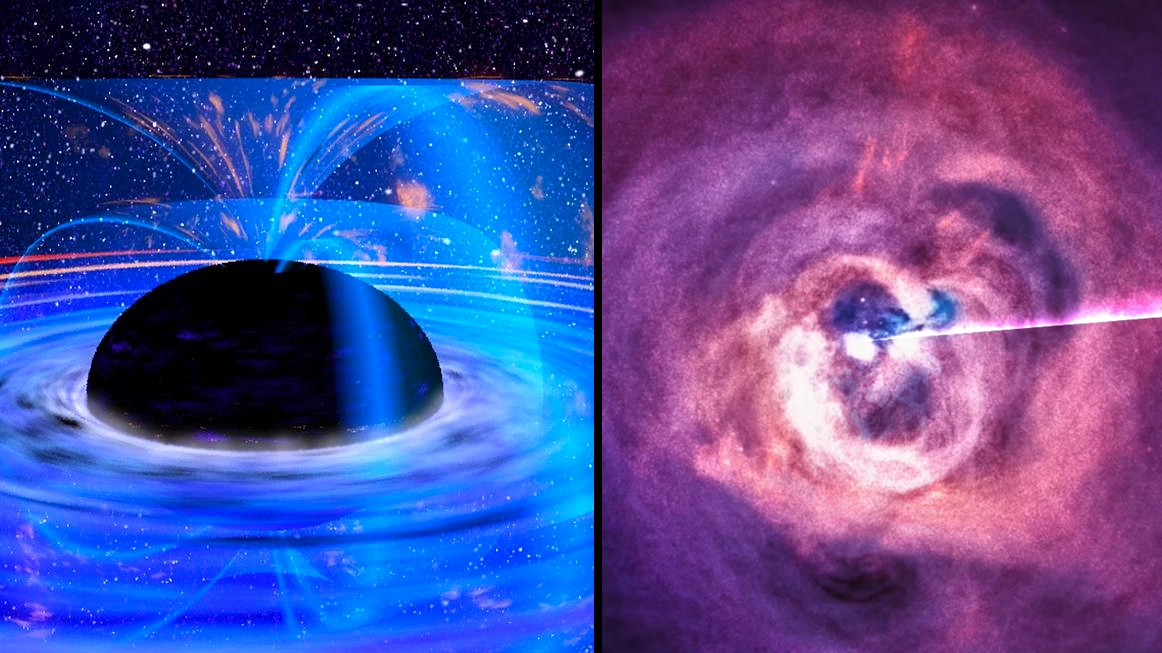
NASA Has Managed To Record The Sound Of A Black Hole

Ever thought black holes produced sounds? Me neither. While many believed sound in space just wasn't possible, NASA has dispelled the myth, releasing a new video allowing us to hear what the black hole at the centre of the Perseus galaxy cluster sounds like. Listen to the surprisingly haunting audio below:
Building on sound waves astronomers previously extracted, this new sonification — translated from astronomical data — makes them audible for the first time, having been released amid NASA's Black Hole Week this year.
Advert
"In some ways, this sonification is unlike any other done before because it revisits the actual sound waves discovered in data from NASA's Chandra X-ray Observatory," a release from NASA read.
"The popular misconception that there is no sound in space originates with the fact that most of space is essentially a vacuum, providing no medium for sound waves to propagate through.
"A galaxy cluster, on the other hand, has copious amounts of gas that envelop the hundreds or even thousands of galaxies within it, providing a medium for the sound waves to travel."
Interestingly, sound has been associated with this black hole since 2003, after astronomers discovered it sent out pressure waves that produced ripples in the cluster's hot gas. However, according to the space agency, the discovery indicated us humans aren't actually able to hear 57 octaves below middle C.
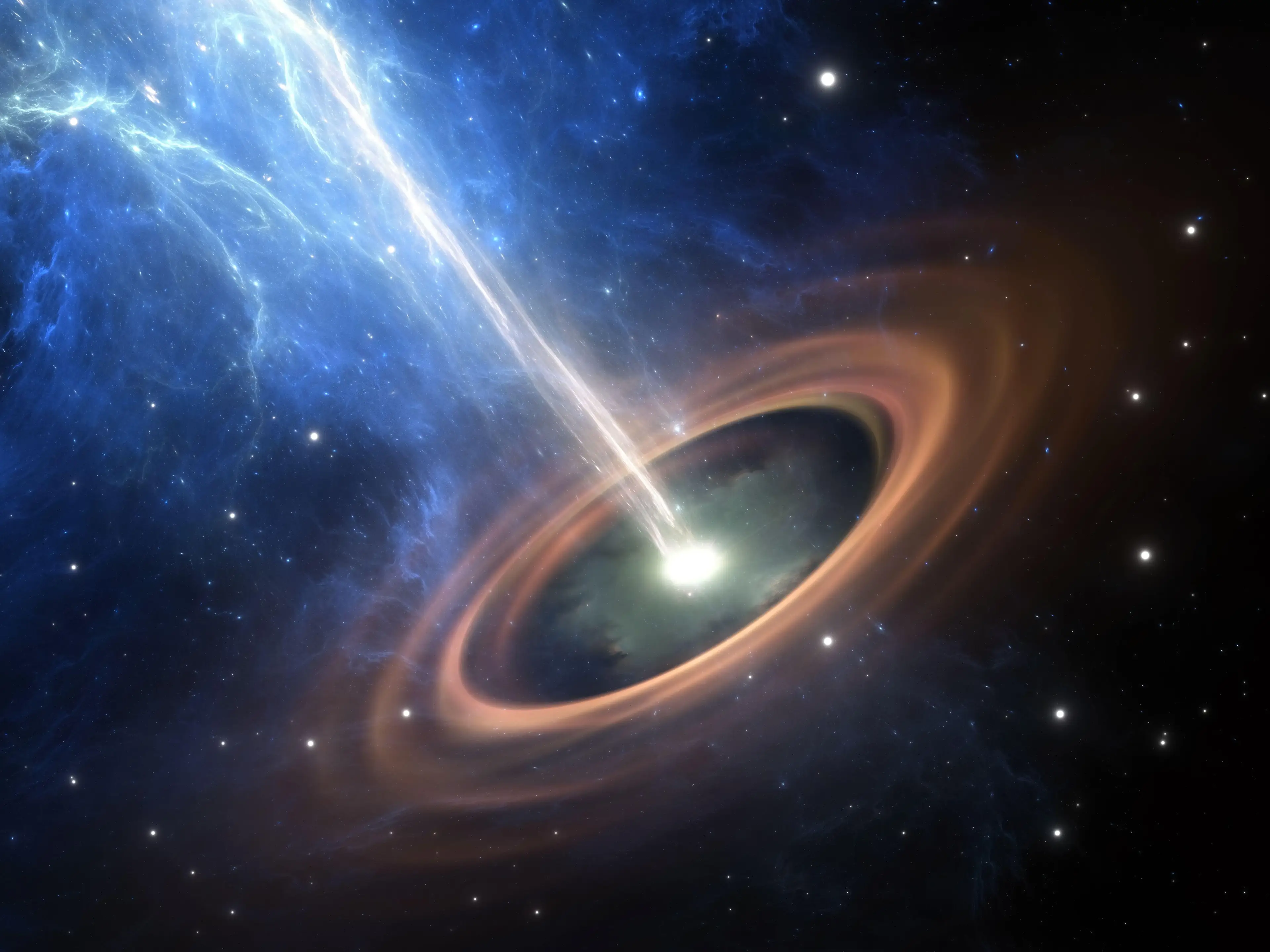
Now, that's all changed thanks to this new sonification.
"The sound waves were extracted in radial directions, that is, outwards from the center. The signals were then resynthesised into the range of human hearing by scaling them upward by 57 and 58 octaves above their true pitch," the release continued.
"Another way to put this is that they are being heard 144 quadrillion and 288 quadrillion times higher than their original frequency."
Having first sparked the interest of science buffs more than two decades ago, this new feat marks another step towards trying to make sense of what's beyond our sky.
Although, it's not the first black hole with a taste for music.
The space agency has also announced that a new sonification of another infamous black hole is also being released.
The black hole in Messier 87, or M87 gained A-lister status within the science community back in 2019, after the first release from the Event Horizon Telescope (EHT) project.
Examining data from other telescopes, scientists were able to once again create an audio representation of the cosmic phenomenon.
"The sonification scans across the three-tiered image from left to right, with each wavelength mapped to a different range of audible tones," NASA explains. "Radio waves are mapped to the lowest tones, optical data to medium tones, and X-rays detected by Chandra to the highest tones."
"The brightest part of the image corresponds to the loudest portion of the sonification, which is where astronomers find the 6.5-billion solar mass black hole that EHT imaged."
The project was led by the Chandra X-ray Center (CXC) and included as part of NASA's Universe of Learning (UoL) program, along with support from NASA’s Hubble Space Telescope/Goddard Space Flight Center.
Topics: NASA, Space, Science, Technology
 Chloe Jackson