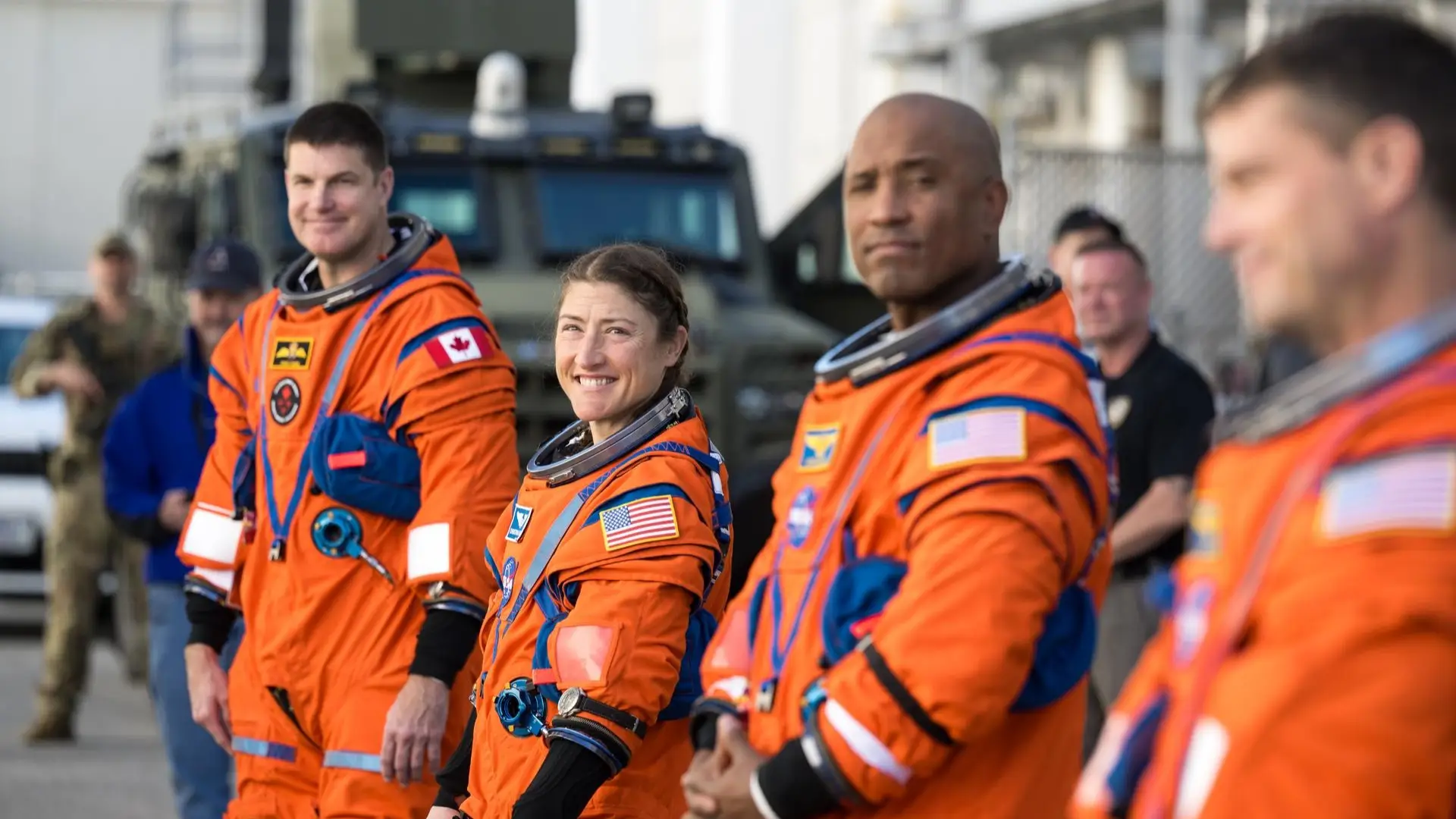
NASA astronauts given new sexual health warning ahead of Artemis II launch

NASA astronauts are readying themselves for the trip of a lifetime next week as the Artemis II mission prepares to launch but the four space adventurers will need to be wary of something before heading further than any human has gone before.
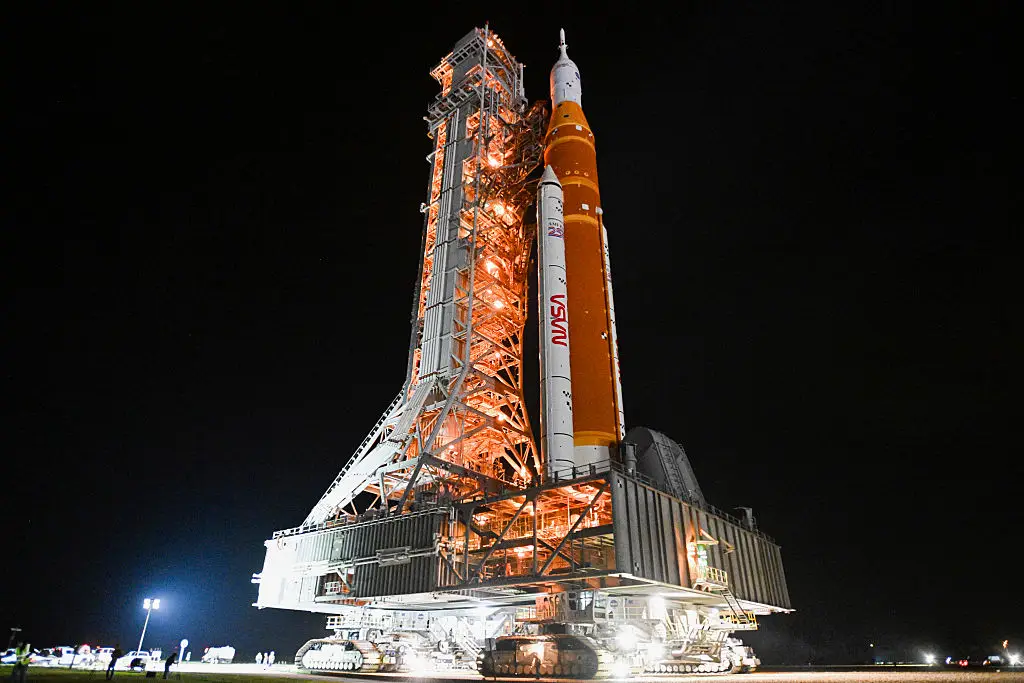
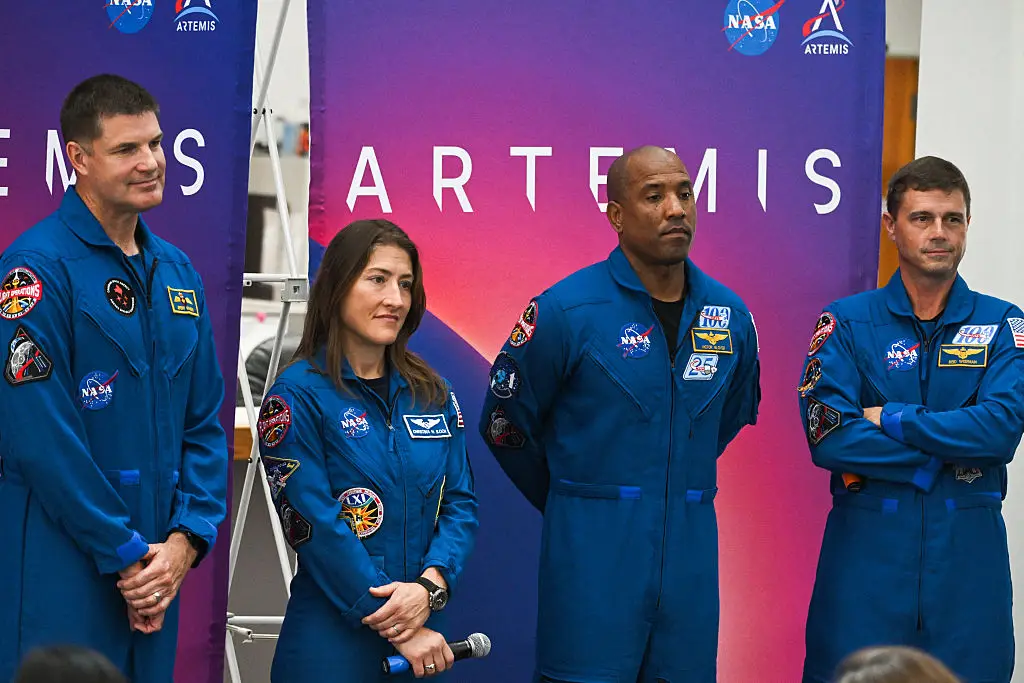
The quartet of Reid Wiseman, Victor Glover, Christina Koch, and Jeremy Hansen are in the final preparations for the mission now, with the rocket already on the launch pad as NASA aims to get things officially underway next Wednesday (1 April).
Naturally, the three NASA astronauts and one Canadian Space Agency astronaut will be well aware of all the risks involved with the history-making flight, with the return to Earth set to be particularly tricky as they will separate from the spacecraft as it bears the full brunt of the intense heat as they re-enter Earth's atmosphere.
Dealing with the lack of gravity in space can have an impact on our muscles, as we saw with the struggles of those astronauts who were stuck in space for nine months, but it turns out that it could also do some damage to the astronauts' sexual health.
Advert
Perhaps the biggest finding from the study was that human sperm can lose its navigational abilities in space.
Researchers at the University’s Robinson Research Institute, School of Biomedicine and Freemasons Centre for Male Health and Wellbeing recently carried out an investigation to see how conditions in space might influence sperm navigation, fertilisation and early embryo development.
The scientists essentially flipped a maze, which was designed to mimic the female reproductive tract, to make the sperm disorientated and it quickly became clear that even the strongest swimmers struggled to stay in the right lane.
Senior author Dr Nicole McPherson said: “This is the first time we have been able to show that gravity is an important factor in sperm’s ability to navigate through a channel like the reproductive tract.
“We observed a significant reduction in the number of sperm that were able to successfully find their way through the chamber maze in microgravity conditions compared to normal gravity.
“This was experienced right across all models, despite no changes to the way sperm physically move. This indicates that their loss of direction was not due to a change in motility but other elements.”
However, a boost from a little sex hormone known as progesterone helped the sperm to overcome things, so the astronauts could always seek some out if they do experience any negative effects upon their return to Earth.
“We believe this is because progesterone is also released from the egg and can help guide sperm to the site of fertilisation, but this warrants further exploration as a potential solution,” added Dr McPherson.
"We observed reduced fertilisation rates during four-to-six hours of exposure to microgravity. Prolonged exposure appeared to be even more detrimental, resulting in development delays and, in some cases, reduced cells that go on to form the foetus in the earliest stages of embryo formation,” said Dr McPherson.
“These insights show how complex reproductive success in space is and the critical need for more research across all early stages of development.”
So, it seems as if all four astronauts heading on the Artemis II mission might be at risk, although given they are all in their late 40s or early 50s, they are unlikely to be all that concerned with having any more children when they come back from the mission, which is expected to last around 10 days.
 James Moorhouse