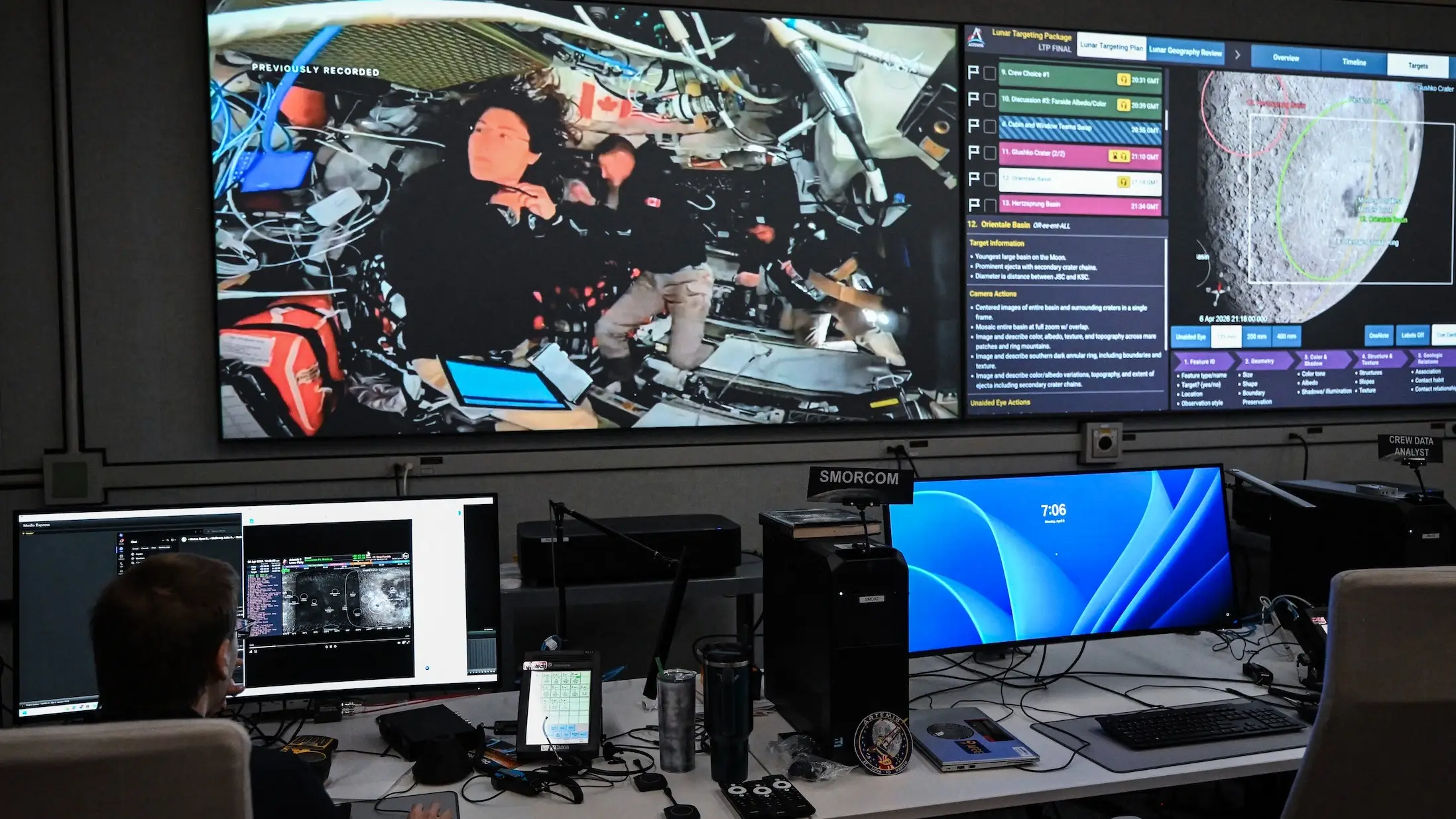
Artemis II loses contact with Earth after seeing parts of Moon ‘no human has ever seen’

Astronauts on board NASA's Artemis II test flight around the Moon have broken the record for human spaceflight's farthest distance from Earth.
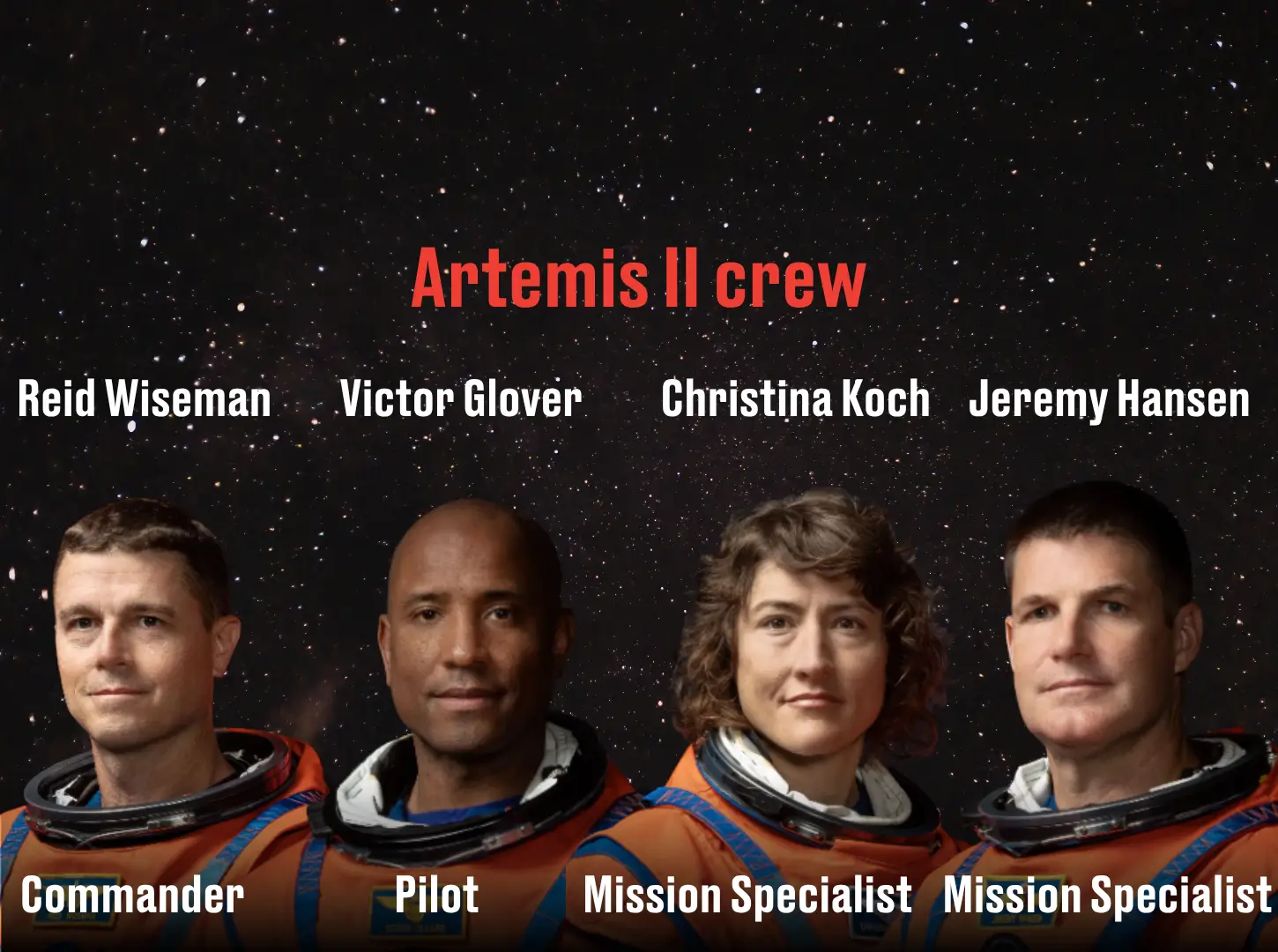
Reid Wiseman, Victor Glover, Christina Koch, and CSA astronaut Jeremy Hansen made history on Monday (6 April) after travelling 248,655 miles. It surpassed the distance previously set by the Apollo 13 mission in 1970.
The crew, however, lost contact with Earth for about 40 minutes when they flew around the Moon's far side in the Orion capsule.
Advert
"It is so great to hear from Earth again," Koch said after the blackout. "To Asia, Africa and Oceania, we are looking back at you.
"We hear you can look up and see the moon right now. We see you, too." Watch below:
Moments after breaking Apollo 13’s record, the astronauts asked permission to name two new lunar craters.
They called the first one 'Integrity', their capsule’s name, and the other 'Carroll', in honour of Commander Wiseman’s wife, who died of cancer in 2020.
Commander Wiseman was left in tears when Hansen put in the request to Mission Control before all four astronauts embraced in tears.
“Such a majestic view out here,” Commander Wiseman radioed once he regained his composure and started picture-taking.
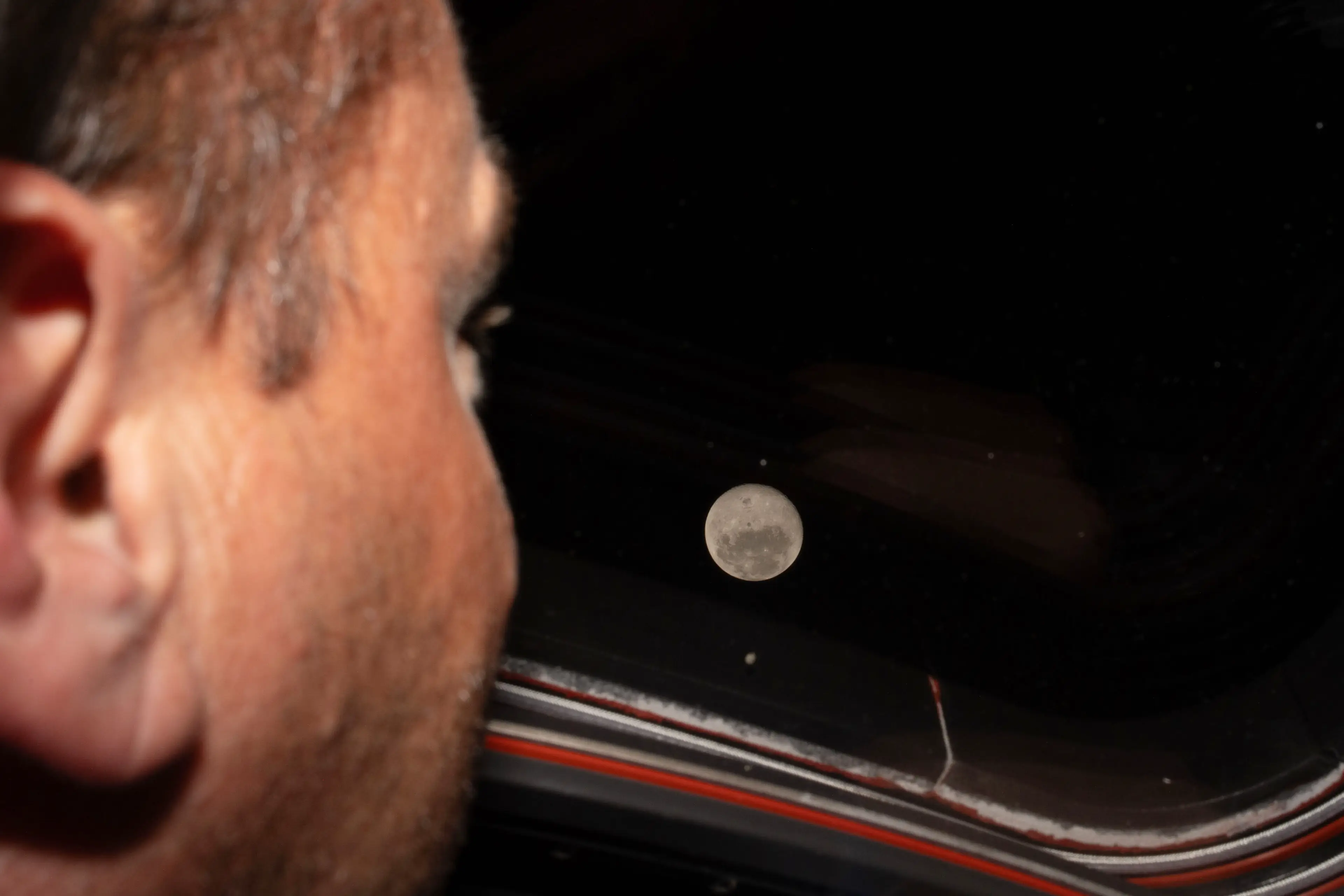
The astronauts called down that they managed to capture the Moon and Earth in the same shot, and provided a running commentary to scientists back in Houston on what they were seeing.
“Welcome to my old neighbourhood,” said Lovell, who also flew on Apollo 8, humanity’s first lunar visit.
“It’s a historic day and I know how busy you’ll be, but don’t forget to enjoy the view.”
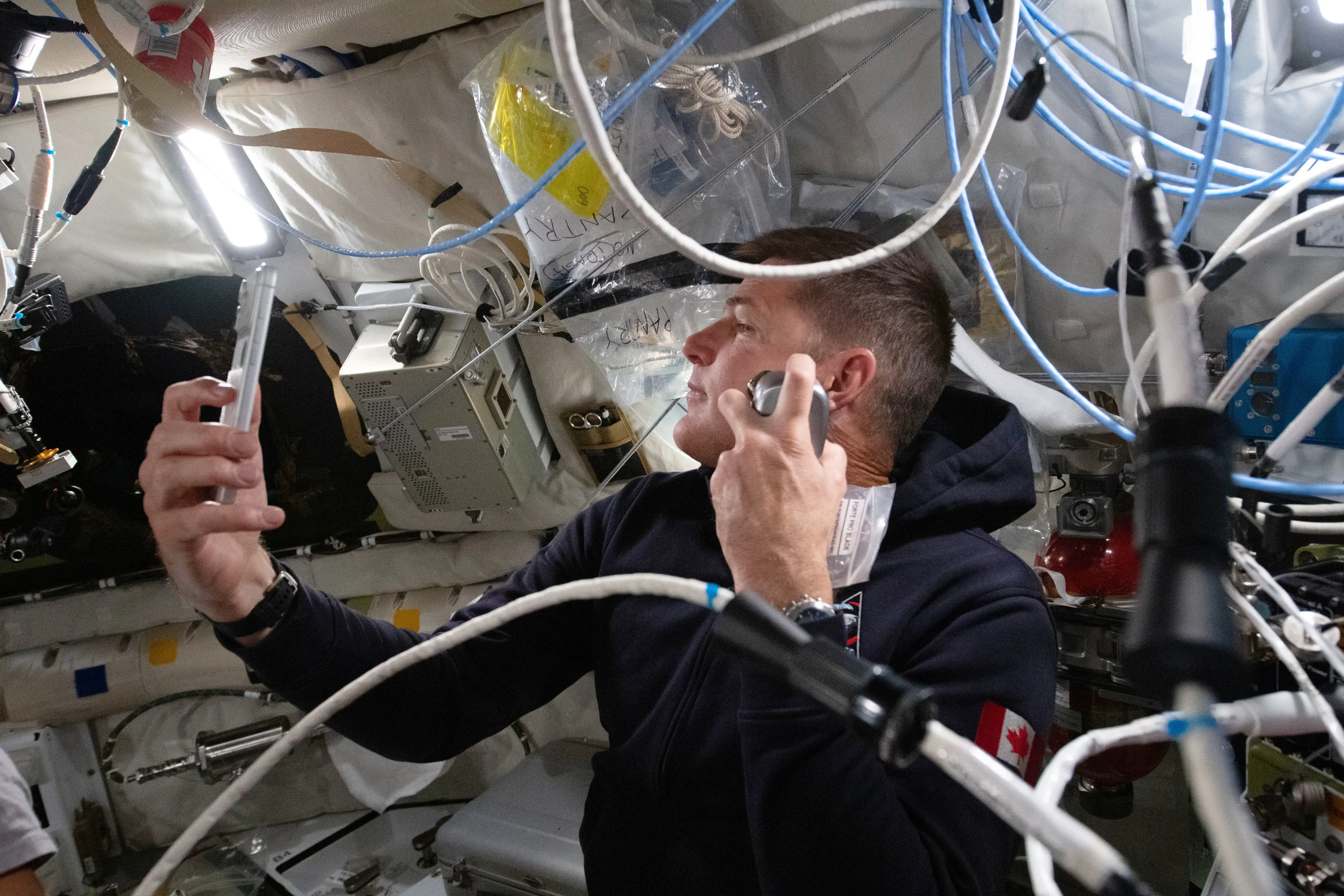
NASA said the crew is scheduled to 'splash down off the coast of San Diego at approximately 8:07 p.m. EDT (5:07 p.m. PDT) on Friday, April 10'.
"Following splashdown, recovery teams will retrieve the crew members using helicopters and deliver them to the USS John P. Murtha," the agency explained.
"Once aboard, the astronauts will undergo post-flight medical evaluations in the ship’s medical bay before traveling back to shore to meet with an aircraft bound for NASA Johnson."
Hansen, on board Orion, added: “From the cabin of Integrity here, as we surpass the furthest distance humans have ever travelled from planet Earth, we do so in honoring the extraordinary efforts and feats of our predecessors in human space exploration.
“We will continue our journey even further into space before Mother Earth succeeds in pulling us back to everything that we hold dear.
“But we most importantly choose this moment to challenge this generation and the next to make sure this record is not long-lived.”
Wild artefacts which have been brought along for the Artemis II mission
Several historical and unusual mementoes have managed to flag down a ride into space with the Artemis crew, continuing a long tradition stretching back to the 1960s. Here are just a few of the items on board the Orion:
Soil from 10 'Moon Trees'
The previous uncrewed Artemis I mission in 2022 flew several tree seeds out into space, which have since gone on to be planted and grown across 236 locations in the US.
Now, soil samples taken from around the roots of 10 of these 'Moon Trees' are on board the Artemis II, 'representing the full cycle of exploration: launch, flight, growth, and return to space again', NASA explains.
Memory card containing the names of millions of people
The SD card contains a ton of names from those who participated in the space agency's Send Your Name to Space campaign, which aimed to bring the public along for the mission.
According to NASA, the kit also includes 'a variety of flags, patches, and pins to be distributed after the mission to stakeholders and employees who contributed to the flight'.
Fabric from the plane used in the Wright Brothers’ first powered flight
On loan from Smithsonian’s National Air and Space Museum, a one-inch piece of muslin fabric from the historic 1903 flight is flying with the crew to make history once again over 120 years later.
After it touches back down on Earth later this week, the fabric swatch will be returned to the museum, where two other 1903 Wright Flyer swatches also live.
American flag
In true fashion, an American flag is travelling on board the Orion craft. But the 13-by-8-inch American flag is no ordinary flag, as it has a pretty impressive space resume, having previously shot up into space with STS-1 and STS-135, the first and last shuttle missions, as well as NASA’s first crewed test flight of SpaceX’s Crew Dragon spacecraft.
Flag originally bound for the cancelled Apollo 18 mission
Another flag is also strapped in for the Artemis II mission, but this time, unlike the American flag, it's finally making its long-awaited space debut, having originally been due to fly on NASA's cancelled Apollo 18 mission.
"The flag serves as a powerful emblem of America’s renewed commitment to human exploration of the Moon, while honouring the legacy of the Apollo pioneers who first blazed the trail," NASA explains.
Negative of a photo from the historic Ranger 7 mission
Launched on 28 July 1964, Ranger 7 made history at the time as the first US mission to successfully make contact with the lunar surface, managing to snap a staggering 4,308 high-res images of the Moon.
NASA explained that the 4-by-5-inch negative 'represents a major turning point in the race to the Moon that will be echoed today through the success of Artemis'.
 Anish Vij