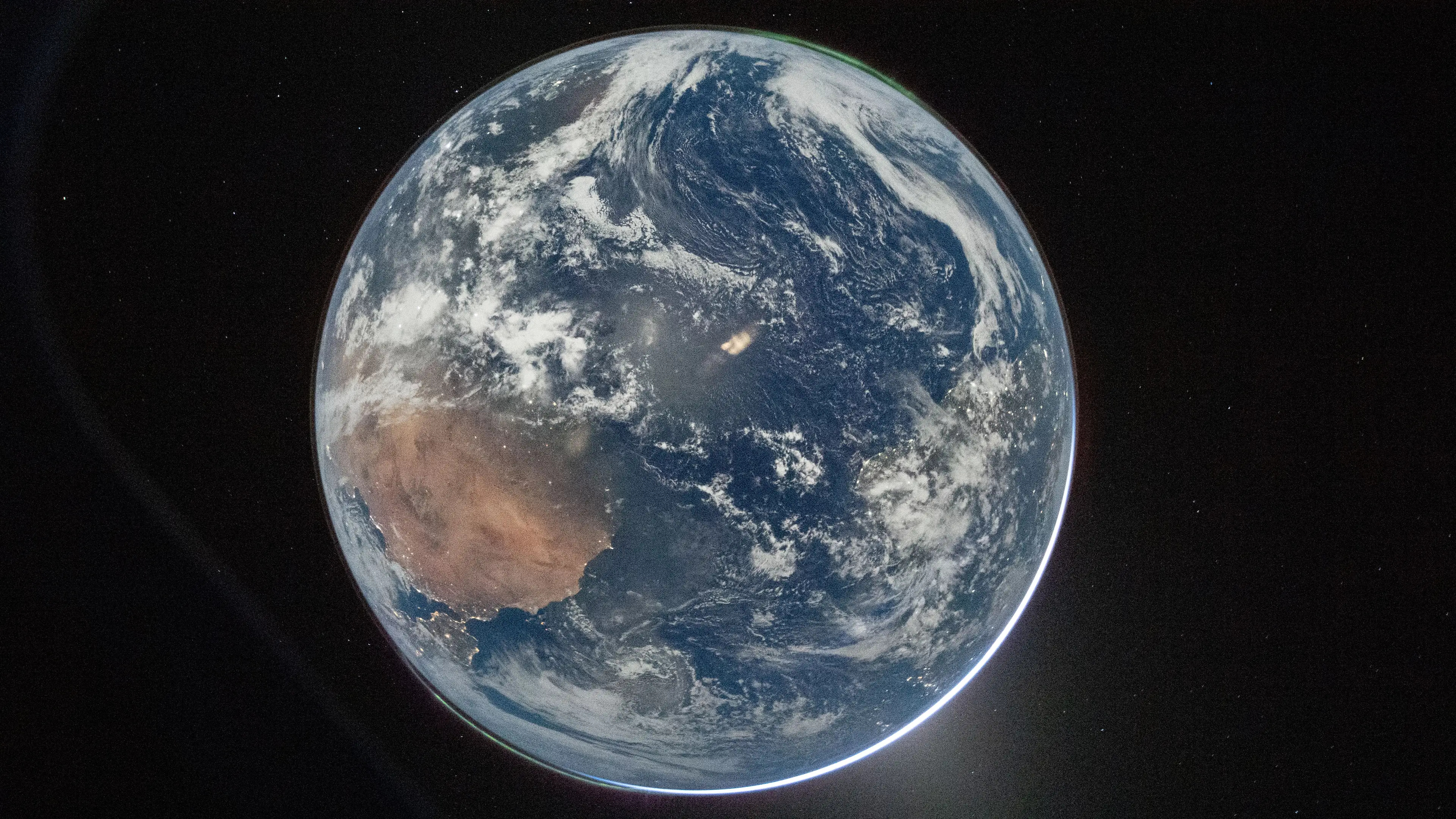
People have huge question as NASA release 'spectacular' image of Earth from Artemis II crew

The Artemis II crew have taken some 'spectacular' snaps of our planet while en route to the Moon - but people reckon they aren't a patch on the ones taken more than five decades ago.
Although the images are extraordinary in their own right, a host of space enthusiasts think that the shots captured by the Apollo 17 team back in 1972 look a lot sharper than the latest batch.
And given that we're now equipped with more advanced technology, people are struggling to make sense of why the photos from 54 years ago appear to be much more vivid.
Four astronauts - NASA's Reid Wiseman, Victor Glover and Christina Koch and Jeremy Hansen of the Canadian Space Agency - blasted off on Wednesday (1 April) for the 10-day mission onboard the Orion spacecraft.
Advert
They will test technologies needed for long-term lunar exploration and manned voyages to Mars, as well as hopefully capturing the best view of the Moon's dark side that has ever been recorded on camera.
The Artemis II crew have got a tough act to follow though, as the lunar travellers who paved the way for them 54 years ago managed to take some cracking photos of our planet.
Apparently, the view that the Artemis II astronauts had from the Orion spacecraft really was quite something, as they were 'glued to the windows' during the journey.
Hansen told mission control that the crew - who have been sent up with iPhones - had a 'beautiful view of the dark side of the Earth, lit by the Moon'.
Wiseman later said it was difficult to get a good shot of this though, adding: "It's like walking out back at your house, trying to take a picture of the Moon. That's what it feels like right now."
NASA released the first images that the team have obtained while making their way towards the Moon on Friday (3 April), showing how 'gorgeous our home looks from space'.
In a post on X, the US space agency compared one of the stunning images captured by the Artemis II crew to an iconic one which was captured by the Apollo 17 astronauts.
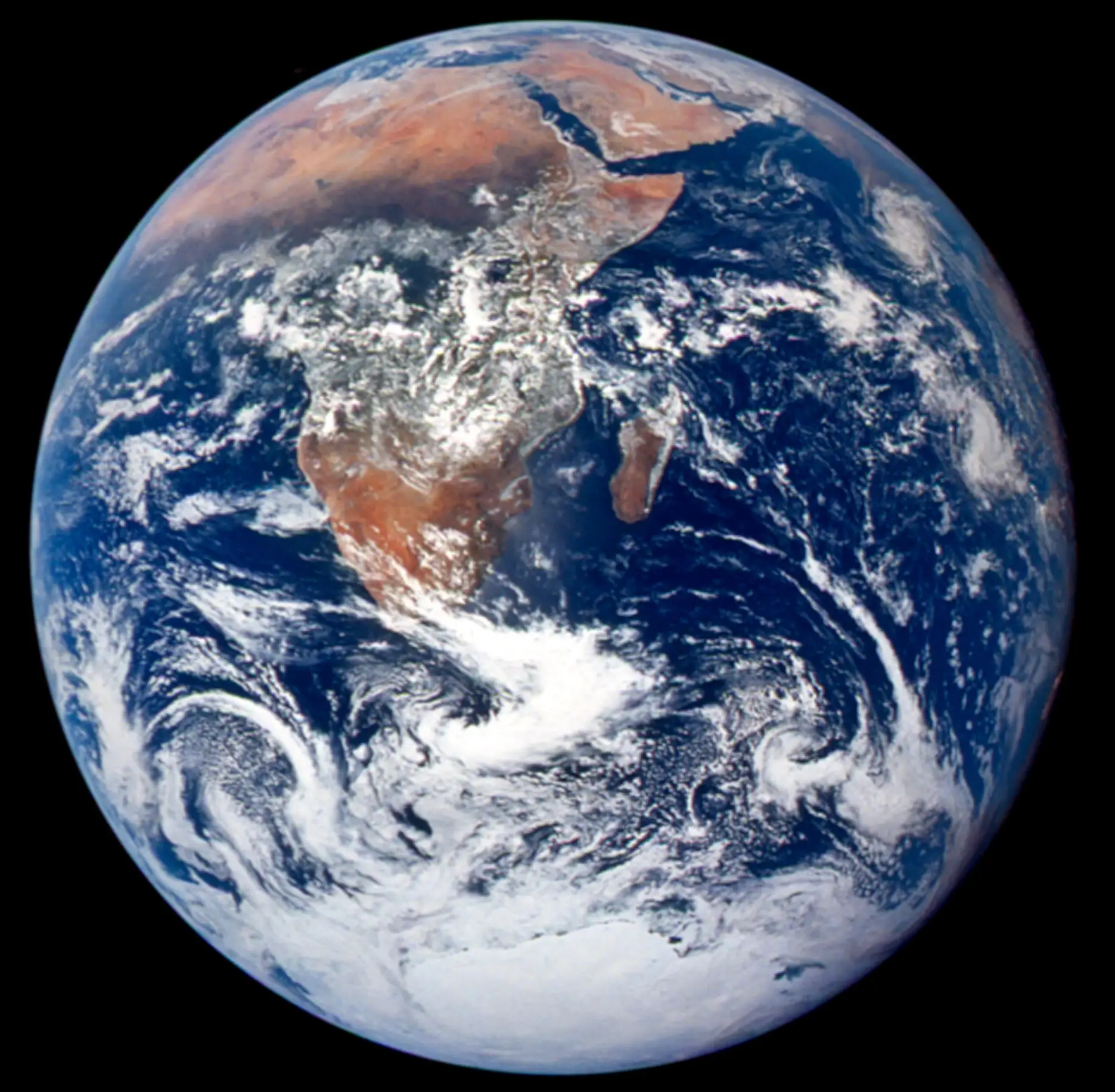
Known as 'The Blue Marble', the image taken more than 50 years ago by moon walker Harrison Schmitt is one of the most widely distributed photographic images in existence.
Hopefully, the same fate awaits the more recent one too, which has been named 'Hello, World'. Wiseman recreated the incredible photo from 1972 and each shows the South Pole facing upwards.
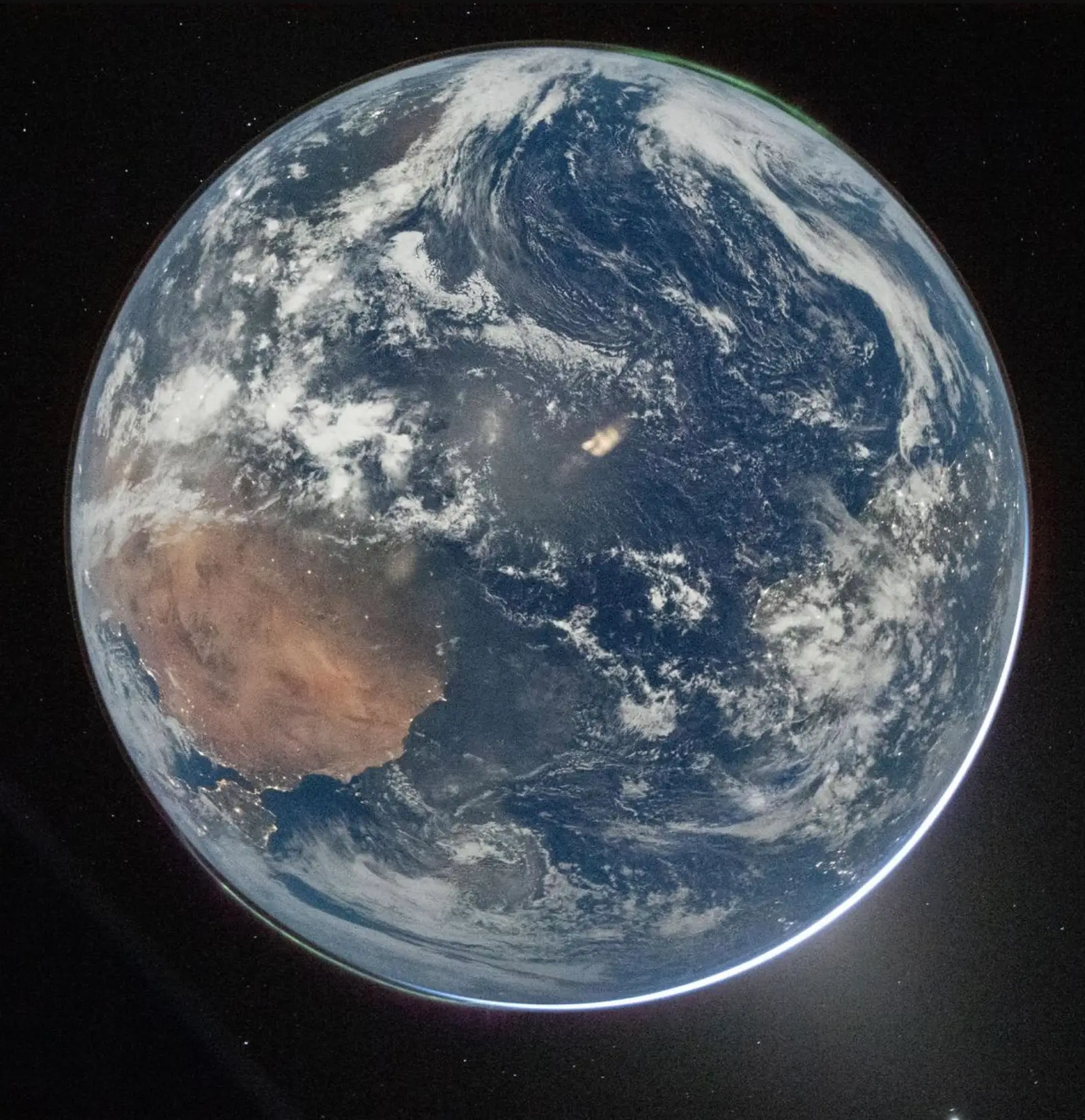
NASA said: "We’ve come so far in the last 54 years, but one thing hasn’t changed: Our home looks gorgeous from space!
"The left view is from the Apollo 17 crew in 1972 and the right was captured yesterday by the Artemis II crew."
After comparing the two snaps, social media users all raised the same complaint - the Earth looks a lot less brighter than it did before.
One person said: "I don’t know if it’s the picture quality or atmosphere, but it looks dull now."
Another asked: "Why does the one from 1972 looks better?"
A third wrote: "The old Earth image looks sharper while this new image looks dull. Camera quality or climate change?"
While a fourth chimed in: "What are we doing so wrong? The Earth looks pale. We are losing it."
Thankfully, a host of other users offered explanations for this visual difference, as one explained: "It's a photo of the dark side illuminated by the moon. It's been brightened. This is why you can see the borealis in it as well.'
A second added: "The side of the Earth photographed in 2026 appears to be in nighttime. Hence the arc of brightness at the bottom right."
While a third suggested: "Earth didn’t change - how we capture it did. The colour difference between the 1972 “Blue Marble” and modern Earth images comes down to technology.
"Apollo 17 used film cameras, which naturally boosted colour and contrast. Today, digital sensors, atmospheric correction, and colour calibration are used.
"Most modern images are also composites, not single shots. That’s why today’s Earth can look less 'vivid'."
To put it simply, the images look so different because of the lighting and because they were taken on different cameras...so don't worry, we're not losing our spark just yet.
David Melendrez, the lead for Orion capsule imagery integration at NASA, told National Geographic that the Artemis II crew are using handheld Nikon D5 DSLR cameras as well as iPhones.
Discussing the importance of the images they obtain of the Earth, he said: "When you see all the strife and the things that are going on in the world today, I think it’s really important to see us as a whole.
"You look at that picture - there's no borders in that picture, it's just all of us. I think that's one of the biggest things we can take out of this, is reminding everybody, everybody, that that's our home. And we all have to share it."
Personal items Artemis II astronauts have brought with them
Commander Reid Wiseman

Wiseman, a US Navy test pilot-turned-astronaut, is a single parent who is raising his two teenage daughters alone after he sadly lost his wife to cancer in 2020.
He's spoken to his children about the risks of the mission, with him saying to them while out on a walk: "Here's where the will is, here's where the trust documents are, and if anything happens to me, here's what's going to happen to you… That's part of this life."
Wiseman said he planned on taking a small notepad so that he can jot down his thoughts during the mission.
Mission specialist Christina Koch
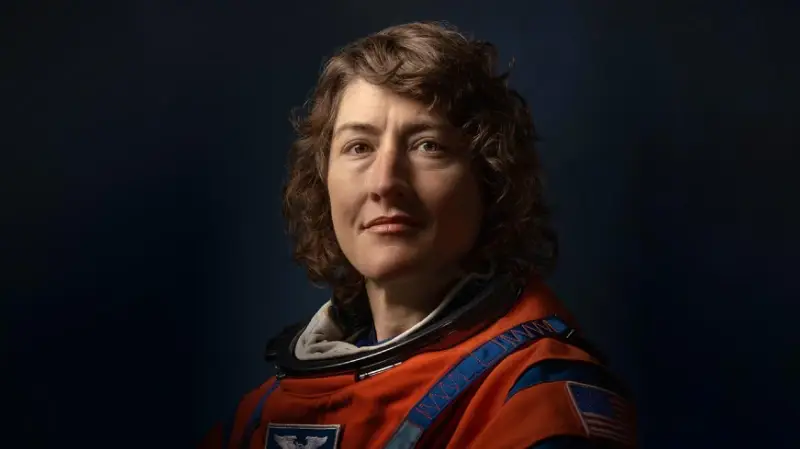
Koch, an engineer and physicist, is a woman who has made many incredible milestones in her life.
Not only has she set the record for the longest single spaceflight by a woman, spending 328 days aboard the International Space Station in 2019, but she's also taken part in the first-ever all-female spacewalk. And now, she's the first woman to ever travel to the moon and venture into deep space.
Koch is taking handwritten notes from people close to her for her personal item, which she has described as a 'tactile connection' to loved ones back on Earth.
Mission specialist Jeremy Hansen
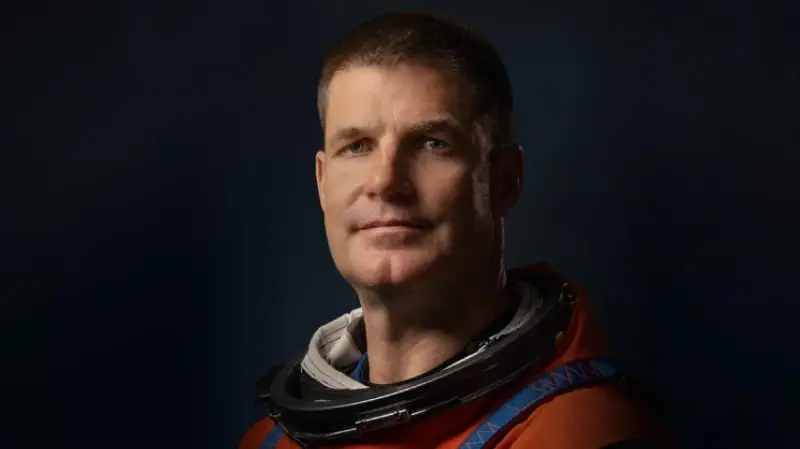
This is the former Royal Canadian Air Force fighter pilot and physicist's first time in space, making him the first Canadian to ever venture into deep space.
Hansen, who is married with three children, will carry four moon-shaped pendants for his wife and children, engraved with the phrase 'Moon and back' and set with their birthstones.
He will also be taking maple syrup and maple cookies on his lunar voyage, in true Canadian style.
Pilot Victor J Glover
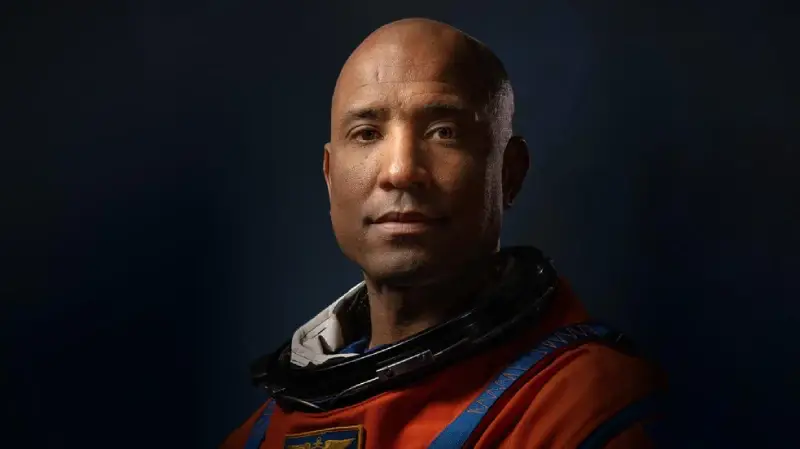
Glover, a former US Navy fighter pilot and test pilot who became a NASA astronaut in 2013, is setting a milestone of his own by being the first ever Black person to travel to the moon.
He is married with four children, and served as pilot of NASA's SpaceX Crew 1 mission, as well as spending nearly six months on the International Space Station as part of Expedition 64.
Already known as the most charismatic and 'sharply dressed' of the Artemis crew, Glover has said he will take on board with him a Bible, his wedding rings and family heirlooms, along with a collection of inspirational quotations compiled by Apollo 9 astronaut Rusty Schweickart.
Topics: NASA, Space, Science, World News
 Olivia Burke