
Artemis II commander made realisation about Earth when stepping into space for first time

The commander of Artemis II made a wild realisation when reflecting on his first ever spacewalk.
NASA astronaut Reid Wiseman stepped outside during his first spacewalk in 2014, and experienced a moment of clarity that most of us would never think of.
As a flight engineer on Expedition 41, he conducted spacewalks outside the orbiting International Space Station laboratory to carry out maintenance and upgrades.
Advert
"While spacewalking I realised something," he later wrote on X.
"I used to think I was scared of heights but now I know I was just scared of gravity."
Watch as he takes his first steps below:
Clearly on Earth, the fear of heights is linked to the possibility of falling. But in orbit, astronauts float by experiencing microgravity, meaning there is no sensation of weight pulling them downward.
But more than a decade after that first mission, Wiseman has been preparing for another historic journey as commander of Artemis II, NASA’s first crewed mission to travel around the Moon since the Apollo era.
On Wednesday (1 April), NASA launched its first manned Moon mission in over 50 years by sending a team of four astronauts deeper into space than any human has gone before.
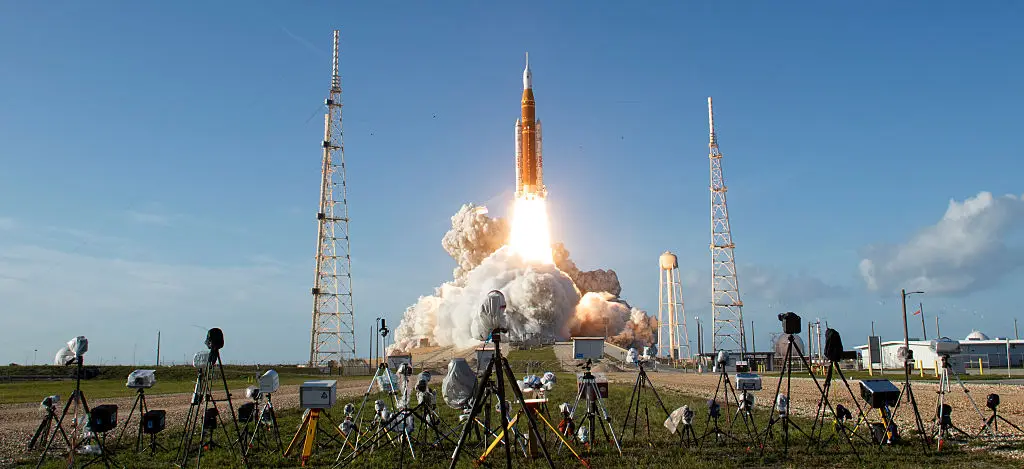
The crew members floated off in a 322-foot rocket and successfully launched from Cape Canaveral in Florida at 6.36pm local time.
It marks the start of a 10-day, 252,000 mile journey towards to the Moon, setting a new distance record for human spaceflight.
Instead of landing on the Moon, however, the Artemis II mission will perform a lunar flyby, helping prepare for future missions and eventual journeys to Mars.
NASA administrator Jared Isaacman said the crew were 'safe, they’re secure and in great spirits'.
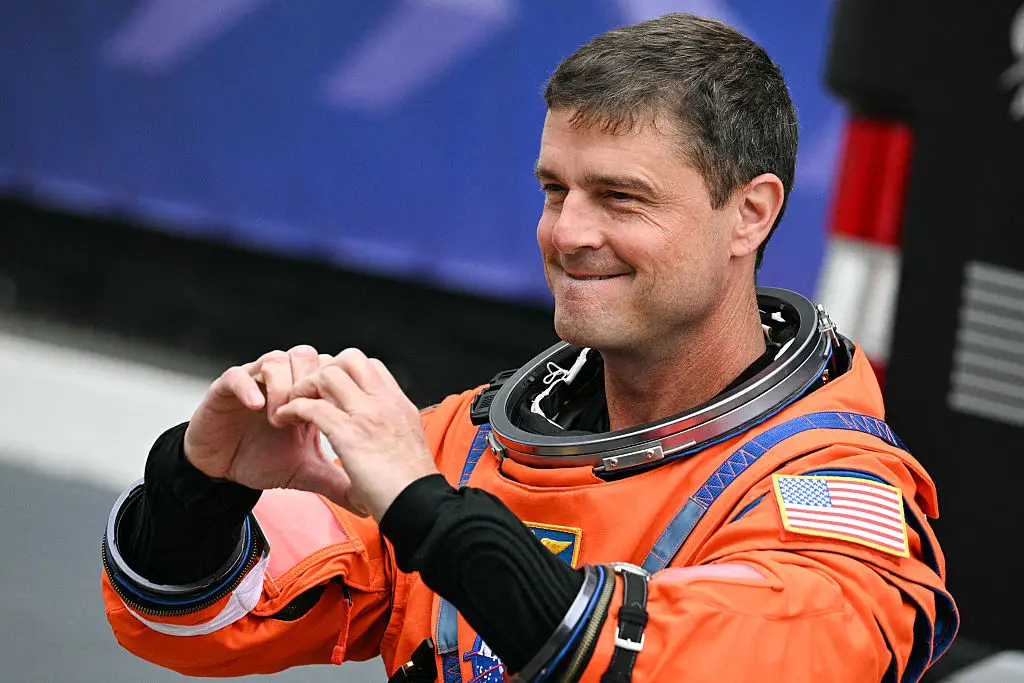
Commander Reid, meanwhile, hopes the mission will be forgotten in the future, as it would signify the success of Artemis and humanity’s expansion into the solar system.
"This is the first time we are going to send humans to the Moon and [have] humans in low Earth orbit. That is awesome. As humanity, we should take a brief moment to go: that is awesome," Wiseman said during a press conference.
"When I look at the future, when we talk about what is our legacy, I don’t want to look five years or 10 years in the future. I want to look 100 or 200 years in the future. Honestly, this is where I thought it may land wrong: I hope we are forgotten.
"If we are forgotten, then Artemis has been successful. We have humans on Mars, we have humans on the moons of Saturn, we are expanding in the Solar System. We have robotic precursor missions going on, we have spacecraft. Maybe we invented something we never dreamed of and inspired some kid somewhere; and that is the footnote. 'He went and inspired Susie or Johnny to do what they did'. That would be magical."
How many moon landings have there been?
Many have long believed that NASA's historic 1969 moon landing was the only time that mankind has set foot on the moon.
But this is far from the case.
Following the historic feat made by astronauts Neil Armstrong and Edwin 'Buzz' Aldrin, who were the first human beings to walk on the moon, 22 American astronauts made the trip between 1969 and 1972.
There have been six US crewed moon landings - Apollo 11, 12, 14, 15, 16, and 17 - resulting in 12 people walking on the lunar surface and a further 12 orbiting.
20 successful soft landings on the moon have also come from countries such as the Soviet Union, the US, China, India, and Japan, as well as countless robotic missions.
Although a human hasn't been on the lunar surface since the 1970s, there continues to be regular crewed missions to space.
Which country landed on the moon first?
It goes without saying that the US has certainly led the space race over the last few decades, with NASA successfully launching the first ever crewed moon landing on 20 July, 1969.
However, the Soviet Union was the first country to achieve a soft landing with an unmanned probe, Luna 9, on 3 February, 1966.
But as it stands, the US remains the only nation to have successfully landed humans on the moon, with 12 astronauts visiting and 12 astronauts orbiting between 1969 and 1972.
Why hasn't man landed on the moon since 1972?
NASA's 1972 Apollo 17 mission was the last crewed mission to the moon, which saw Commander Gene Cernan and Lunar Module Pilot Harrison Schmitt walk the lunar surface for the final time.
But why hasn't NASA gone back since then?
The answer is money, according to Royal Museums Greenwich.
It should come as no surprise to learn that going to the moon is very expensive - originally, John F. Kennedy’s government had estimated a $7 billion cost to travel to the moon, and in the end, it came to around $20 billion.
With the combination of less national support and a shift in focus on missions, previous NASA administrator Jim Bridenstine described how the future of lunar travel is about a sustained presence on the Moon, saying: "This time when we go to the Moon we're going to stay. That's what we're looking to do."
 Anish Vij