Artemis II crew capture something ‘unbelievable’ in 'spectacular' new image of Earth

The Artemis II mission marks the first time NASA has sent astronauts to the moon since the Apollo 17 mission back in 1972.
And the four crew onboard the Orion spacecraft are currently more than halfway there after taking off on Wednesday (1 April).
Once they successful completed a trans-lunar injection burn in the early hours of yesterday morning, the astronauts were taken out of Earth orbit and given an incredible view of our planet.
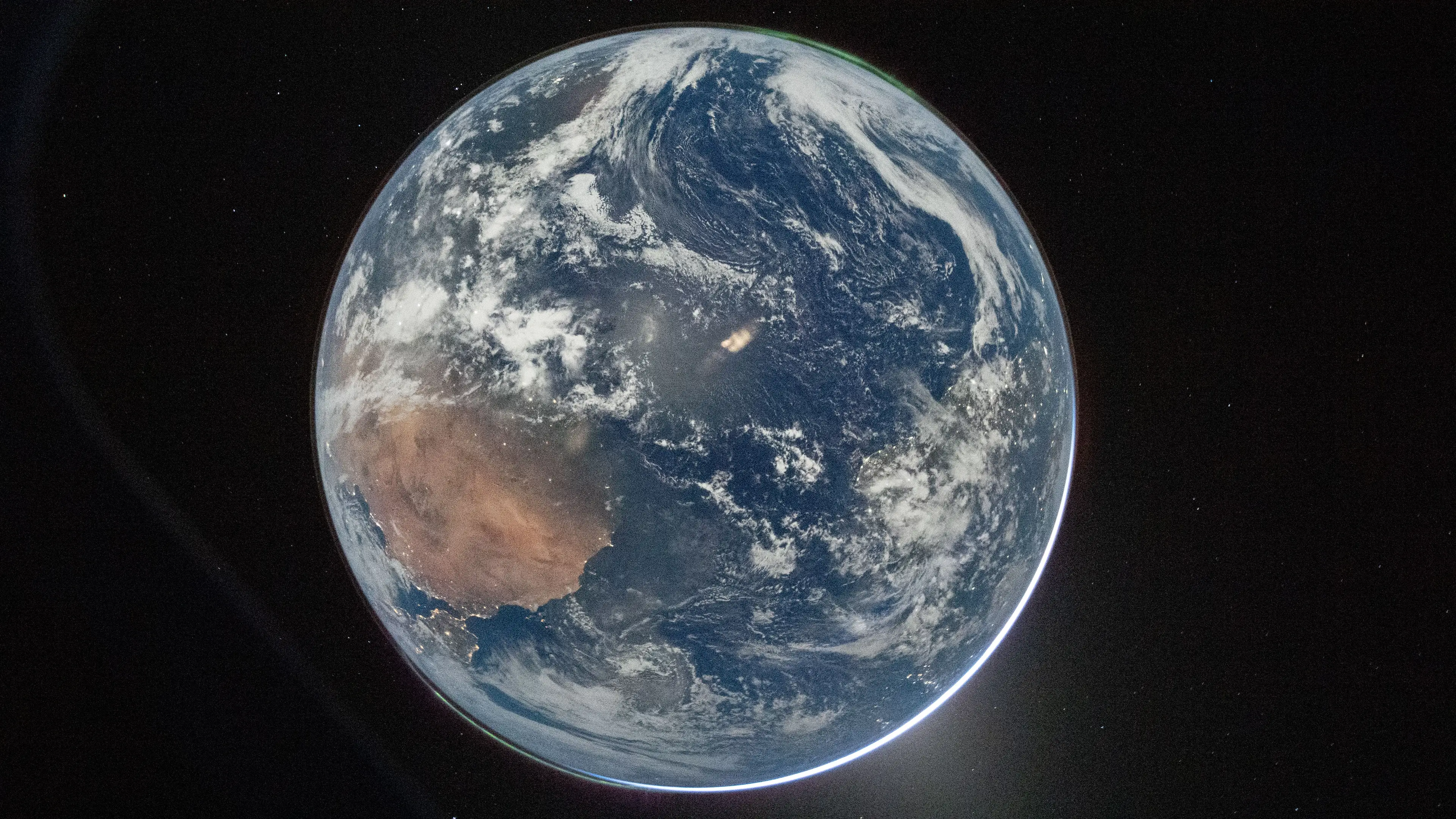
Commander Reid Wilson then snapped some ‘spectacular’ images of Earth with the incredible Hello, World photo showing something that’s almost ‘unbelievable’ to comprehend.
Advert
While there’s a bit of confusion over the lighting and just what we’re even looking at, the amazing photo shows the aurora at both of the Earth’s poles.
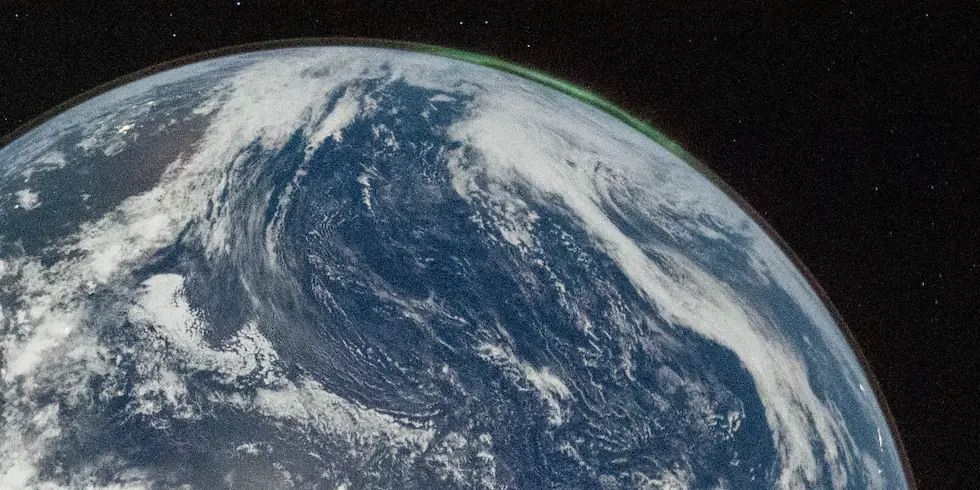
Yep, if you look closely, you can see the glowing green at the north and south of the planet.
“Damn even the Aurora Borealis is visible,” one user wrote on X.
“Wow!” another wrote, “you can see the aurora borealis!”
“Unbelievable, can see green Northern (Aurora Borealis) and Southern (Aurora Australis) lights,” a third posted.
Although, the picture does basically show the Earth upside down, leading to some confusion over which aurora is which as people wrongly pick them out on social media.
Users were quick to correct just what the green glow is in the top right of the already viral picture: “It’s actually aurora australis because it’s on the south pole :] the image is upside down.”
NASA included in its description: “NASA astronaut and Artemis II Commander Reid Wiseman took this picture of Earth from the Orion spacecraft’s window after completing the translunar injection burn. There are two auroras (top right and bottom left) and zodiacal light (bottom right) is visible as the Earth eclipses the Sun.”
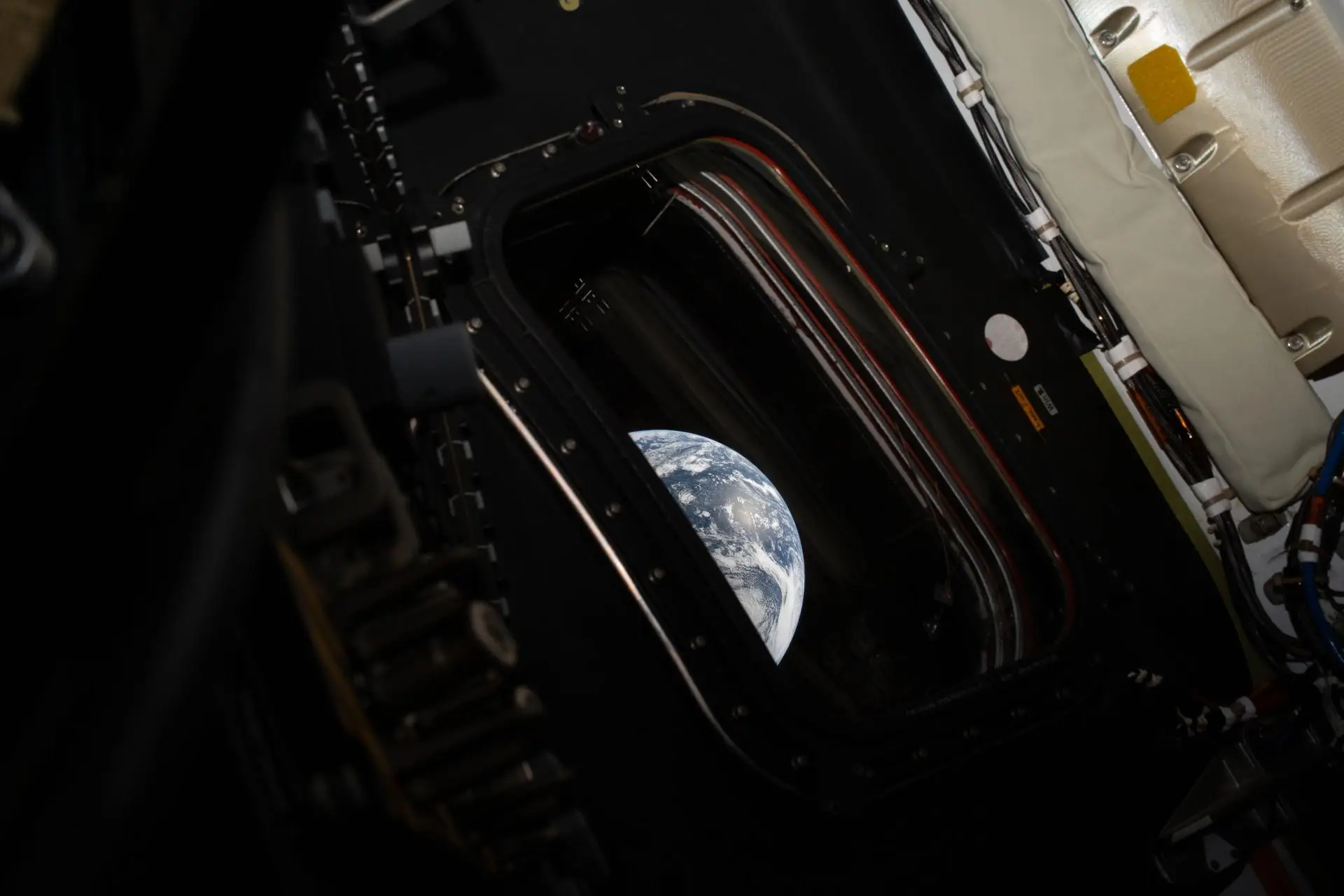
Referring to the image, Lakiesha Hawkins, Nasa’s acting deputy associate administrator for exploration systems development said: “It’s great to think that, with the exception of our four friends, all of us are represented in this image.”
Wiseman said that when the Earth came into this incredible view, the crew were ‘glued to the windows’ as they began snapping photos.
Using his incredible image, NASA was able to take a side-by-side comparison of the view of Earth between Artemis II and Apollo 17 back in 1972.
"We've come so far in the last 54 years, but one thing hasn't changed: our home looks gorgeous from space!" it wrote.
Artemis II timeline: When will the crew reach the Moon?
After completing the translunar injection burn, the Artemis II crew have broken free of Earth’s gravity and are now on course for the Moon.
They are set to travel 250,000 miles from Earth, further than any human has ever gone before.
But what are the key milestones over the next few days, and what should we look out for back on Earth?
Friday 3 April - Saturday 4 April
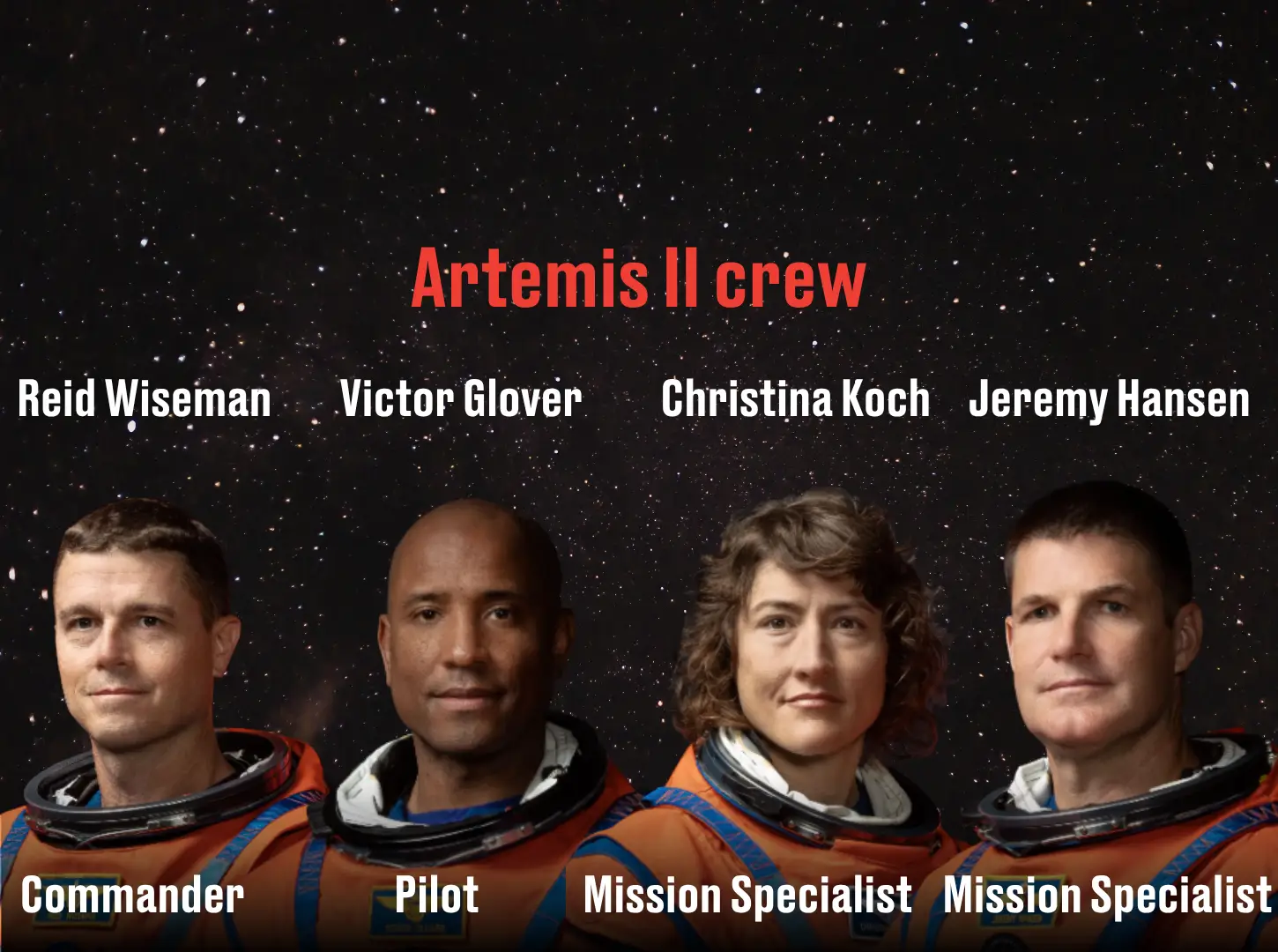
While the rest of us are enjoying a four-day weekend, astronauts Reid Wiseman, Victor Glover, Christina Koch and Jeremy Hansen will be hard at work prepping for their Moon fly-by.
They’ll be testing radio communications, and most importantly for us, taking lots of pictures out of the window of their spacecraft.
So expect some stunning photographs of the Earth and the Moon in deep space.
Sunday 5 April
As Brits tuck into their Easter Sunday roast dinners, it’s an important day for the Artemis II crew.
This is when they’ll enter the lunar sphere of influence, which means the tug of the Moon’s gravity is stronger than Earth’s.
The crew will also be testing their spacesuits to make sure they’re in tip-top shape for re-entry next week.
Monday 6 April
This is the big one! The Artemis II crew will pass around the far side of the Moon, the furthest from Earth anyone has ever gone before.
Commonly dubbed the dark side of the Moon - it isn’t actually dark and actually gets more sunlight than the side we do see.
It’s called this because, thanks to something called tidal locking, the same side of the Moon is always facing Earth, so we never get to see the other one.
The Artemis II crew will spend the day taking photographs of the lunar landscape, and there will be 40 mins where they will lose contact with Earth - which is sure to be squeaky bum time for the folks at NASA.
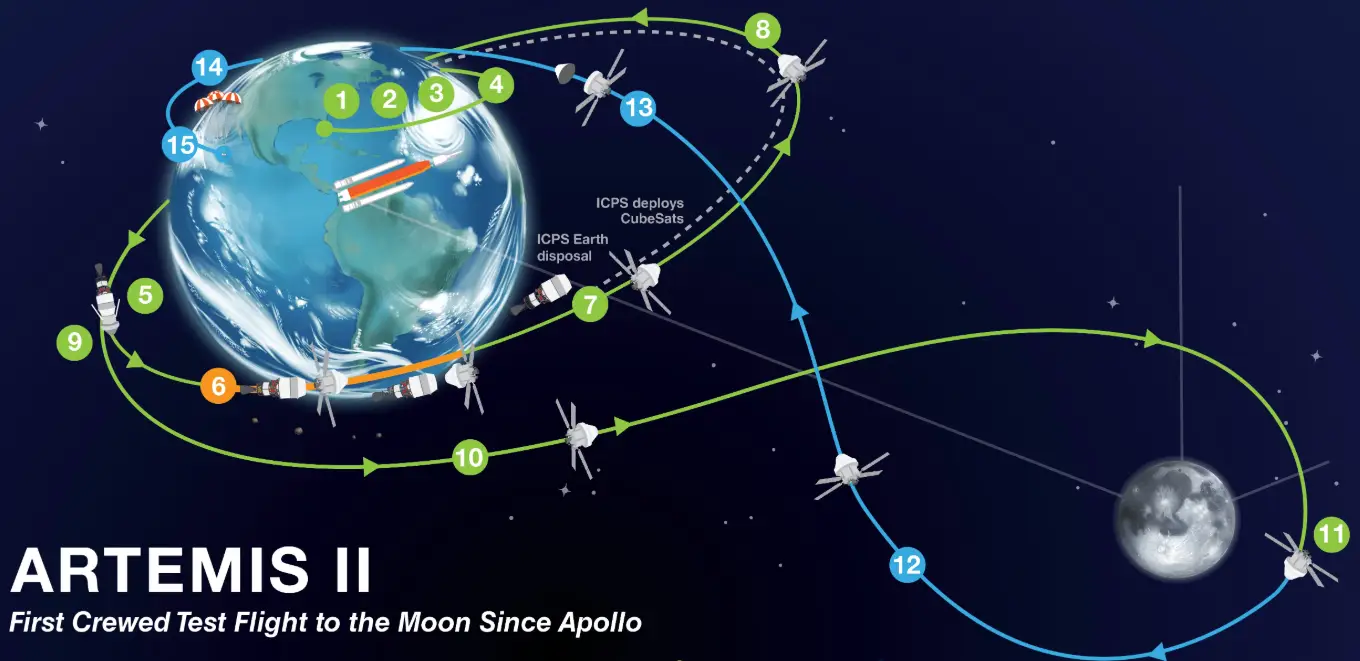
Tuesday 7 April - Thursday 9 April
As we grudgingly head back to work, the astronauts begin their return journey to Earth.
Tuesday is the Artemis II crew’s day off after a full-on few days - though you have to imagine entertainment is scarce in the Orion spacecraft. No Netflix, unfortunately.
On Wednesday, the crew will practice building a radiation shelter, which would be able to shield them in the event of solar flares, test compression garments which should prevent dizziness on the return to Earth, and have a go at manually piloting the spacecraft.
Friday 10 April
The Artemis II crew will be back on Earth in time for the weekend. This is the diciest section of the mission, with the Orion spacecraft exposed to temperatures of up to 1,650°C.
Once safely back in Earth’s atmosphere, parachutes will deploy and they’ll land in the Pacific Ocean off San Diego, where NASA and the US Navy will be ready to pick them up.
 Jess Battison