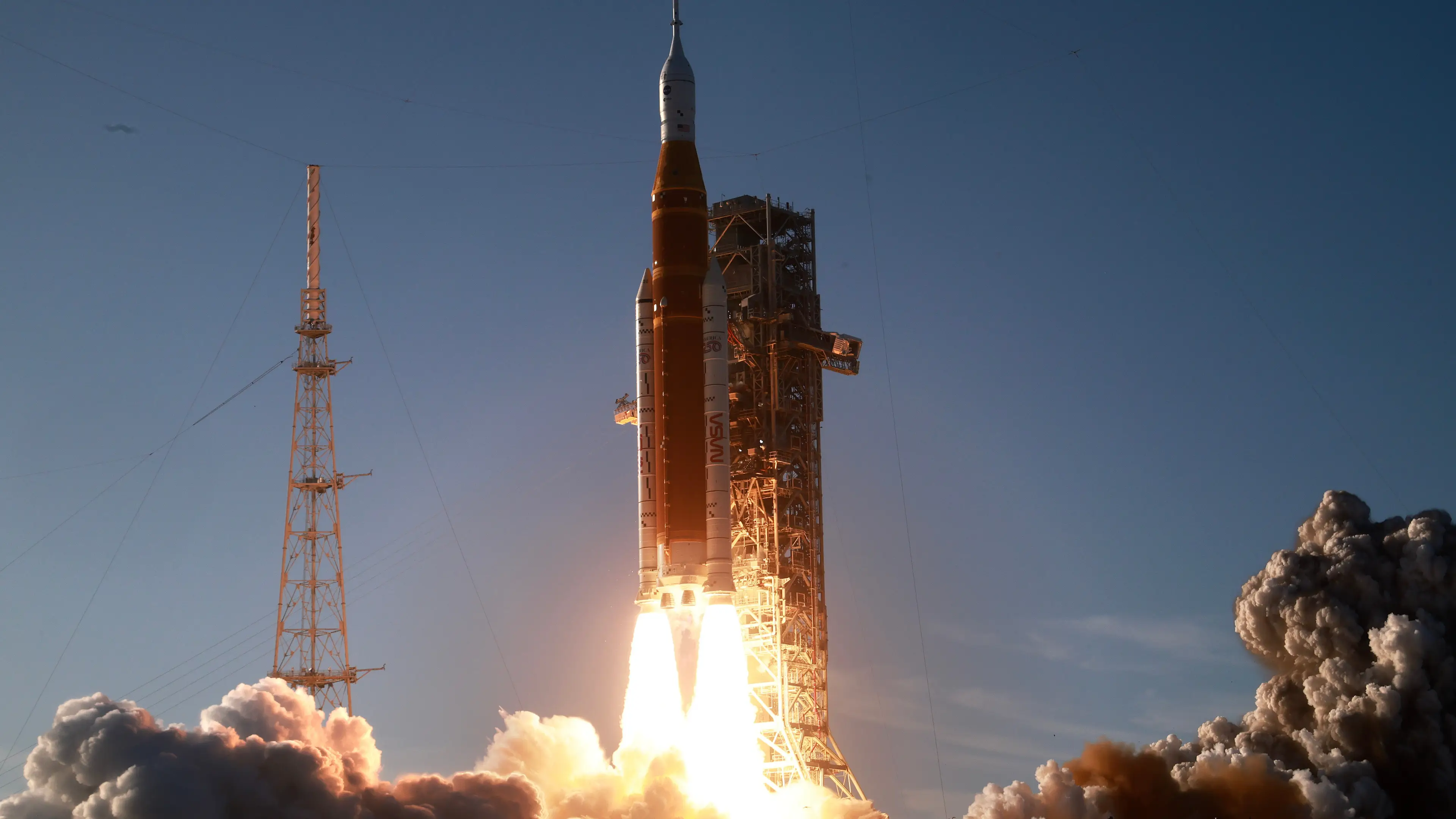
Artemis II mission could be about to end moon landing conspiracy for good

The Artemis II crew have had their first glimpse of the far side of the Moon as their mission continues successfully.
Things have largely gone very well with a couple of exceptions as far as the toilet is concerned, and the astronauts said that laying eyes on the far side of the Moon was a 'spectacular thing' to do.
While it's often poetically referred to as the 'dark side of the Moon', there is light shed on it and the astronauts of Artemis II will be able to see the details of the surface.
There have even been suggestions that their capsule might also be able to spot traces of the Apollo Moon landings, which would essentially prove that all the people who said the Moon landing was faked were wrong.
Advert
It's already in the realms of conspiracy nutjob territory and the people who are certain we never managed to land on the Moon are unlikely to start paying attention to the facts now, but you never know.
As for what they'll see on the other side of the Moon, Dr Megan Argo, Senior Lecturer in Astrophysics at the University of Lancashire explained to LADbible that they'll get a good view of the South Pole Aitken Basin, one of the largest observable impact craters in the solar system.
She said: "That's the relic of an enormous impact where an asteroid hit the moon's surface billions of years ago, and since then there's been lots of further impact cratering on the surface.
"But this is the first time that human eyes will ever have actually seen that impact basin.
"It's a significant one because again, it really is a region that really helps us understand the history of the evolution of the Moon."
Dr Argo explained that the Artemis II crew will be much further away from the far side of the Moon than the astronauts on board Apollo 13, so while they won't get as close a look they'll be able to see the whole side.

Artemis II timeline: When will the crew reach the Moon?
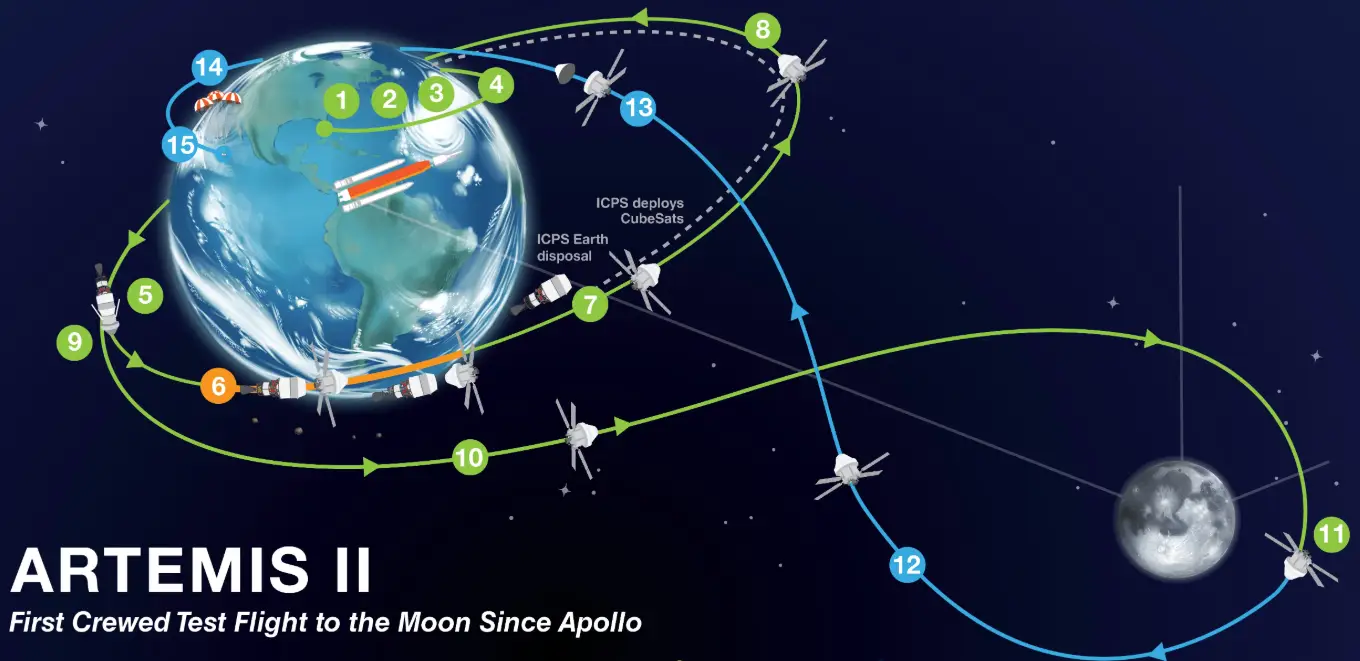
Sunday 5 April
As Brits tuck into their Easter Sunday roast dinners, it’s an important day for the Artemis II crew.
This is when they’ll enter the lunar sphere of influence, which means the tug of the Moon’s gravity is stronger than Earth’s.
The crew will also be testing their spacesuits to make sure they’re in tip-top shape for re-entry next week.
Monday 6 April
This is the big one! The Artemis II crew will pass around the far side of the Moon, the furthest from Earth anyone has ever gone before.
Commonly dubbed the dark side of the Moon - it isn’t actually dark and actually gets more sunlight than the side we do see.
It’s called this because, thanks to something called tidal locking, the same side of the Moon is always facing Earth, so we never get to see the other one.
The Artemis II crew will spend the day taking photographs of the lunar landscape, and there will be 40 mins where they will lose contact with Earth - which is sure to be squeaky bum time for the folks at NASA.
Tuesday 7 April - Thursday 9 April
As we grudgingly head back to work, the astronauts begin their return journey to Earth.
Tuesday is the Artemis II crew’s day off after a full-on few days - though you have to imagine entertainment is scarce in the Orion spacecraft. No Netflix, unfortunately.
On Wednesday, the crew will practice building a radiation shelter, which would be able to shield them in the event of solar flares, test compression garments which should prevent dizziness on the return to Earth, and have a go at manually piloting the spacecraft.
Friday 10 April
The Artemis II crew will be back on Earth in time for the weekend. This is the diciest section of the mission, with the Orion spacecraft exposed to temperatures of up to 1,650°C.
Once safely back in Earth’s atmosphere, parachutes will deploy and they’ll land in the Pacific Ocean off San Diego, where NASA and the US Navy will be ready to pick them up.
Topics: Space, NASA, Science, Conspiracy Theory
 Joe Harker