Sobering explanation behind why people in these three countries barely get cancer

In a time where we're all increasingly obsessed with our bodies and our health, it's no surprise that our diets are being studied so closely.
If you dare to seek advice on what you should be eating online, then you'll likely come across a mixture of vegan diets or carnivore diets, depending on your particular algorithm.
Doctors and scientific experts are probably the only people we should be listening to, as well as ourselves and our own bodies, when it comes to deciding what to eat and drink.
Many young people are moving away from alcohol and trying to eat more natural foods, and it's no surprise given the rapid rise of cancers and chronic illnesses among young people, which has been linked with a diet that is said to be worse for the human body than 'smoking'.
Advert
One would assume that people living in an affluent country such as the US would have access to the best foods and diets, but the recent explosive diarrhoea outbreak from 'lettuce' suggests that that is not alway the case.
In fact, it's stereotypically poorer countries who seem to boast the lowest cancer rates in the world, which is a question that Steven Bartlett posed to cancer expert Thomas Seyfried on the latest episode of his Diary of a CEO podcast.
Steven Bartlett asked: "High-income countries like Australia, New Zealand, and the United States have the highest rates of cancer. Countries like Niger, Gambia, Nepal consistently rank at the very bottom. Why is that?
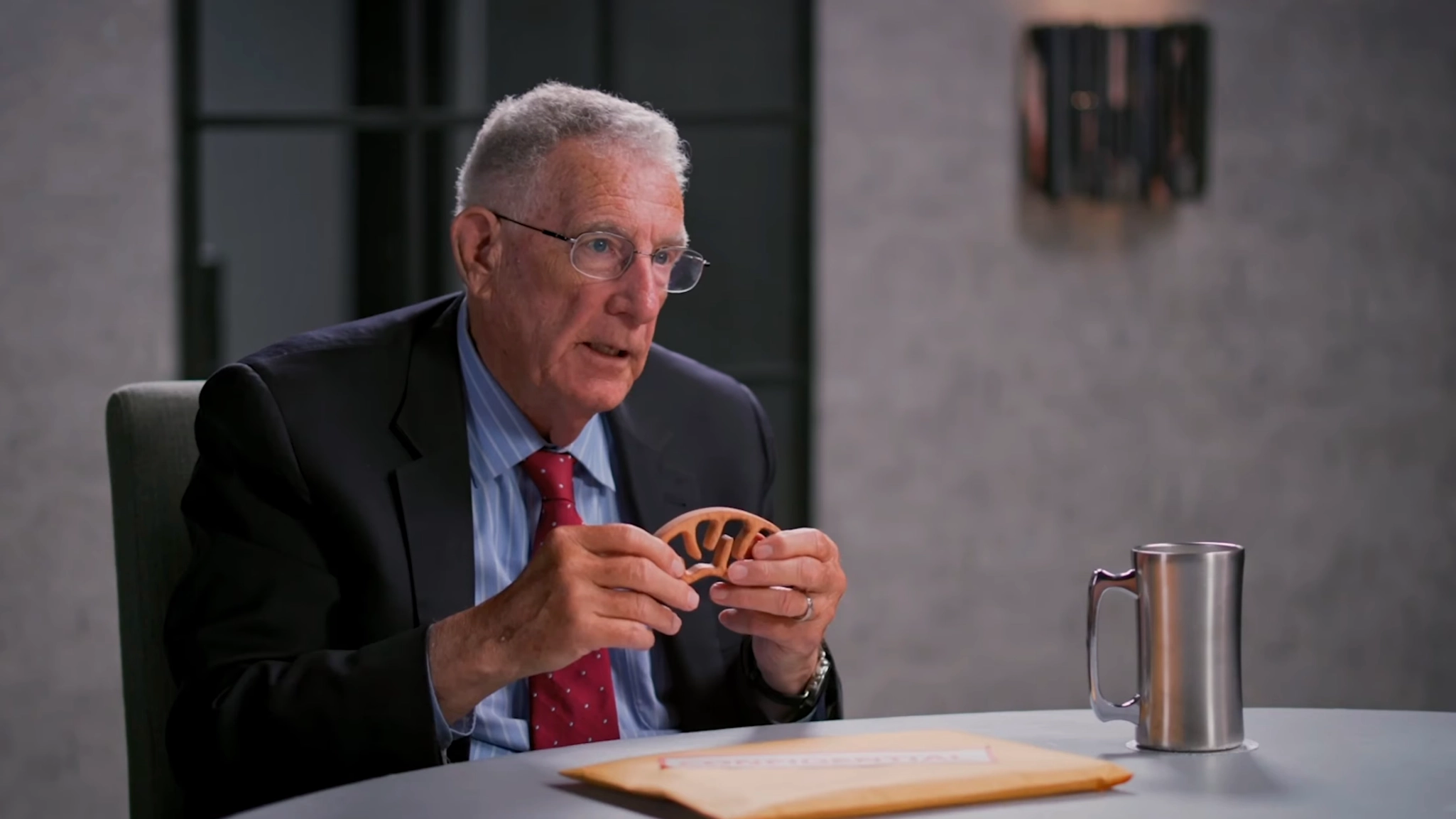
Seyfried, a professor of biology at Boston College, replied: "It's because of our technology. We are still Paleolithic man and our biology has allowed us to store energy efficiently because of times of famine.
"But in diets and lifestyles and the way we are today, exposure to carcinogens and whatever, we chronically damage this (he holds up a replica) organelle. And you can elicit dysregulated cell growth as the result of that.
"This is what Albert Schweitzer found, the famous humanitarian physician. He was specifically looking for cancer in African tribes.
"Paleolithic man, our ancestors from 500,000 years ago. Or modern men, like you said, in these countries, living according to traditional ways, with minimal interference from modern diet and lifestyle issues, have lower amount of cancer in general. What are these guys doing? Well, they have a lot of exercise. They're eating all organic foods. They're not under the same kind of stress or exposure to chemicals that modern societies have.
If you can keep your mitochondria healthy, remarkably, [the chances of developing cancer is] extremely low."
Essentially, the professor suggests that humans evolved to survive on very little food, whereas nowadays a lot of people who are well off will have an almost unlimited source of food at their disposal.

Experts have long linked the growth of ultra-processed foods into our diets as a factor for the increase in colorectal cancer cases and the professor is convinced that they are having an incredibly detrimental impact on our health.
He clarified earlier in the episode that we should all seek to stay away from a 'red zone' diet which is extremely high in fatty, ultra-processed foods and instead aim for natural, plant-based foods without all the added chemicals that we see on our supermarket shelves.
We already knew that eating a little less food and not gorging ourselves too much on processed foods, might be the key to keeping our bodies happy and healthy, but it might just be crucial in keeping cancer away as well.
 James Moorhouse