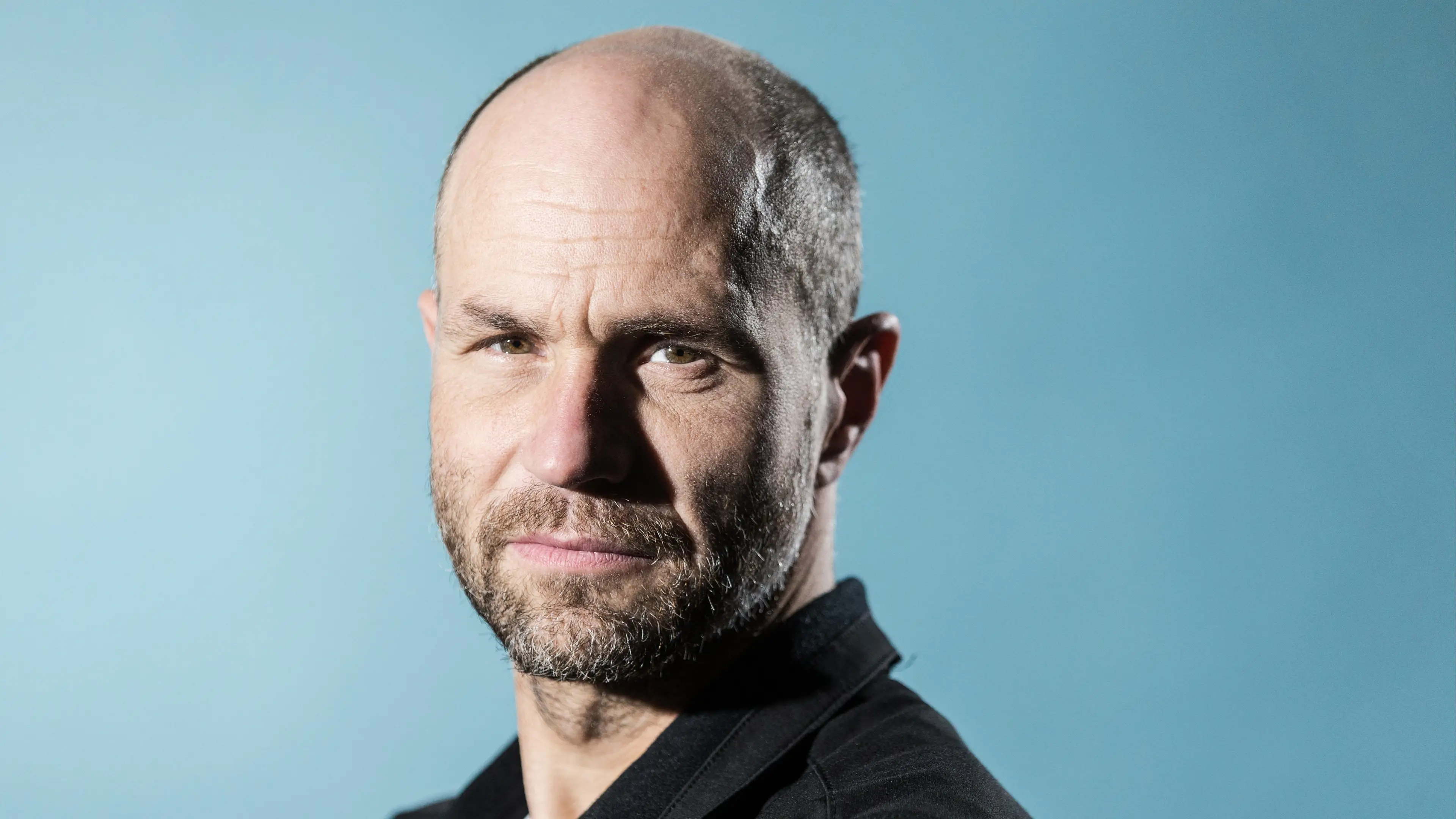
Man who spent 40 days in cave without concept of time breaks down the astonishing effects on his body

A man who spent 40 days underground as part of an experiment on how removing the perception of time impacts people spoke of feeling 'liberation' during the experiment.
Christian Clot led a group of volunteers spent 40 long days inside a cave in the south of France as part of an science experiment called 'DeepTime' which charted how it impacted people when you remove the usual ways that we chart the passage of time.
"During the first week in the cave, it was really hard to accept the idea that when I wake up, I didn't have to check my smartphone or my watch to see if I slept enough. I just have to listen to my body," Clot said.
"It was like a liberation, you know. It was like: Wow, amazing. I just have to listen to me!"
Advert
When we say removing the passage of time, we don't just mean taking away people's watches and phones - the experiment very deliberately put them in a place that would take things much further.
Our bodies have a natural rhythm for when to sleep and wake, based on things like sunlight which gives us an idea of what stage of the day it is, but here even this factor was removed by isolating the group in the cave.

That meant that the people in the cave were entirely removed from any external sense of the time, whether it was artificial or natural, meaning that people had only their intuition or general 'sense' of time.
During their underground stay volunteers could take scientific observations, with the cave being mostly dark except for one living area which was lit up.
The volunteers were instructed to simply eat and sleep when they felt like they needed to, while it was 'absolutely forbidden to wake up someone else' so people just woke up when they woke up.
Fascinatingly, the experiment found that there was a lot of individual variation among the people who participated.
Clot told Insider that after the 40 days underground most of the people involved had completed just 40 'cycles' of what we might think of as a day, indicating that they ended up on a time frame of 30 hours instead of 24.

One person on the study had an even longer cycle, sleeping 23 times over the course of the 40 day experiment.
Things also changed over the course of the experiment as well as people began to readjust to the strange new environment in which they found themselves.
At first, Clot said that people were entirely out of sync with one another as they were still tied to how they would sleep and wake up in their everyday lives.
"People were awake around the clock," said Clot.
But he noticed that as the days, such as they were, continued to pass on people began to fall into a strange synchronicity.
"In an unconscious way, when people wanted to be together, they woke up at the same time," said Clot.
It just goes to show how forces that we think of as all-encompassing are in fact a lot more malleable than we might expect.
Topics: World News, Science
 Kit Roberts