Archaeologists find 'true tomb' of Jesus after 2,000 years in major discovery

Jesus Christ! Could the biblical figure's final resting place have really been excavated after 2,000 years of longing?
Archaeologists from Italy certainly seem to think so, per The Daily Mail, after they matched an ancient burial site with the Bible's description of where the Son of God rose to defy mortality.
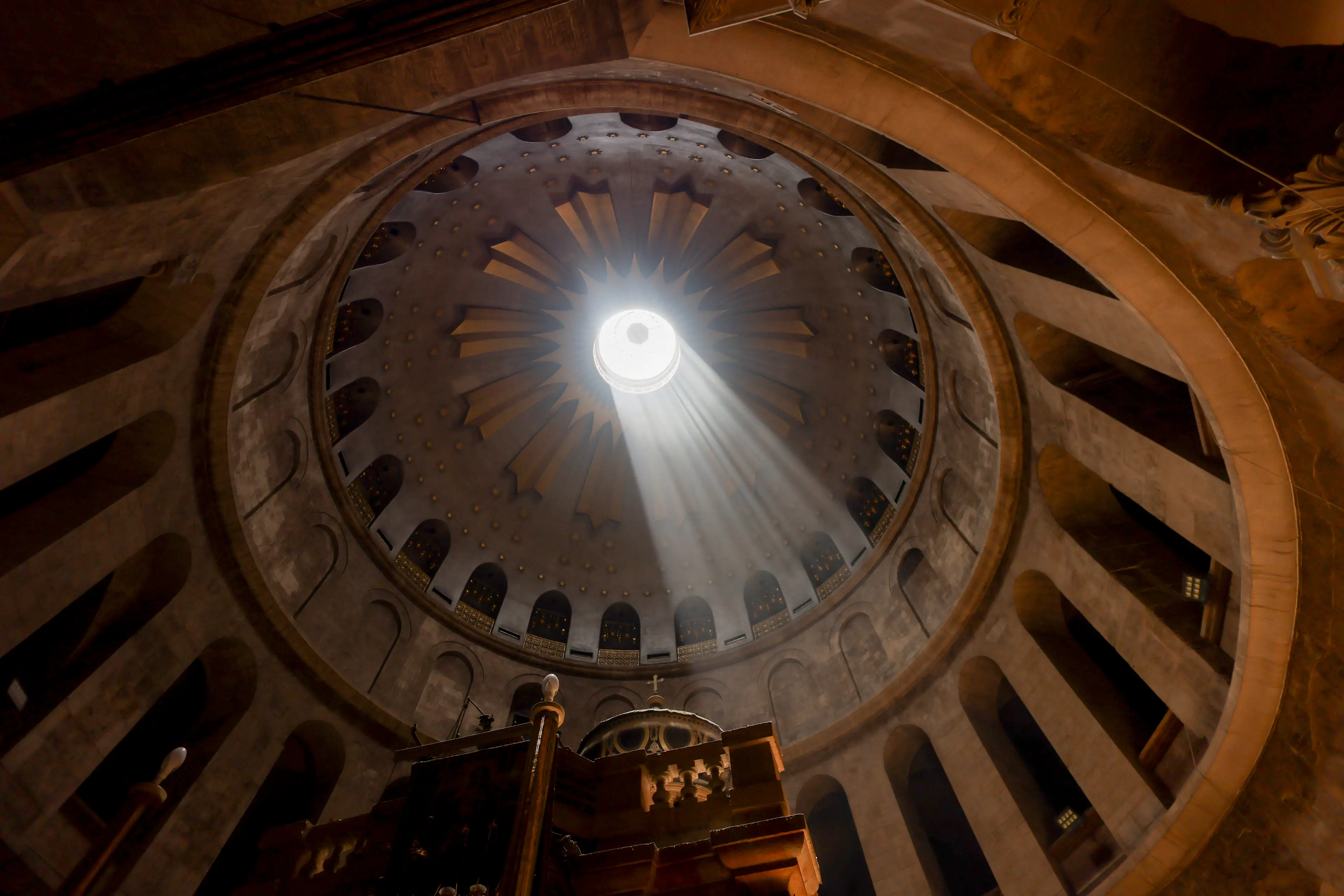
The location itself is Jerusalem's Church of the Holy Sepulchre, which was built above supposedly religious ground pertaining to Jesus' crucifixion and eventual resurrection.
Approximately four million visitors trek to this fourth century Roman Church every year as a holy pilgrimage, and it's looking like their beliefs might actually be qualified thanks to Francesca Romana Stasolla and his archaeology squad.
Advert
"We have found evidence of a funerary landscape," Stasolla told the aforementioned publication.
Three years into their excavation efforts, in 2025, researchers from the University of Rome discovered an abandoned quarry underneath the building, as well as a garden and various tombs.
Quite incredibly, this perfectly lines up with the Book of John quote: 'At the place where Jesus was crucified, there was a garden, and in the garden a new tomb, in which no one had ever been laid.'
Speaking to The Israel Times, Stasolla commented: "The gospel mentions a green area between the Calvary and the tomb, and we identified these cultivated fields."
Olive trees and grapevines dating back to the time of Jesus' death (33 A.D.) were discovered on the site, while the nearby graves were etched directly into the rock as described by Matthew, Mark and Luke.
Meanwhile, the fact that an obstructive Roman structure was destroyed 200 years after Emperor Hadrian's reign as a way of enshrining Jesus' so-called tomb gives the find more credence.
Was knowledge of this location passed down from generation to generation of early Christians?
Stasolla continued: "The real treasure we are revealing is the history of the people who made this site what it is by expressing their faith here.
"Whether someone believes or not in the historicity of the Holy Sepulchre, the fact that generations of people did is objective. The history of this place is the history of Jerusalem, and at least from a certain moment, it is the history of the worship of Jesus Christ."
This comes after smatterings of DNA were newly found on the Shroud of Turin earlier this year.
Believed to be blood-imprinted with the image of Jesus, the relic also carries traces of cats, dogs, chickens, cows, goats, sheep, pigs, horses, wild deer, rabbits, Atlantic cod and various crustaceans.
Talk about unwanted guests.
Topics: Religion
 Dan Seddon