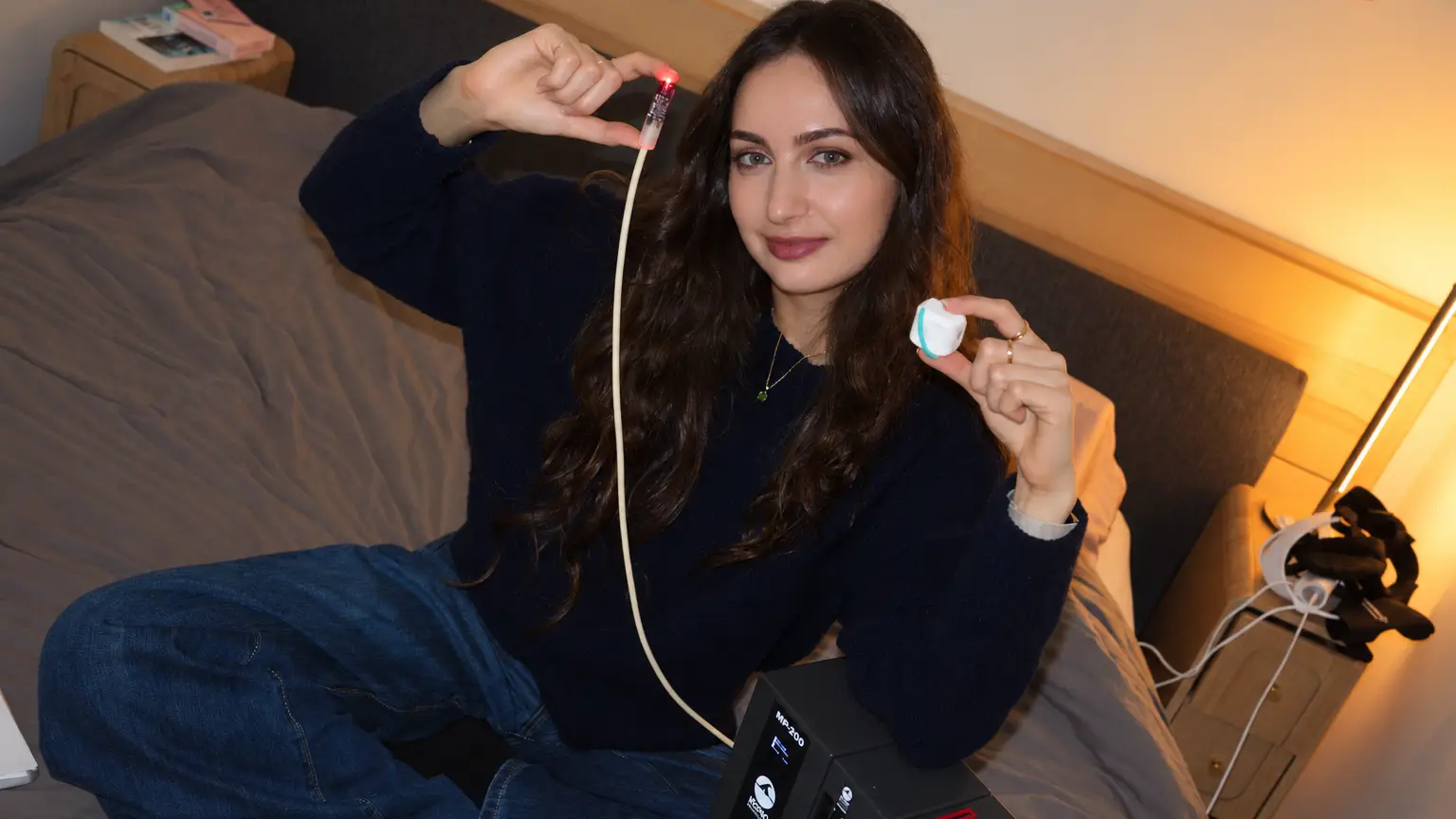
Biohacker Kate Tolo tests techno tampon to track nighttime female erections in 'world first'

A biohacker known for having a ‘top one percent vagina’ has published the results of her latest study – documenting the nighttime female erection.
If you haven't heard of Kate Tolo before, you'll more than likely be aware of her boyfriend, Bryan Johnson, aka the man who transfused blood from his teenage son, documented the ‘de-ageing of his penis’ and poured millions into his goal of never dying.
Tolo herself is also a keen biohacker, sharing intimate details about her body in hopes of further understanding our medical knowledge of endometriosis.
And now Tolo has shared the results of her investigation into overnight arousal in women, collecting data via a device she refers to as a 'techno tampon'.
Advert
So what did she find?

Nighttime erection data, sexual dysfunction and heart health
For most people, erections are something traditionally believed to be a biologically male-exclusive experience, however this is not the case at all.
Recent studies have revealed that the clitoris not only contains tens of thousands of nerve endings but also the same erectile tissue as the penis. MRI studies have also revealed that the clitoris engorges by around 50 to 300 percent when aroused, which certainly sounds like a type of erection.
So why could measuring the female erection be important?
Erectile dysfunction in men is known to be a precursor to heart disease known as atherosclerosis, a condition where fat builds up in the arteries. However, this has never been tested on women.
Nighttime measurement of penile blood flow can also help understand whether or not erectile dysfunction is physical or psychological. If erections are recorded during REM sleep, it proves that the blood vessels and nerves are working as they should, meaning the issues are more than likely psychological. Again, these studies are yet to be replicated in women.

"I've tracked my nighttime erections for years," Johnson explained. "It's a tier 1 longevity marker [and] one of the best signals I've found for vascular health."
However, Johnson notes that his data is 'only useful for half the population', with the couple hoping the results of Tolo's research will determine whether or not the same applies to women.
"If nighttime genital blood flow predicts heart disease in women the way erectile function does in men, this is one of the most important measurements we're looking at," he added.
"Men's nighttime erections have been studied extensively for decades... Women's are barely measured."
While some of Johnson and Tolo's health experiments are more than a little left-field, measuring erection tracking data with your son or publishing the details of your vaginal microbiome to the world aren't activities which most people engage in, you can't deny that Tolo's work isn't revolutionary.
As the 30-year-old points out in her research data, studies surrounding female nighttime erections haven't evolved since 1975.
While Johnson can measure how many times he unconsciously stands to attention with a £207 ($275) publicly available smart sensor which connects to his phone via Bluetooth, Tolo's tracking method is a little more complex.
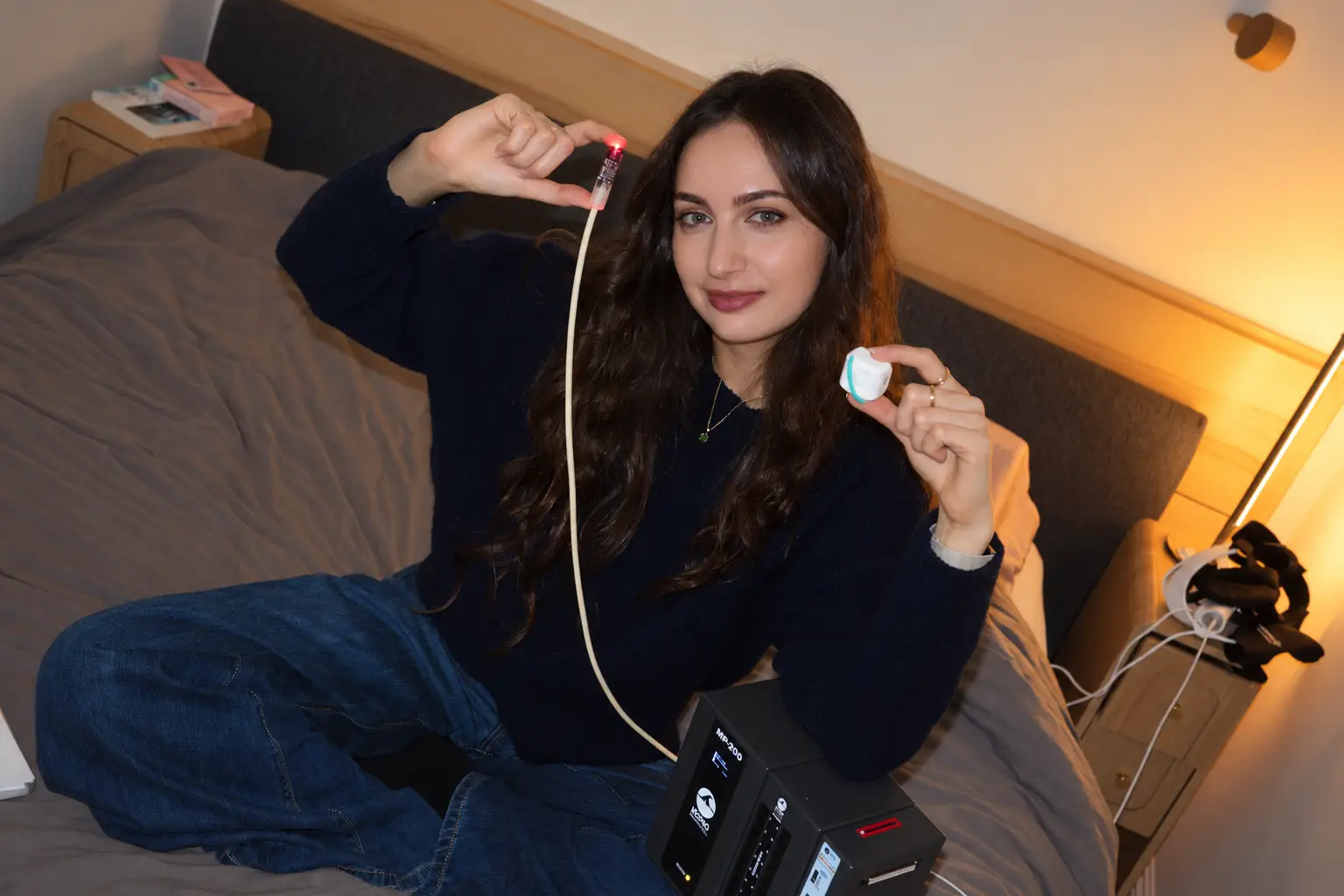
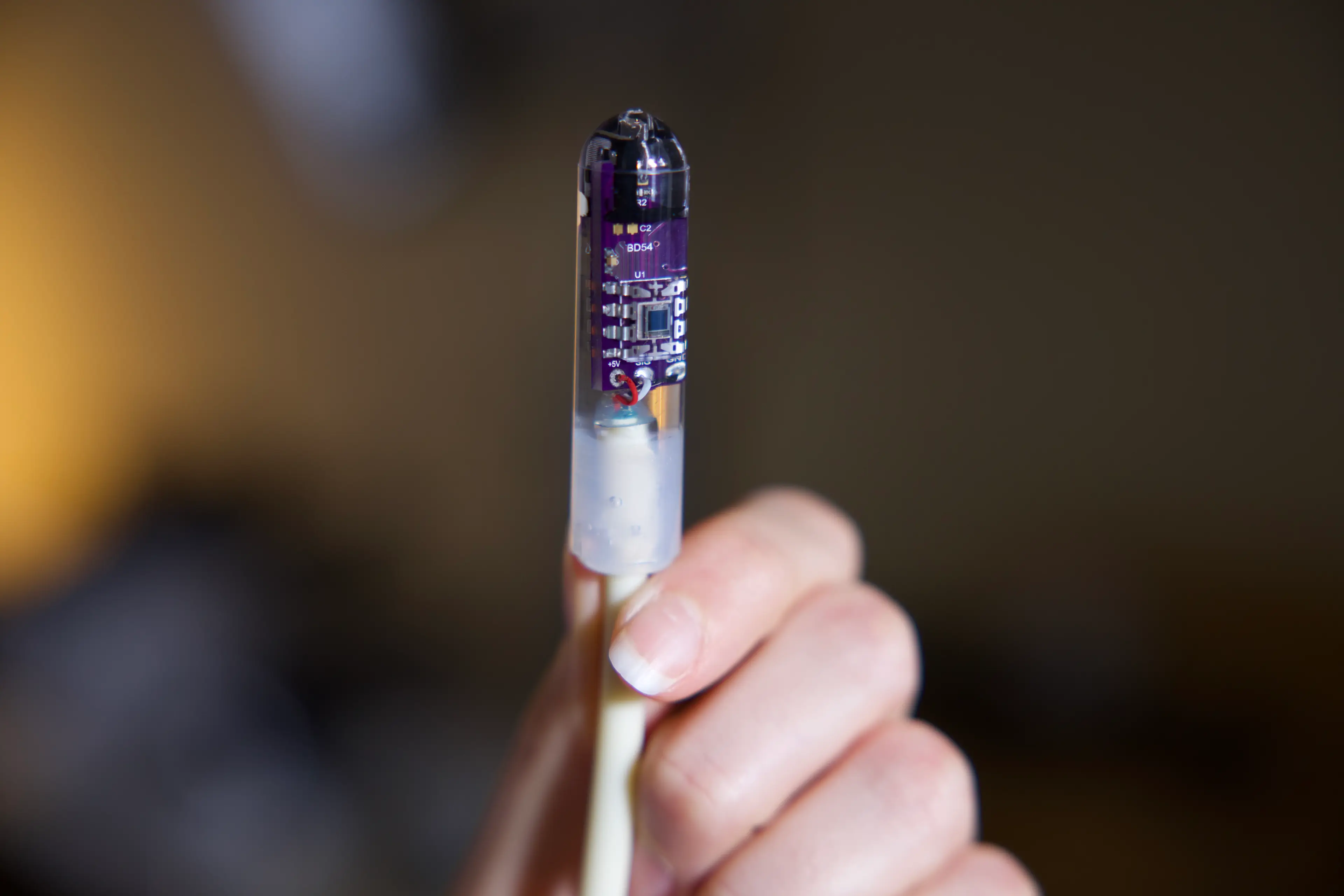
In order to conduct the experiment, she had to use a 5cm internal probe, which hasn't been updated since it was invented over five decades ago, which is taped to her leg and hooked up to lab equipment via a laptop. The laptop also has to stay on overnight otherwise the data is lost.
Price-wise, Tolo's device costs around £11,881 ($15,723.68) and isn't available on the high street.
"Men's nighttime erections have been studied extensively for decades... Women's are barely measured," Tolo said.
"If the data turns out to matter the way it matters for men, someone should build the device."
If Tolo's research revolutionises our understanding of women's sexual health, I promise to never laugh at Johnson's more bizarre studies ever again.
Topics: Bryan Johnson, Health, Sex and Relationships, Science
 Brenna Cooper