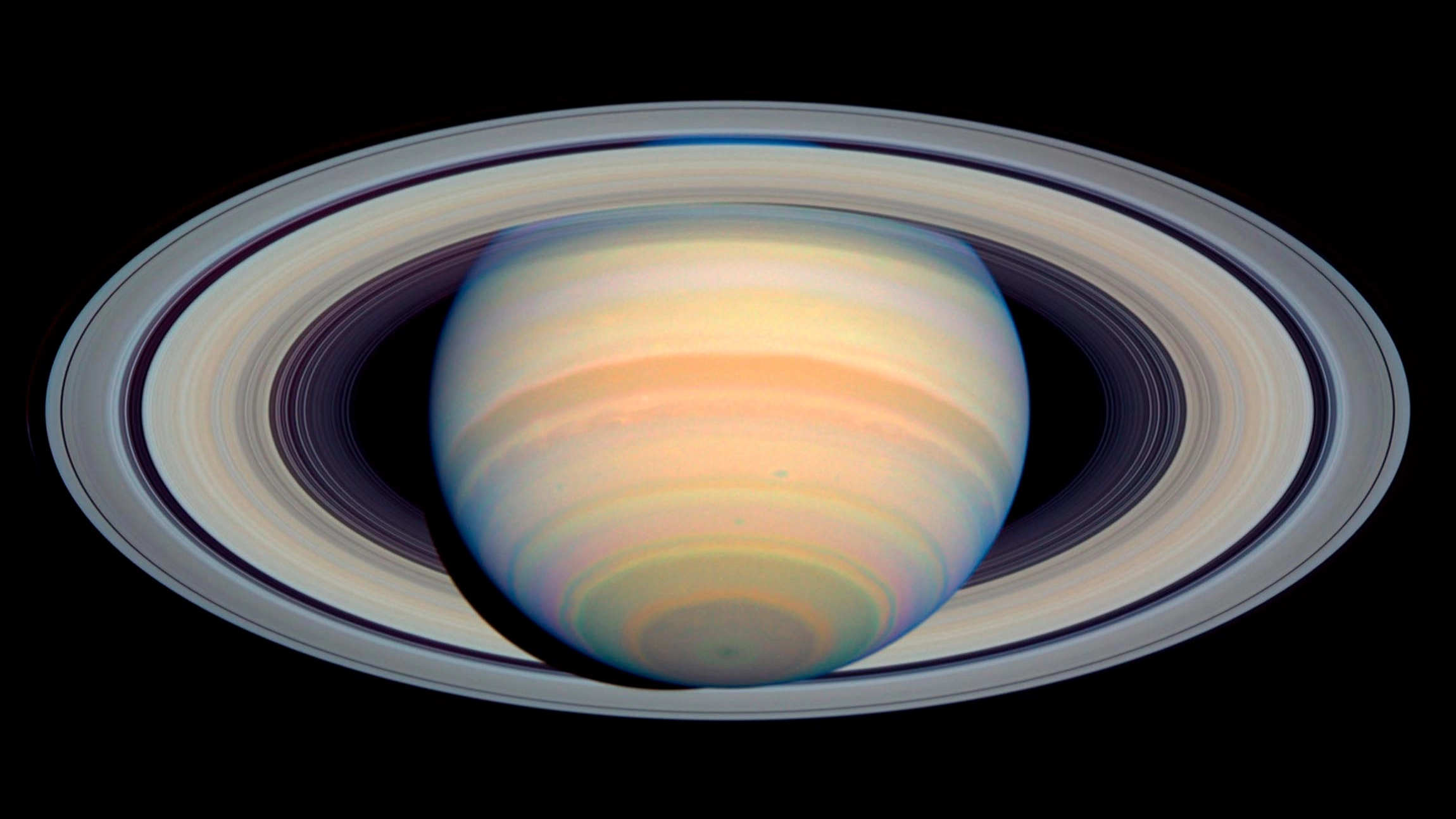
NASA's Hubble reveals giant 10-sided wave encircling Saturn's south pole

Scientists believe they may be witnessing a developing phenomenon on Saturn after the Hubble Space Telescope spotted a giant 10-sided wave over the planet's south pole.
It's long been known that there's a giant hexagonal wave over Saturn's north pole, but now NASA's big telescope has been checking out the south side of the planet and seen a new development.
The team of scientists laid out their findings in a new study, and Amy Simon of NASA's Goddard Space Flight Center said they'd 'never seen anything quite like this in Saturn's southern hemisphere'.
She said: "The northern hexagon has been there every time we've looked for more than 40 years. This feature is different - it appears to be strengthening, giving us the rare opportunity to watch a giant atmospheric pattern develop."
Advert
Scientists got a good look at Saturn's south pole as the seasons changed and everything lined up the Earth to take a good look at it.
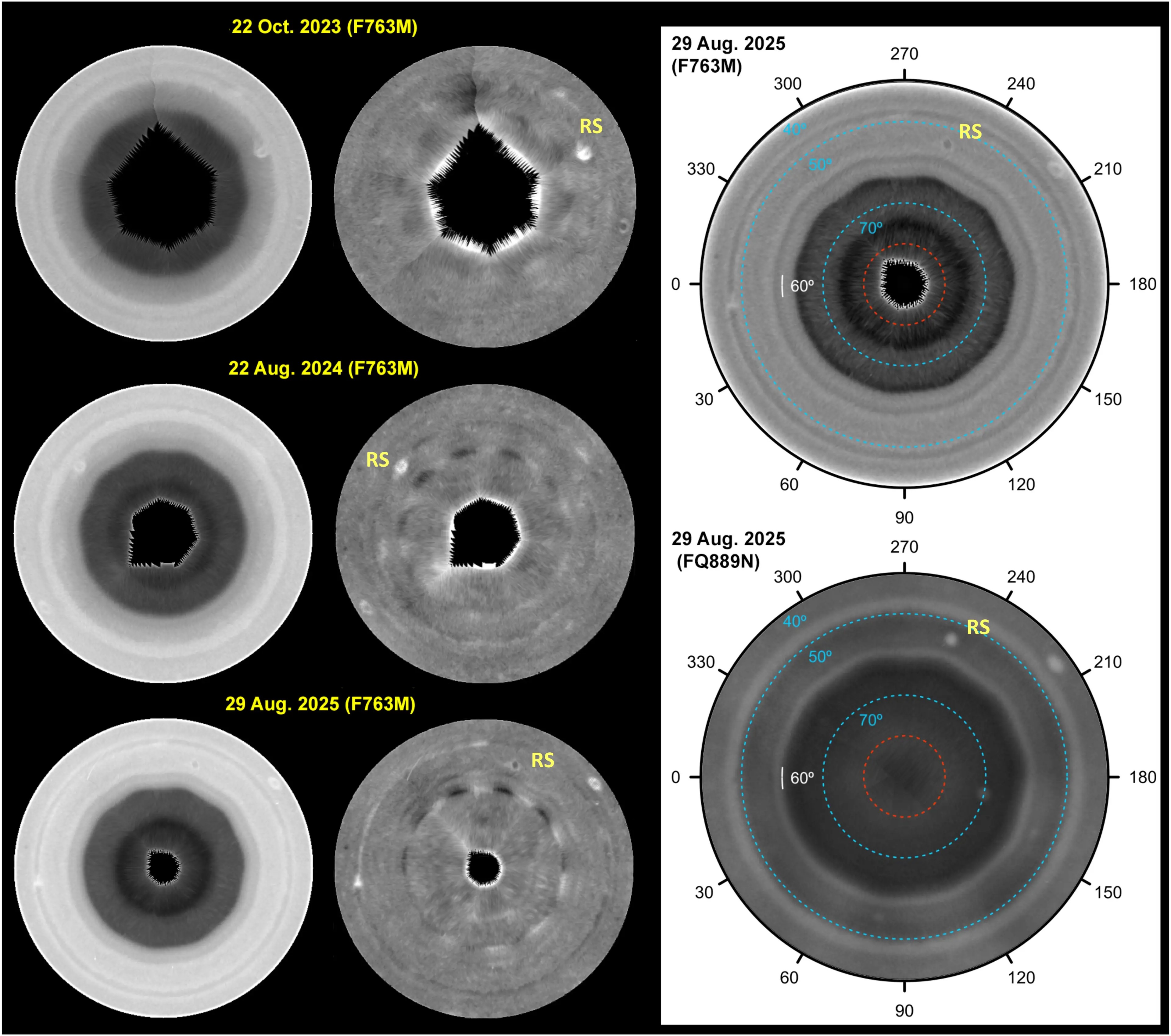
The developing decagon was first seen by Agustín Sánchez-Lavega of Spain's University of the Basque Country, in 2024 he, Trevor Barry and Jean-Paul Oger spotted something on Saturn's south pole.
Further investigation gave them a better picture of what appeared to be a decagon, and the researchers teamed up with NASA to get the clearest possible look with the Hubble Space Telescope.
One of the chief benefits of a space telescope is it being able to spot things in space without the filter of our own planet's atmosphere, and Hubble saw the 10-sided wave as well.
It can only be a new phenomenon as NASA had the Cassini spacecraft orbiting Saturn between 2004 and 2017 and it didn't spot anything of the sort, but Hubble's observations confirmed it dated back to 2023.
Sánchez-Lavega said: "Given Saturn's symmetry in its north-south jet stream system, we have been searching for a counterpart to Saturn's northern hexagon on the south pole in Hubble images since 1990."
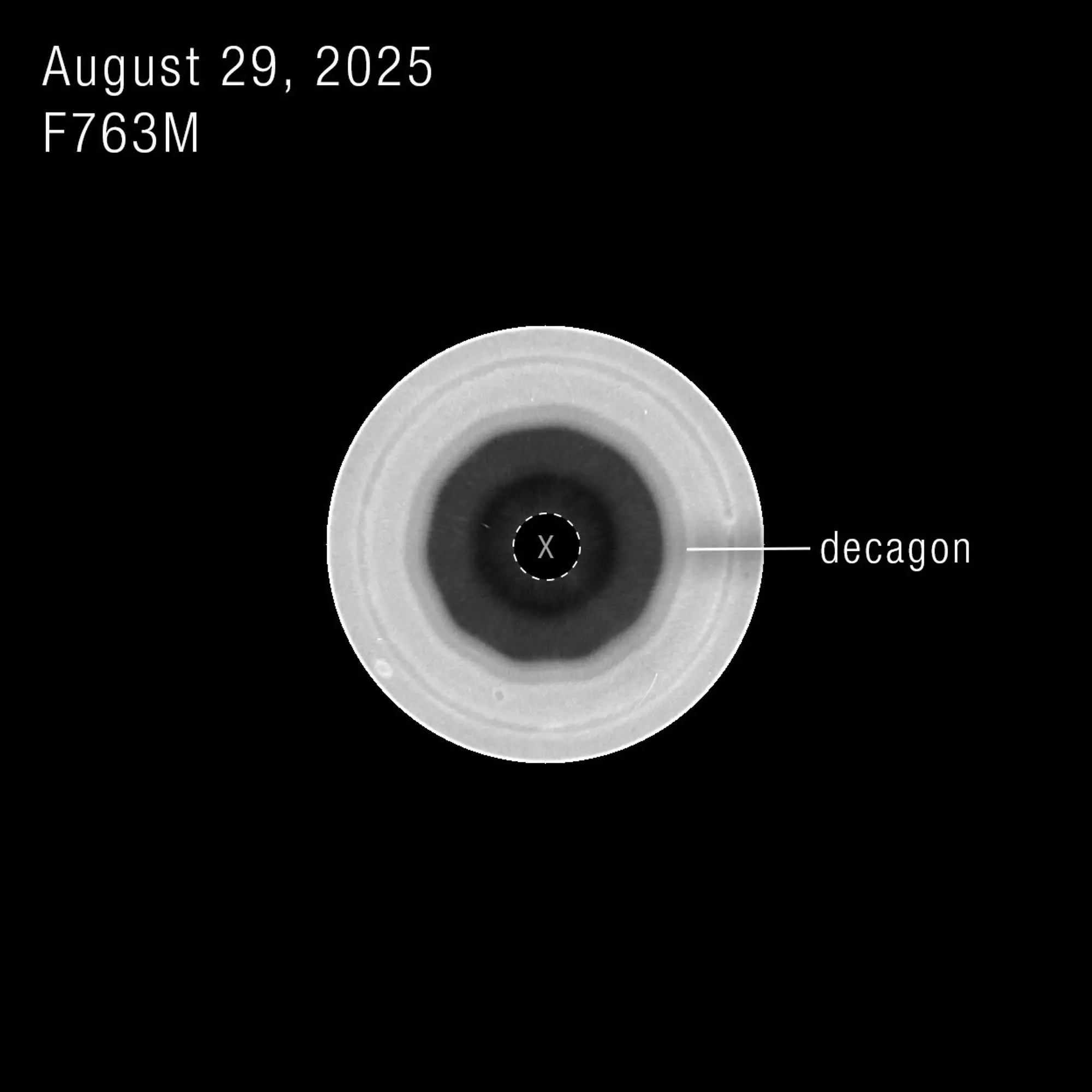
The 10-sided south pole wave
Researchers have found this wave is in one of Saturn's most powerful jet streams and goes through several layers of the planet's atmosphere.
While it surrounds the planet's south pole the position of this wave has shifted slightly in different images taken by the Hubble Space Telescope, as it can take different images at different wavelengths which look at different parts of the atmosphere.
Amy Simon said: "The most intriguing part to me is that this seems to have just formed recently.
"The question is, why did it suddenly form now when we haven't seen one before?"
That's a question that scientists don't currently have an answer to, and like many developing scientific phenomena it'll take further study to fully learn the truth as to what this Saturn decagon is.
It'll require further observations from the Hubble Space Telescope, while the James Webb Space Telescope will also need to contribute.
There's much more to be discovered.
 Joe Harker