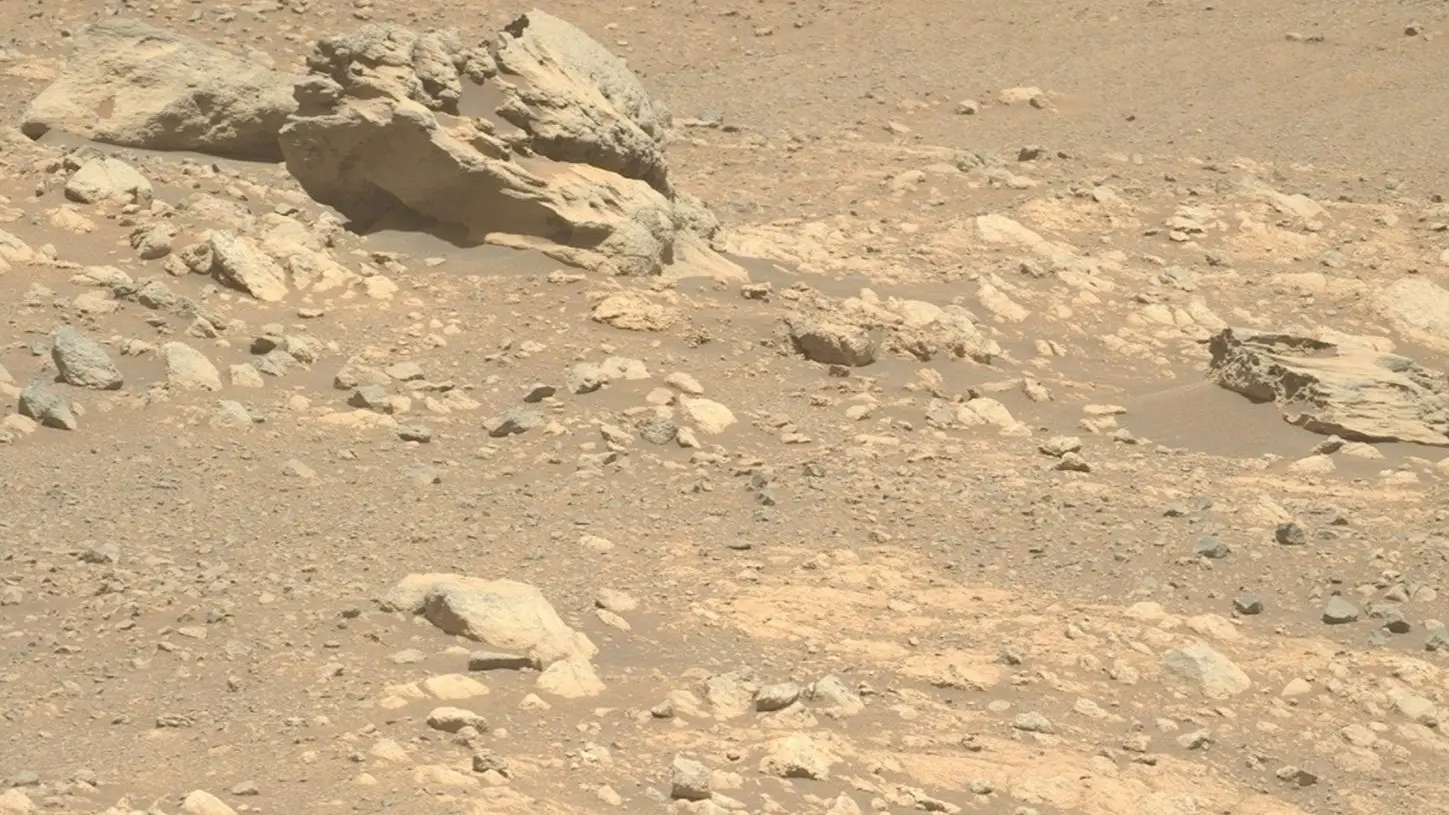
NASA thinks rock found on Mars is a 'visitor from outer space'

The NASA Perseverance rover on Mars has found a rock which scientists think might not have come from the red planet itself.
As the little bundle of technology trundles its way over the surface of another planet, the things it has seen are quite amazing, with it making a series of impressive discoveries about the next world over in our solar system.
Earlier this year it collected a sample of textures 'unlike anything we've ever seen' which ended up being dubbed 'Silver Mountain', with some of it collected to be brought back to Earth for further study.
Everything Perseverance finds on Mars helps deepen our understanding of the universe around us and the latest discovery is a suspicious looking rock.
Advert
NASA has said this rock has been dubbed 'Phippsaksla' and it's about 80 centimetres across, and something about it caught the eye of scientists.
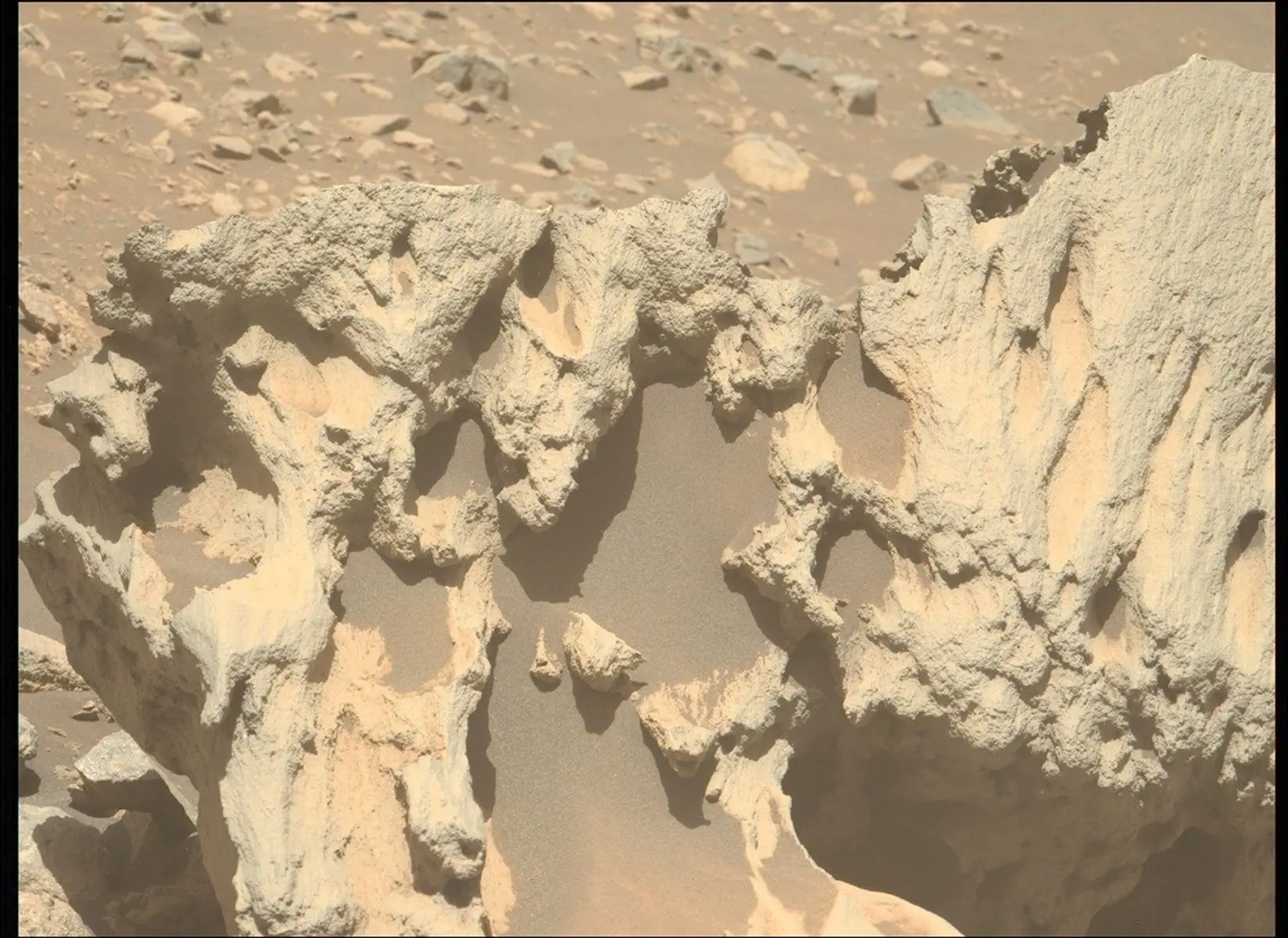
Further study from Perseverance with the SuperCam instrument found it contained lots of iron and nickel, leading scientists to think that it might have been a meteorite from elsewhere in the solar system which ended up on the surface of Mars.
There have been other extra-Mars-estrial rocks discovered by NASA rovers on the planet surface, as Curiosity came across a number of iron-nickel meteorites.
Other rovers Opportunity and Spirit also found similar space rocks which are reckoned not to have been originally from Mars, to the point that NASA said it was actually strange that Perseverance hadn't found something similar until now.
More investigation will need to be done to determine whether or not 'Phippsaksla' is actually from outer space or not, but it's another stitch in the canvas that is the surface of Mars.
Here's hoping Perseverance can add its name to the illustrious list of Mars rovers which have found space rocks on the red surface.
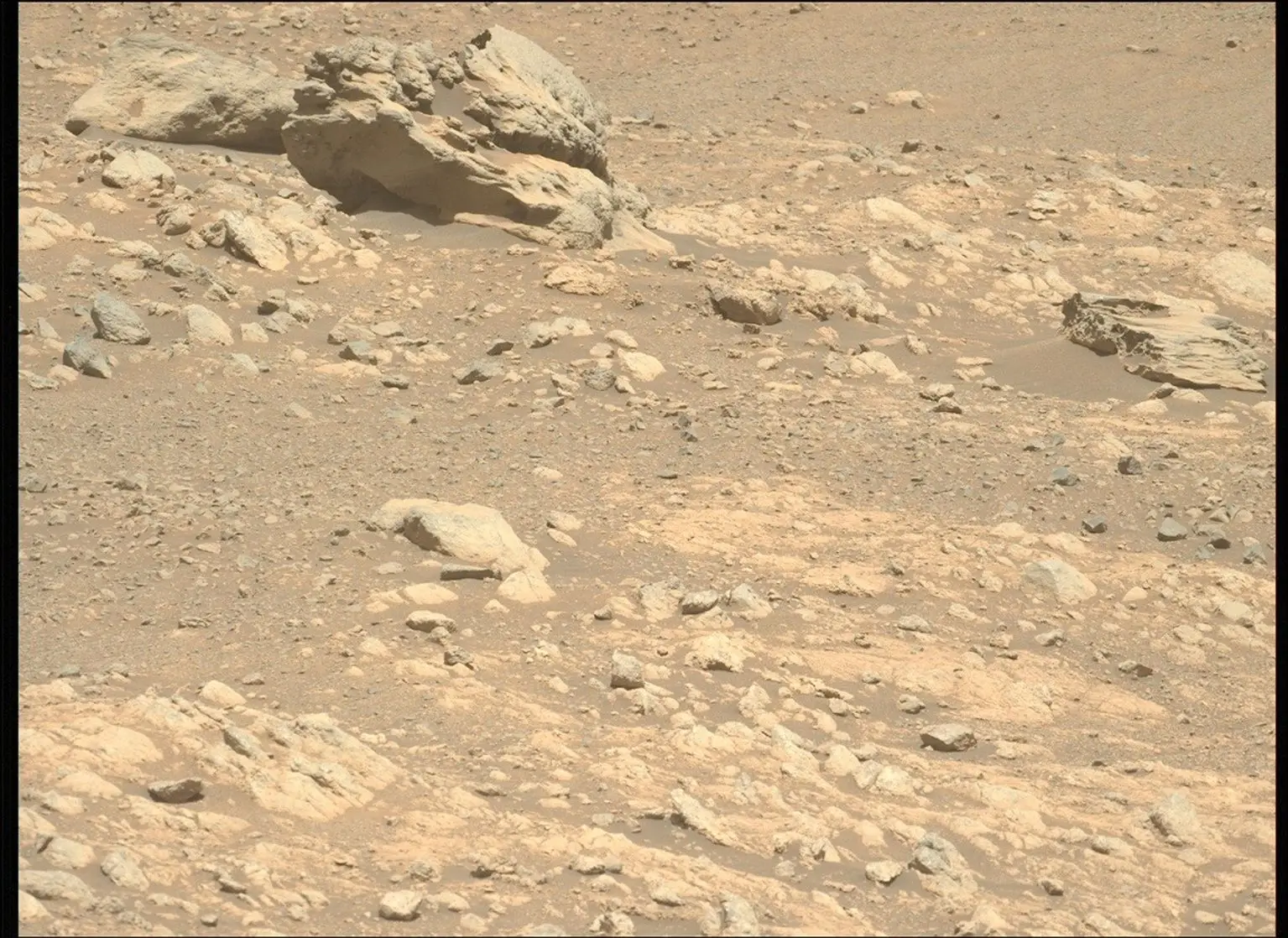
Elsewhere on Mars, Perseverance has been searching for prospective signs of life on the planet's surface.
The rover had been going through the Krokodillen region of Mars collecting samples, the more it finds the more we learn about that other planet and the things which have struck it over the years.
Ken Farley, deputy project scientist for Perseverance from the California Institute of Technology in Pasadena, had said: "If we find a potential biosignature here, it would most likely be from an entirely different and much earlier epoch of Mars evolution than the one we found last year in the crater with 'Cheyava Falls'."
The NASA rover might even bring some samples of this new rock it's discovered back to Earth for further study, which will keep the scientists busy.
 Joe Harker