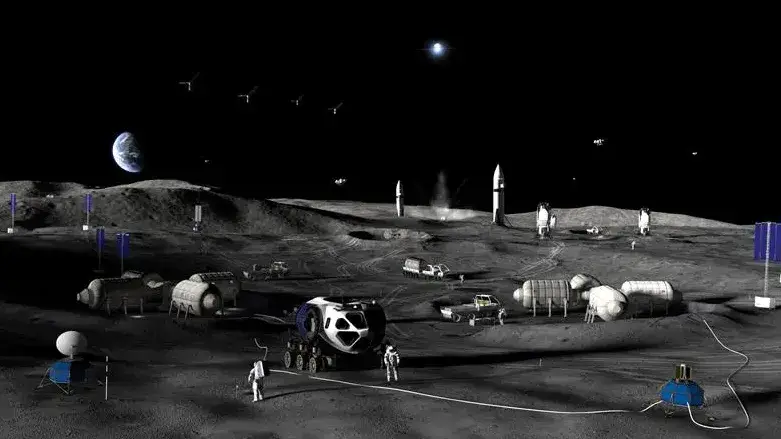
NASA announces $20 billion Moon base plan and nuclear power spaceship in wild move

NASA have announced some incredibly ambitious plans to put boots back on the Moon before the end of Donald Trump's second term with the goal of establishing a Moon base.
At their 'Ignition' event yesterday (24 March), NASA administrator Jared Isaacman laid out what the space agency's targets for the next few years were going to be.
"NASA is committed to achieving the near‑impossible once again, to return to the Moon before the end of President Trump’s term, build a Moon base, establish an enduring presence, and do the other things needed to ensure American leadership in space," he said.
For context Trump's term in the White House will end in January 2029, assuming American democracy is still functioning by then, so in practice that's boots on the Moon by 2028.
Advert
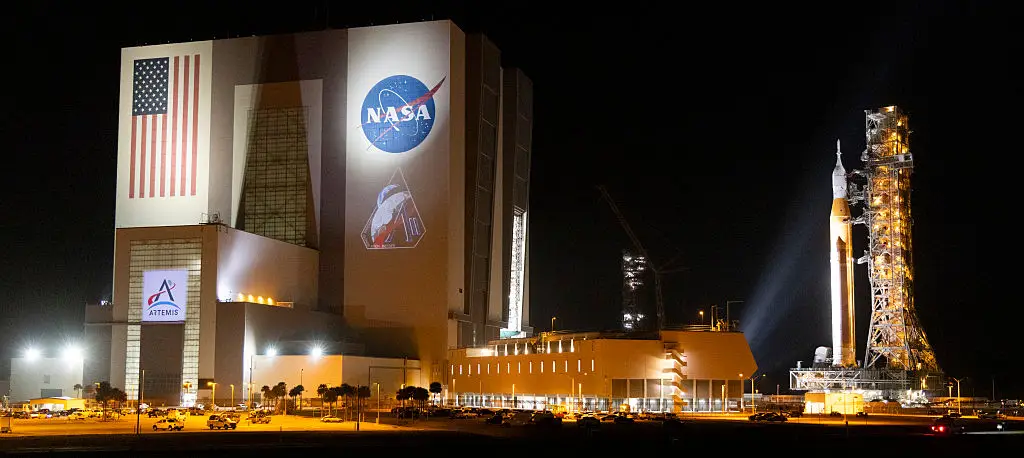
These plans mean a development of the Artemis missions, the next of which could launch within the next couple of weeks and aims to fly astronauts further from the Earth than ever before.

The plans may sound wild to some, but Isaacman said all NASA had to do was concentrate their 'extraordinary resources', then 'clear away needless obstacles that impede progress' and finally 'unleash the workforce and industrial might of our nation and partners'.
No sweat, then.
He said this Moon base would 'not appear overnight', which seems like quite the understatement, and it's estimated to cost around $20 billion over the next seven years, with companies that deliver equipment behind schedule and over budget told to 'expect uncomfortable action'.
Plans to build a 'Gateway' space station that orbited the Moon have been shelved in favour of diverting resources towards the Moon base projects.
If all goes to plan for NASA putting a man back on the Moon by 2028 would be followed by more frequent crewed space missions, while their presence on the Moon's surface is set to increase in three phases.
The first step will be to put more rovers and technology on the Moon to show that power generation, communications, navigation and surface operations are possible.
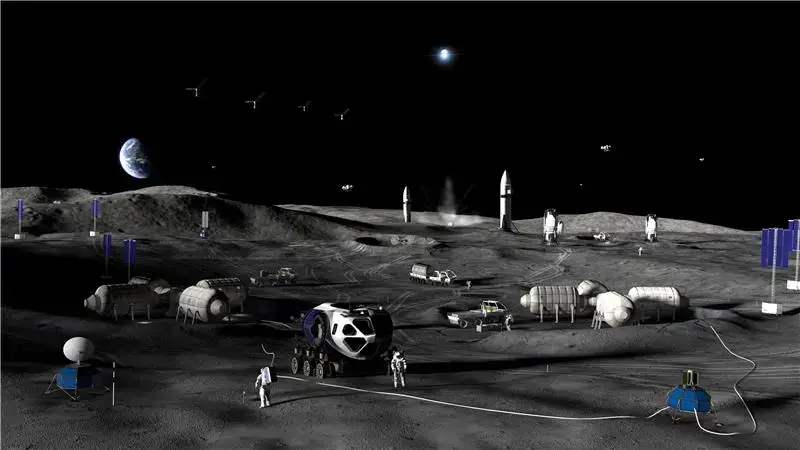
The next phase would be developing 'semi‑habitable infrastructure and regular logistics', meaning putting people on the Moon on a regular basis.
Finally, NASA plans to develop what it calls 'cargo‑capable human landing systems' which they are sure will allow them to transport the heavy-duty equipment needed to establish a permanent base on the Moon.
While having an orbiting space station like Gateway in place would have helped with resupply NASA believes the hardware and facilities from the shelved project will do well on the Moon base project.
These are undoubtedly ambitious plans, and NASA will face all sorts of responses from people who say you can't build a base on the Moon for $20 billion within the next decade.
Prior to NASA's announcement, Jordan Bimm, Assistant Instructional Professor of Science Communication at the University of Chicago, told the LADbible he was 'heavily sceptical' about plans to get back to the Moon by 2028.
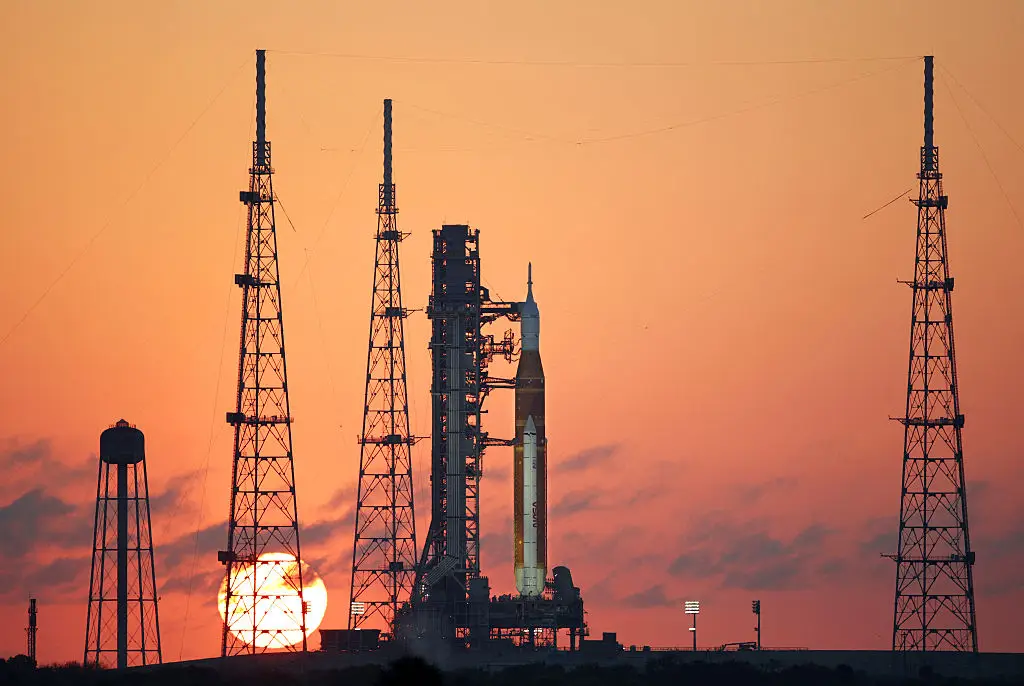
"The main reason for that is the unavailability of Starship, which is supposed to be the landing system for future Artemis missions that would land on the moon," Professor Bimm had explained.
"A lot of people get confused because they think of Starship as simply a launch ascent vehicle that's gonna take people from Earth to Earth orbit, or perhaps onto Mars.
"But for the Artemis architecture at least, the plan was to use it also as a landing craft to go from Moon orbit to Moon surface and back.
"The fact that Starship is still in development and hasn't even done a successful Earth orbit and landing yet tells me there's a lot more they've gotta do before they're getting ready to put humans on there in Moon orbit and take them down to the Moon.
"They're gonna probably have to land it autonomously on the Moon a bunch of times before they even think about a crew, and that's gonna take, just thinking about space and tech timelines and temporalities, way more than a couple years."
That's not great for NASA's plans, as Professor Bimm said that SpaceX boss Elon Musk had talked about doing 10 uncrewed landings on the Moon before putting people in there, which is going to take time.
He also said there'd need to be some technological developments on the way for this goal to be achievable.
He said: "Looking at the timeline it doesn't seem realistic to have human boots back on the Moon in 2028, or a Moon base at any time realistically after that unless there's a major technological breakthrough or unless they decide to go with Blue Origin's Moon lander instead of Starship.
"Which is in the mix at least now. But still that that craft has not flown either.
"The technology is not there. It is on the way, but it's not there."
That's not NASA's only plan, as they also announced that before the end of 2028 they'd launch Space Reactor‑1 Freedom, a nuclear-powered spacecraft bound for Mars, which will then deploy helicopters to explore the planet.
It's certainly ambitious.
Topics: NASA, Donald Trump, Science, Space, US News
 Joe Harker