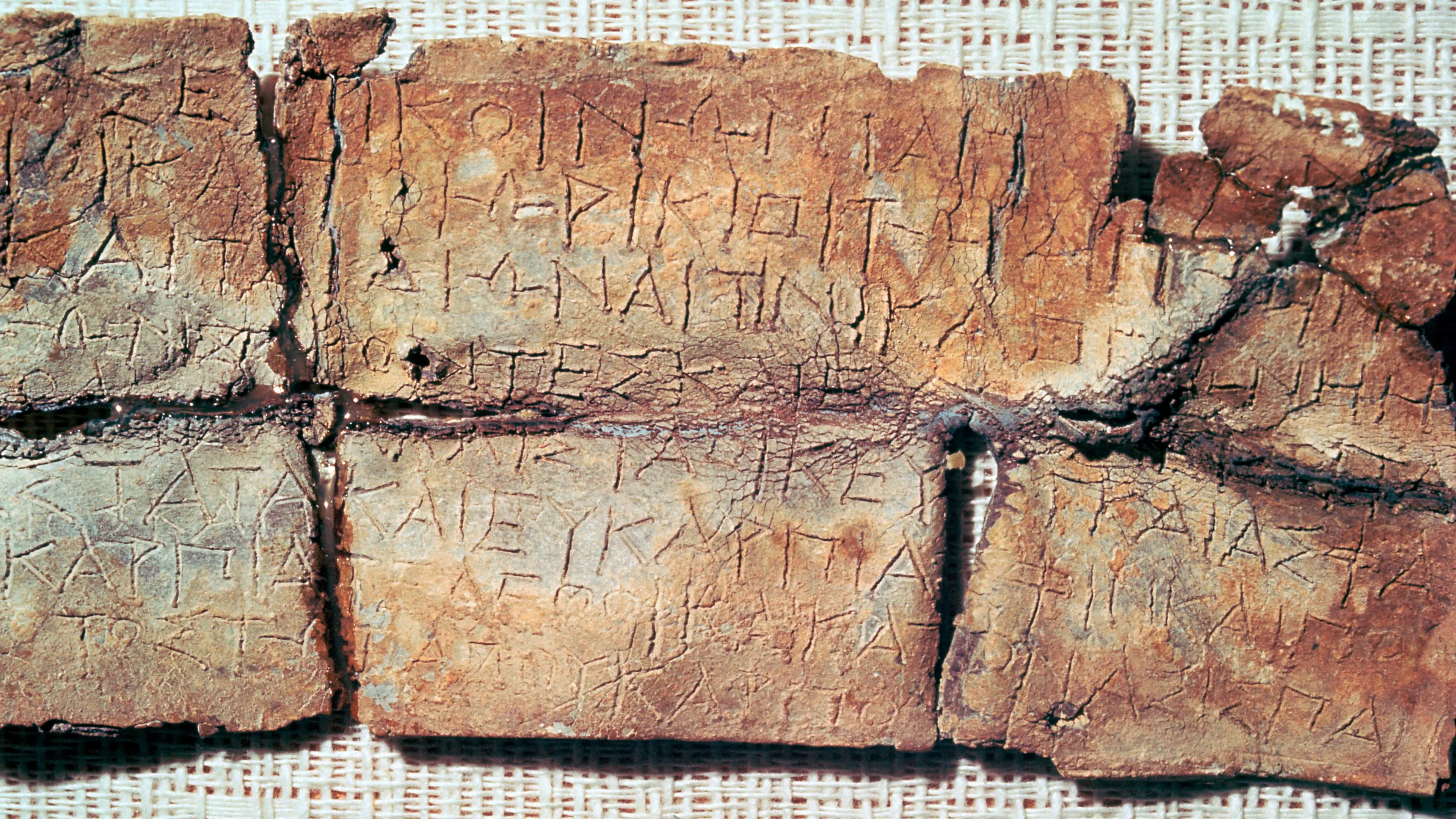
History of Roman Empire's ancient 'curse tablet' deciphered after 1,800 years of dark mystery

Papyrology researchers at Germany's Heidelberg University appear to have cracked the mystery behind ancient 'curse tablets' that were all the rage during the Roman Empire.
Set to be displayed at Heerlen Museum in the Netherlands - situated in the town it was recently excavated from - one of these artefacts boasts an Ancient Greek inscription instead of the traditional Latin, allowing its purpose to be deciphered by Dr. Rodney Ast and his team with the help of reflectance transformation imaging (RTI).
This particularly insightful lead tablet was unearthed in a pit beneath the Heerlen town hall square; the site of a Roman military settlement known as Coriovallum.
Measuring in at 9.3 by 4.8 centimetres, this mystical piece contains a triumvirate of character groups.
Advert
The RTI technique sees multiple images being taken of the inscription in variable lighting; they are then digitally joined into a single photograph that allows the most minuscule of surface details to stick out.
So, what did the aforementioned academic director and his underlings find out when the language was translated?
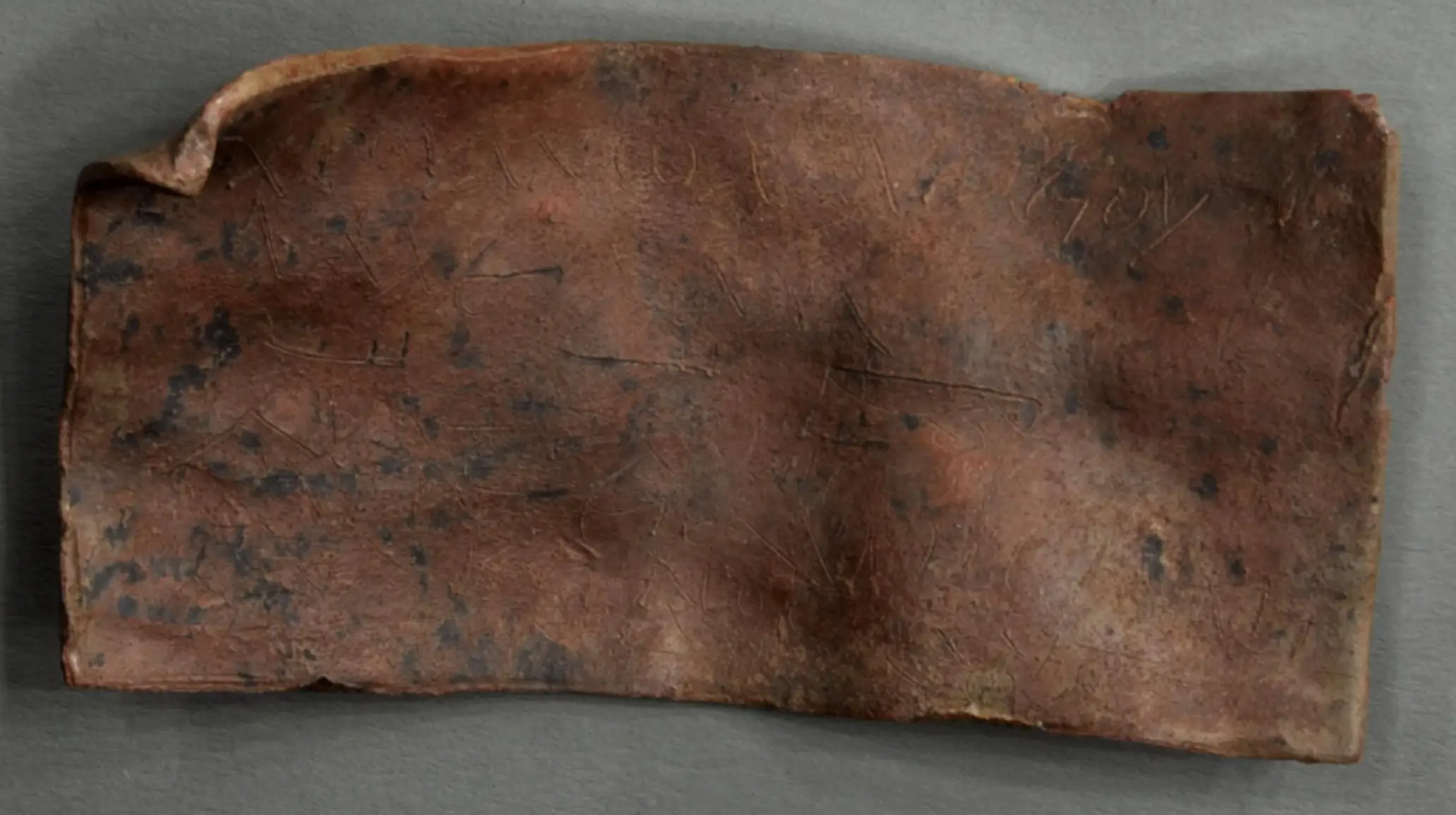
Fascinatingly, they learned that the 'curse tablet' invoked the powers of deities and demons upon the inscriber's rivals.
It would've been buried and spiritually bound to an individual who literally or figuratively opposed the person who'd spent the time to carve spells on it.
Having identified the names of two women and two men on the stone, Dr. Ast suggested in a report: "The tablet served either as a curse against these four slaves or as a curse in their name against an unnamed person."
In his mind, the composition of these names also stood out as strange, as the men are depicted in Latin and the women Greek.
"It cannot be ruled out that one of the two women was the author of the inscription and had brought the supposed ability to communicate with divine powers through such curses with her from Roman Egypt," shared Dr. Julia Lougovaya, research associate at the Institute for Papyrology.

Meanwhile, Heidelberg University's director of the Institute for Egyptology, Dr. Joachim Quack, noted how this advanced civilisation relied heavily on magic.
Protection and healing practices were even officially acknowledged as part and parcel of religious life.
Quack went on to comment: "In the early centuries A.D., Near Eastern, Egyptian, Jewish, and sometimes even Christian traditions increasingly merged and spread throughout the entire Roman Empire of that time – a development that the discovery from Heerlen impressively underscores."
Topics: History
 Dan Seddon