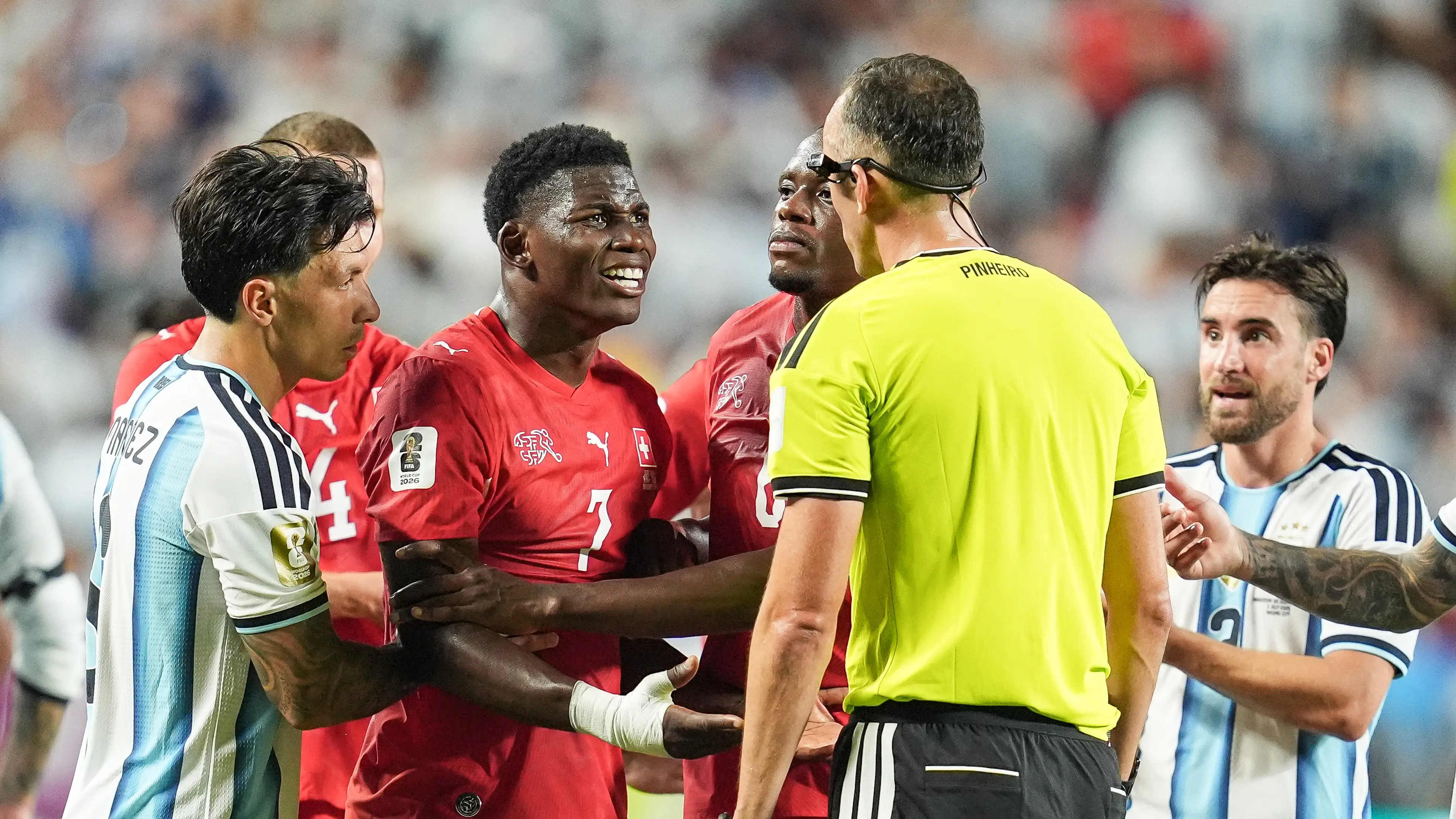
Mistaken identity rule explained as World Cup player becomes first to be sent off for it

FIFA's new rules have made a big impact at the World Cup and Switzerland felt the brunt of them against Argentina.
A swathe of new rules were introduced by FIFA ahead of the 2026 World Cup, from five-second limits on taking throw-ins to players being unable to talk with their manager if a goalkeeper is receiving treatment.
England were the beneficiaries of one such new regulation in their Jude Bellingham-inspired victory over Norway in the quarter-finals, as the Scandinavians had a goal ruled out due to Erling Haaland fouling Elliot Anderson before a corner kick had been taken.
As fouls can not be given when the ball is not in play, the goal would have stood before the World Cup, but Norway were forced to re-take the corner instead.
Advert
Thomas Tuchel now knows his side will face fierce rivals Argentina in the semi-finals on Wednesday, 15 July, who also had a rule change benefit them in their quarter-final.
Argentina defeat Switzerland to make World Cup final four
Lionel Messi's Argentina also needed extra-time to advance before they eventually defeated Switzerland 3-1.
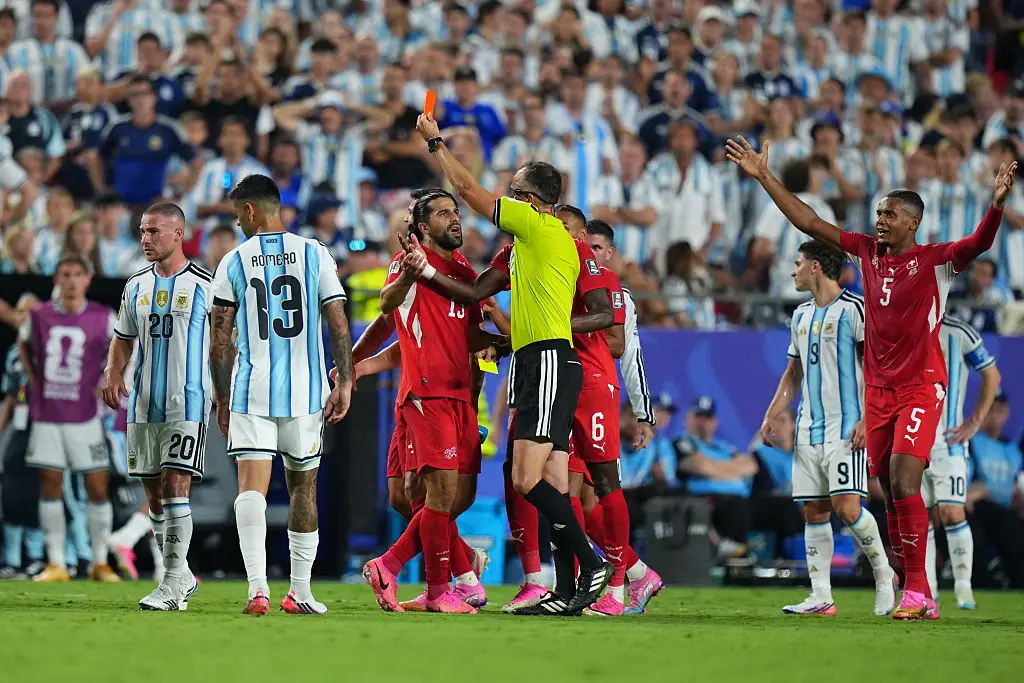
However, the Swiss were reduced down to 10 men just five minutes after equalising in normal time when striker Breel Embolo was shown a second yellow card for simulation.
Referee Joao Pinheiro had initially booked Argentina's Leandro Paredes for fouling Embolo, but VAR intervened and sent the man in charge to the monitor.
Under FIFA's new law for mistaken identity, the referee changed his decision and sent Embolo off for diving, leaving the 29-year-old in floods of tears and in need of consolation from his teammates.
Pierluigi Collina, chairman of the FIFA Referees Committee, requested the new rule to be introduced ahead of the tournament.
It states that if a player is booked or shown a red card but the foul was actually committed by the opposition team, then the decision can be changed and the card given to the guilty player.
This includes referees going to the VAR monitor to view the decision again, which was previously not allowed.
It can only come into effect if a card is actually brandished. So if Parades was not shown a yellow for his 'foul' in the first place, Embolo would not have been shown a second one.
The rule was first used earlier in the tournament when Miguel Almiron - who was also the first player to be sent off for covering his mouth - thought he had won a free-kick against co-hosts USA and Tim Ream was booked, but Almiron was adjudged to have dived and given the card instead after review.
Embolo, however, has become the first player in football history to be sent off under the rule.
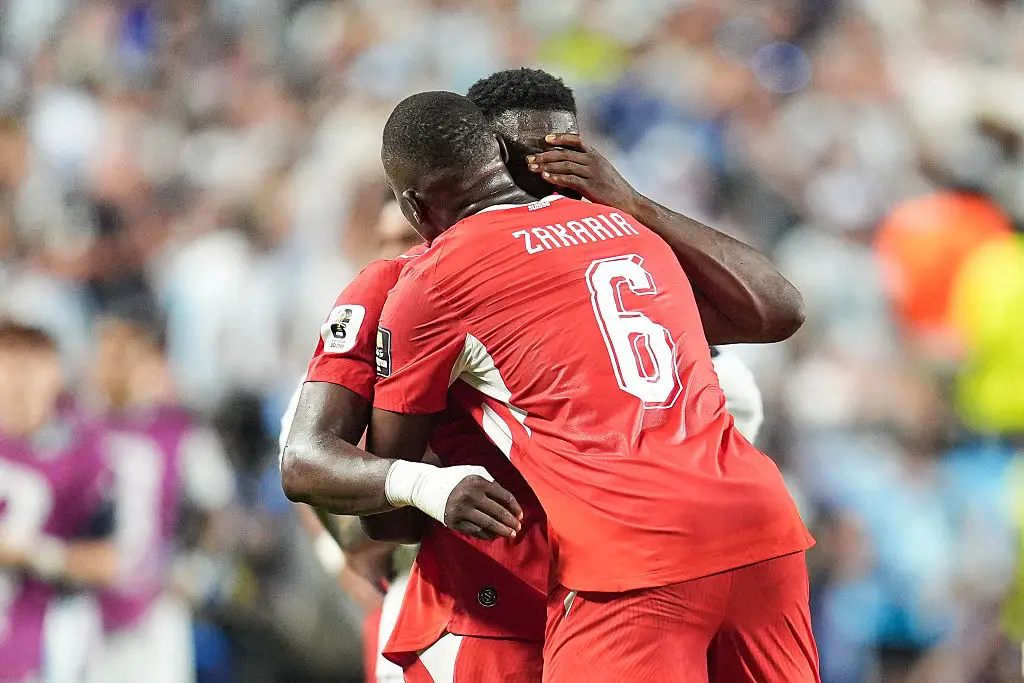
Switzerland furious with the referee's decision
Speaking after the match, Switzerland boss Murat Yakin labelled the rule as 'unacceptable.'
"There was definitely no reason to award a yellow card," he said.
"It was a harmless situation. He should have let play continue.
"We were punished because of a rule that is unacceptable. I don't understand it. The fact that they intervened unnecessarily is extremely hurtful. It's a rule that has nothing to do with football.
"It destroyed our game. We have to accept it, but it is painful to lose that way.
"This team has so much passion. Despite the fact we were one man down, we gave it all. I'm extremely proud of everyone."
Alexis Mac Allister had put Argentina ahead after 10 minutes, but Dan Ndoye levelled things up in the 67th, before Embolo's ill-fated dismissal.
Switzerland held on with 10-men, but finally faltered just eight minutes before penalties when Julian Alvarez struck with a sensational curling goal. Lautaro Martinez added a third in stoppage time.
New rules for the FIFA World Cup 2026
This year, there’s been a whole host of rule changes, many of which are designed to speed up the game and penalise players who drag things out. Some of the new regulations are likely to prove controversial.
10-second substitution
Subbed players now have to get a move on and leave the pitch within ten seconds by the nearest exit point. If they haven’t, their replacement will get held up by one minute until the next stoppage of play, and until then, their side will have to play with 10 men.
5-second throw-ins and goal kicks
If a referee thinks a player is taking too long for a throw-in or goal kick, they’ll start a five-second countdown, by which time the ball needs to be back in play. If it’s not, for throw-ins the opposing team will get their own throw-in, or for a goal kick the other side gets a corner.
Injured players to remain off the pitch for one minute
An injured player treated by medical staff off-field has to stay off the pitch for one minute, leaving their side with just 10 players.
More VAR
VAR can now be used to review an incorrectly awarded corner kick; second yellow cards resulting in a red card; when a player is incorrectly awarded a yellow or red card for another player’s actions; and any attacking fouls that occur before the ball is in play.
Players can’t cover their mouths
Players who cover their mouths in confrontational situations will be handed a red card. It’s believed players might cover their mouths to guard against lip readers while racially abusing other players, which some suspect has happened in the past.
Red cards for players leaving the pitch
Any player who leaves the pitch in protest over a referee’s decision will be handed a red card, and if a team walks off and causes a match to be abandoned, they’ll forfeit the game.
 Daniel Murphy