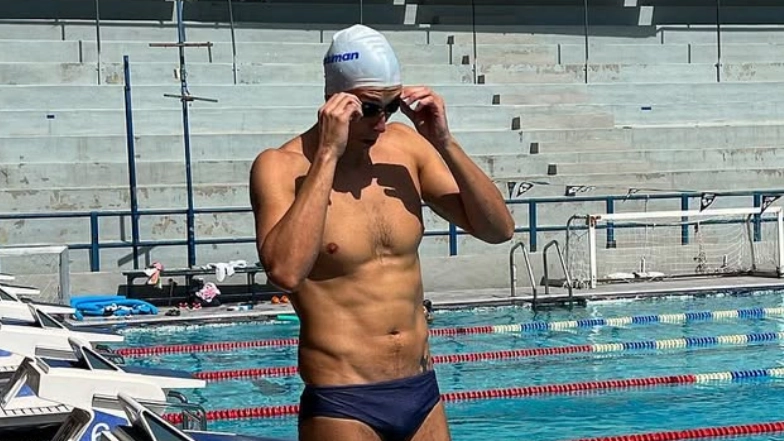
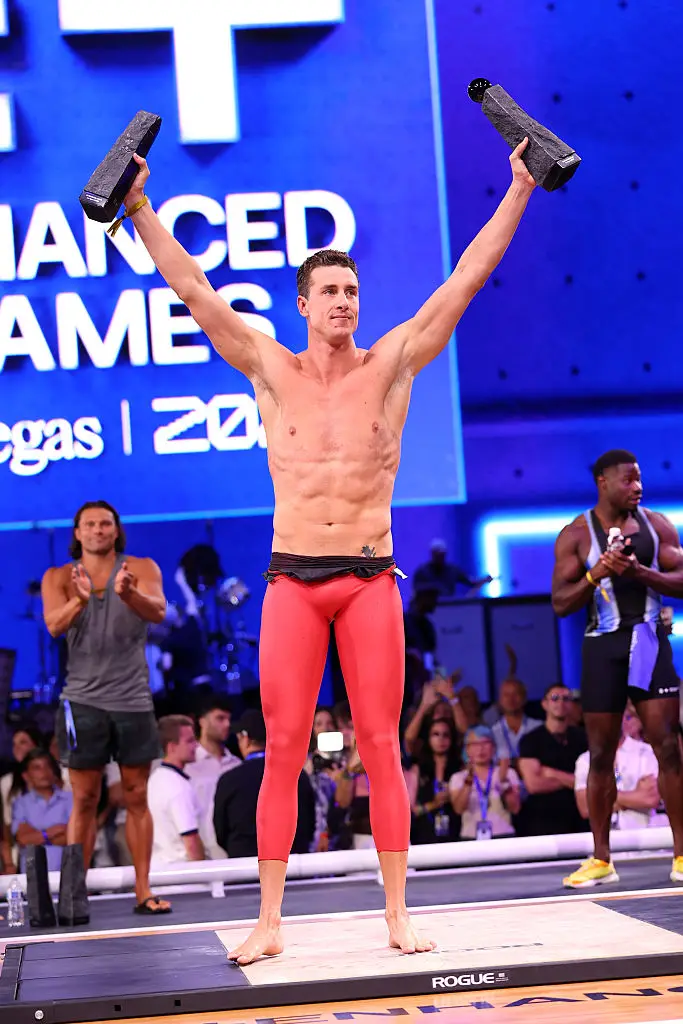
Enhanced Games athlete Kristian Gkolomeev earns $1 million for breaking world record

The Enhanced Games has kicked off with a world record thanks to Kristian Gkolomeev's display on Sunday (24 May).
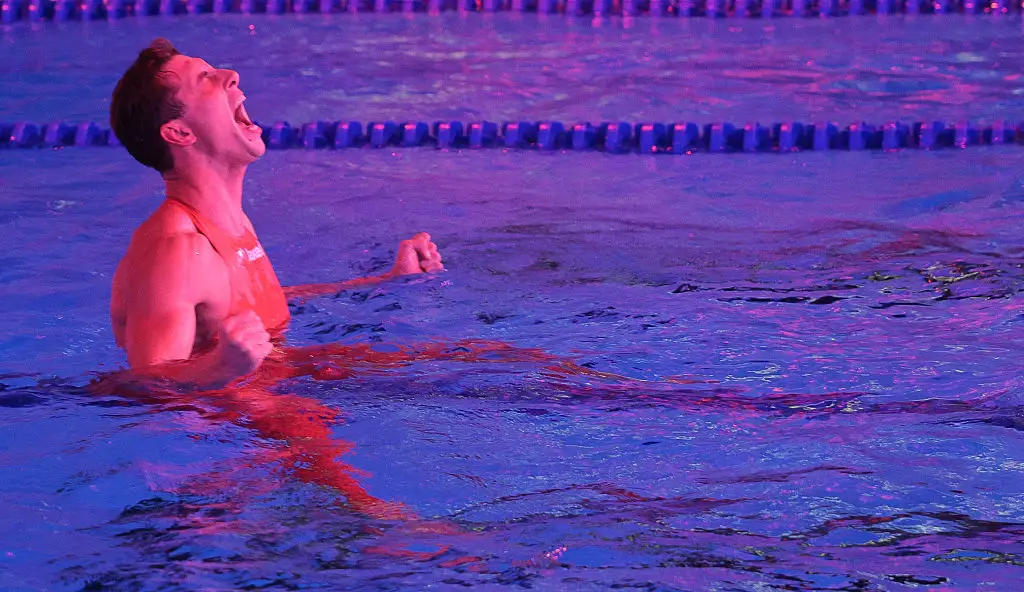
At the inaugural event that allows athletes to use performance-enhancing drugs, the Greek swimmer set an unofficial 50-meter freestyle world record of 20.81 seconds.
It's 0.07 seconds faster than the previous record and the 32-year-old was awarded the $1 million prize organisers have pledged to all record-breakers.
On it being the second time he earned the big payday, Gkolomeev said on the Enhanced Games YouTube broadcast: “Another million, I’m gonna say, it’s not bad at all.
Advert
“This is gonna change my life to the good, for sure. It’s a big help for me and my family.”
“I had a really good race,” he added.
“I had a mistake on the breakout. I got a little bit nervous, but then the rest of the swimming was good, so I got it.”
World Aquatics opposes the Enhanced Games and will not recognize any records set there.
Australia’s Cameron McEvoy still has the official record in the men’s 50-meter freestyle at 20.88 seconds.
"You don't have to be pressured or use drugs in order to be the best," says Travis Tygart, CEO of the US Anti Doping Agency, USADA.
"We don't want kids to have to say, 'in order to win an Olympic medal, when I'm 18 or 20 years old, I have to inject myself every day in the rear end with a potentially dangerous drug'."
However, American sprinter Shania Collins argues that those taking part already have more integrity than cheaters.
"We're being up front and honest and transparent from the start," she told the BBC.
"So how can you challenge our integrity when we're forthright with the information?"
British Olympic silver medalist Ben Proud argued that 'there's no money in sport' and that, instead, the Enhanced Games gives athletes a chance to win big.
"I was 30 and had just come off a silver medal, what future path do I follow?" Proud, who will still make $250,000 for winning the race and not breaking the record, said.
Out of the 42 athletes who competed on Sunday, only four said they did not use enhancers, while three of them still won their races - 100-meter sprinters Fred Kerley of the US and Tristan Evelyn of Barbados, and American 50-meter backstroke swimmer Hunter Armstrong.
What are the rules on doping at the Enhanced Games?
Though the Enhanced Games allows athletes to use performance-enhancing substances to compete - such as testosterone, anabolic steroids, hormones and growth factors (including HGH and EPO), metabolic modulators and stimulants - there are still rules for them to follow.
And it certainly isn't a free-for-all when it comes to using substances.
Competitors are limited to only using substances that are approved by the Food and Drug Administration (FDA), meaning drugs such as cocaine, heroin and other illicit, non-prescription drugs are strictly prohibited.
However, there will be medical supervision for the athletes using performance-enhancing substances, which will see them undergo continuous physiological monitoring and medical profiling to prevent dangerous over-use
And it's important to note that athletes don't have to use these substances to compete - 'un-enhanced' athletes are also welcome to compete, which helps to establish a format that tests both medically augmented and entirely natural physical limits.
Topics: Sport
 Anish Vij