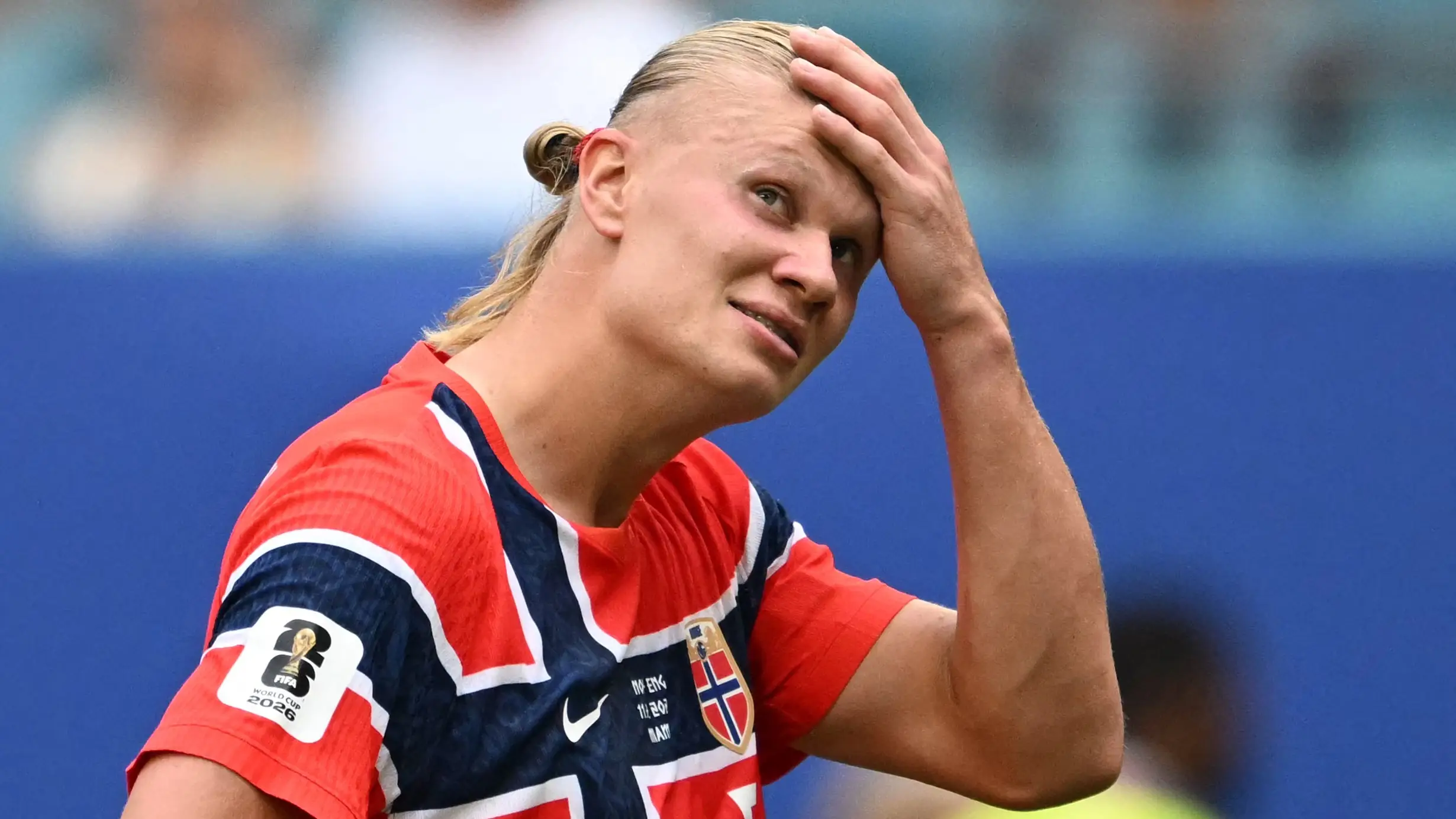
Why does Erling Haaland have 'Braut' on his Norway shirt but not Man City?

Erling Haaland's is one of the world's greatest strikers, with his performance at the 2026 World Cup continuing his meteoric rise to the top of world football.
The Norwegian striker has already won the Premier League, Champions League, FA Cup on a team level as well as individual accolades like UEFA Men's Player of the Year and UEFA Champions League top scorer.
And with seven goals to his name during his first ever World Cup campaign - topped only by the Lionel Messi (who else?) and Kylian Mbappe - he is showing that he really is world class on every stage and for any team he plays for.
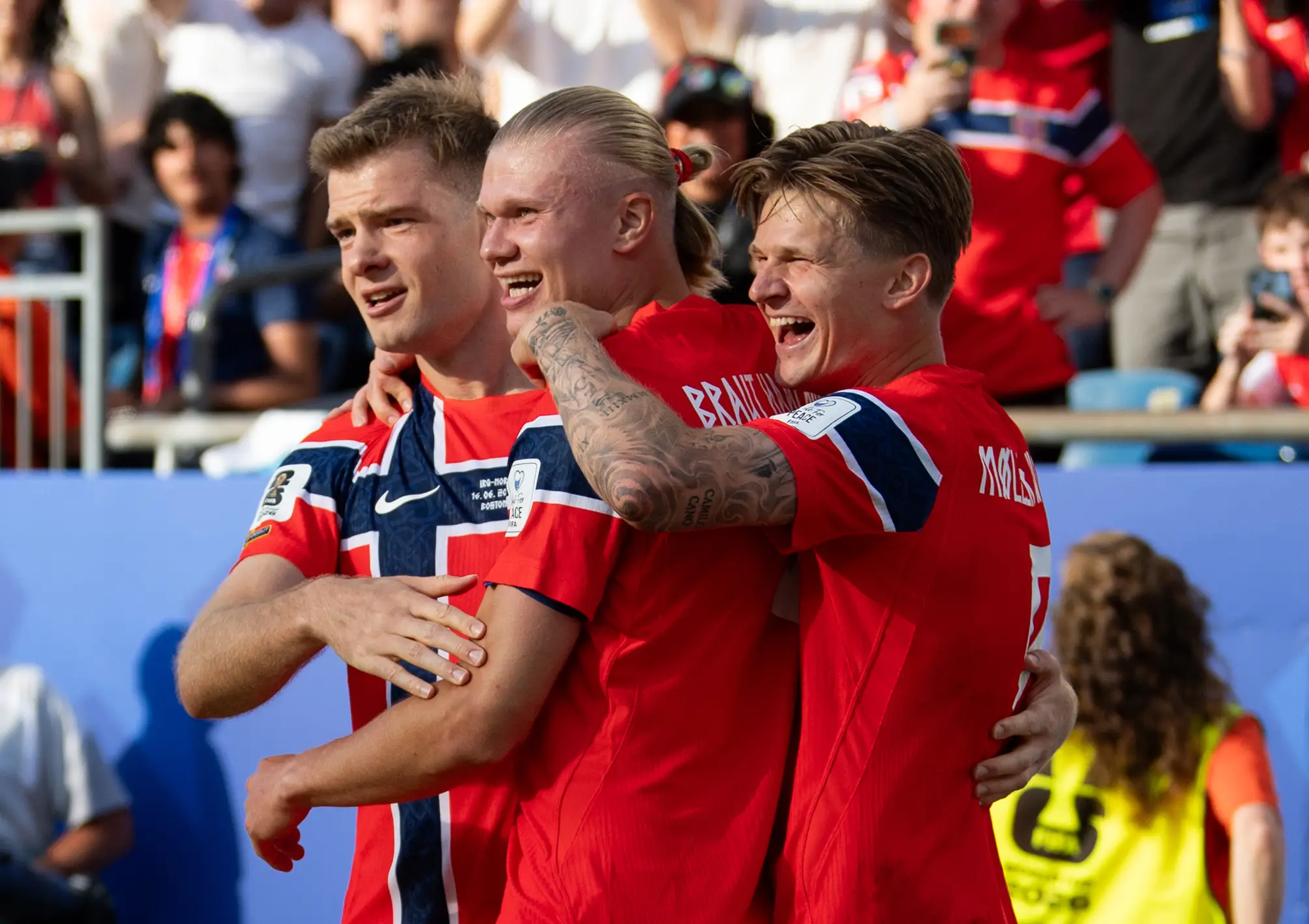
His goals mean all eyes are on the imposing footballer during his celebrations, including his Norway jersey where those glued to their TVs have noticed the name on the back of the shirt is different to his Manchester City top.
Advert
Haaland he is not. Enter 'Braut Haaland'. There's a very good reason for it too.
See, Erling's dad is retired Norway, Nottingham Forest, Leeds United, and Man City footballer Alf-Inge Haaland. A big time Barclaysman, he's perhaps known virally for his coming together with Manchester United's Roy Keane (IYKYK) during Alf-Inge's City days. Not one for those with knee injuries.
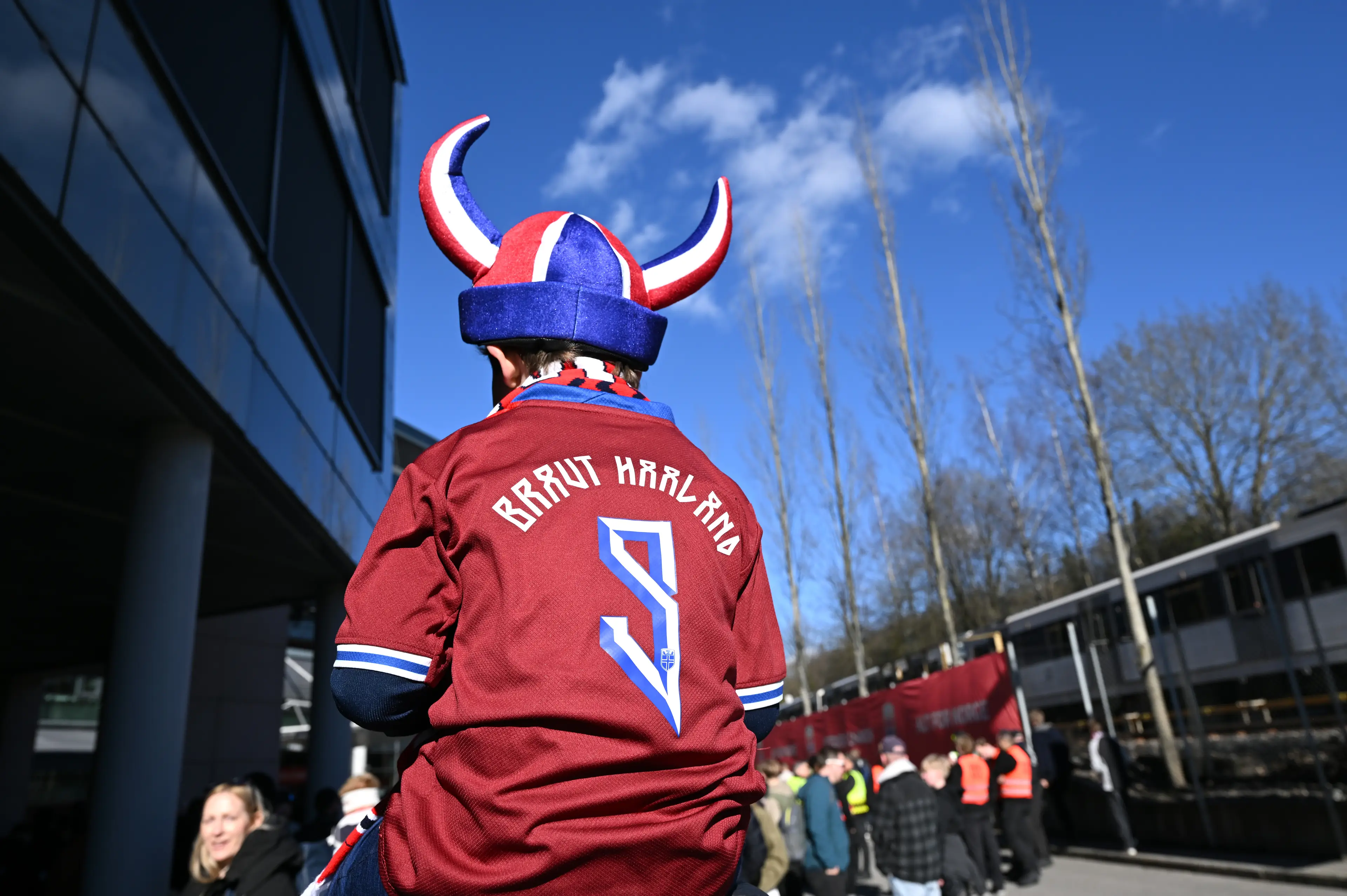
In a hugely symbolic move of where he came from, Erling's Norway shirt name is part of him recognising his heritage with his full, legal name actually being Erling Braut Haaland.
Braut is his mother's maiden name, her being former women's heptathlon athlete Gry Marita Braut.
As The Athletic reports, Haaland is also using 'Braut' on his social media handles and is in fact 'reflective of Norwegian custom, where it is more common for both maternal and paternal names to be used'.
World Cup shirt controversy
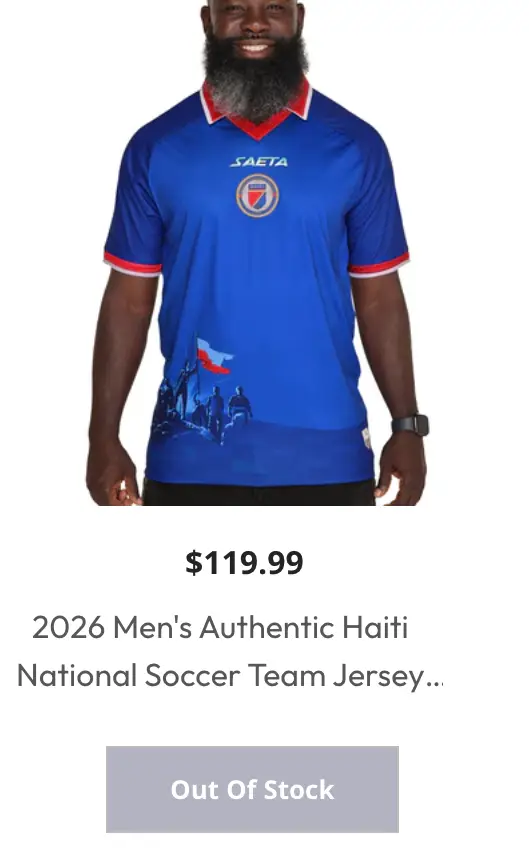
World Cup jerseys have caused a stir in this World Cup, with FIFA already moving to make Haiti redesign their sold-out national shirt.
Their first World Cup since 1974, the country had honoured the Battle of Vertières - the final battle in Haiti's Revolution that ended in 1804.
But FIFA has strict rules on political messaging. Supplier of the kit, manufacturing company Saeta, said in a statement: "During the review process, FIFA determined that certain visual elements could be interpreted differently under its equipment regulations and ultimately requested modification to the design.
"The final design was intended as a tribute to the men and women who contribute every day to Haiti's future and was not intended as a political statement."
FIFA's official regulation 28.1 on Kit and Colours Approval states: "The display of political, religious, or personal messages or slogans of any nature in any language or form by players and team officials on their playing, team kits or other clothing considered as outerwear and formal attire, before and after playing, and equipment (including kit bags, beverage containers, medical bags, etc.) or body is prohibited."
Along with strict regulations on the kit they wear, players face a bevy of rule changes at this year's World Cup.
FIFA introduced six new rules for 2026 World Cup
There have been been a whole host of rule changes for the 2026 World Cup; many of which are designed to speed up the game and penalise players who drag things out. Some of the new regulations are likely to prove controversial.
10-second substitution
Subbed players now have to get a move on and leave the pitch within ten seconds by the nearest exit point. If they haven’t, their replacement will get held up by one minute until the next stoppage of play, and until then, their side will have to play with 10 men.
5-second throw-ins and goal kicks
If a referee thinks a player is taking too long for a throw-in or goal kick, they’ll start a five-second countdown, by which time the ball needs to be back in play. If it’s not, for throw-ins the opposing team will get their own throw-in, or for a goal kick the other side gets a corner.
Injured players to remain off the pitch for one minute
An injured player treated by medical staff off-field has to stay off the pitch for one minute, leaving their side with just 10 players.
More VAR
VAR can now be used to review an incorrectly awarded corner kick; second yellow cards resulting in a red card; when a player is incorrectly awarded a yellow or red card for another player’s actions; and any attacking fouls that occur before the ball is in play.
Players can’t cover their mouths
Players who cover their mouths in confrontational situations will be handed a red card. It’s believed players might cover their mouths to guard against lip readers while racially abusing other players, which some suspect has happened in the past.
Red cards for players leaving the pitch
Any player who leaves the pitch in protest over a referee’s decision will be handed a red card, and if a team walks off and causes a match to be abandoned, they’ll forfeit the game.
Topics: Manchester City, World Cup, World News, Football
 Tom Earnshaw