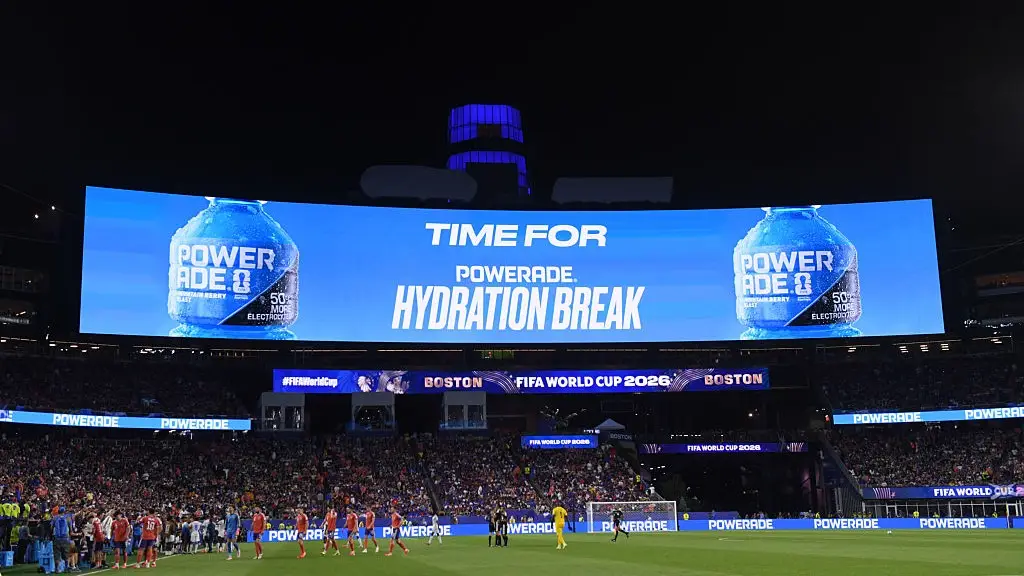
Hidden advantage behind controversial World Cup hydration breaks as true value emerges

Hydration breaks are quickly becoming the biggest bugbear of the 2026 World Cup, with fans, pundits, managers and now even players voicing their frustrations with the mandatory stoppages.
Though introduced under the guise of 'player welfare' in the potentially sweltering conditions of the USA, Mexico and Canada, annoyance has grown because breaks are being enforced in the World Cup regardless of the conditions. Even in close-roofed, temperature-controlled stadiums.
Even more anger is coming from the fact that the breaks are being used by some TV broadcasters throughout the world - like on FOX Sports in the United States - to show mid-game commercials.
Some football fans believe that was the real motivation behind the drink stoppages all along, and they are not happy about it.
Why are there hydration breaks in World Cup games?
Advert
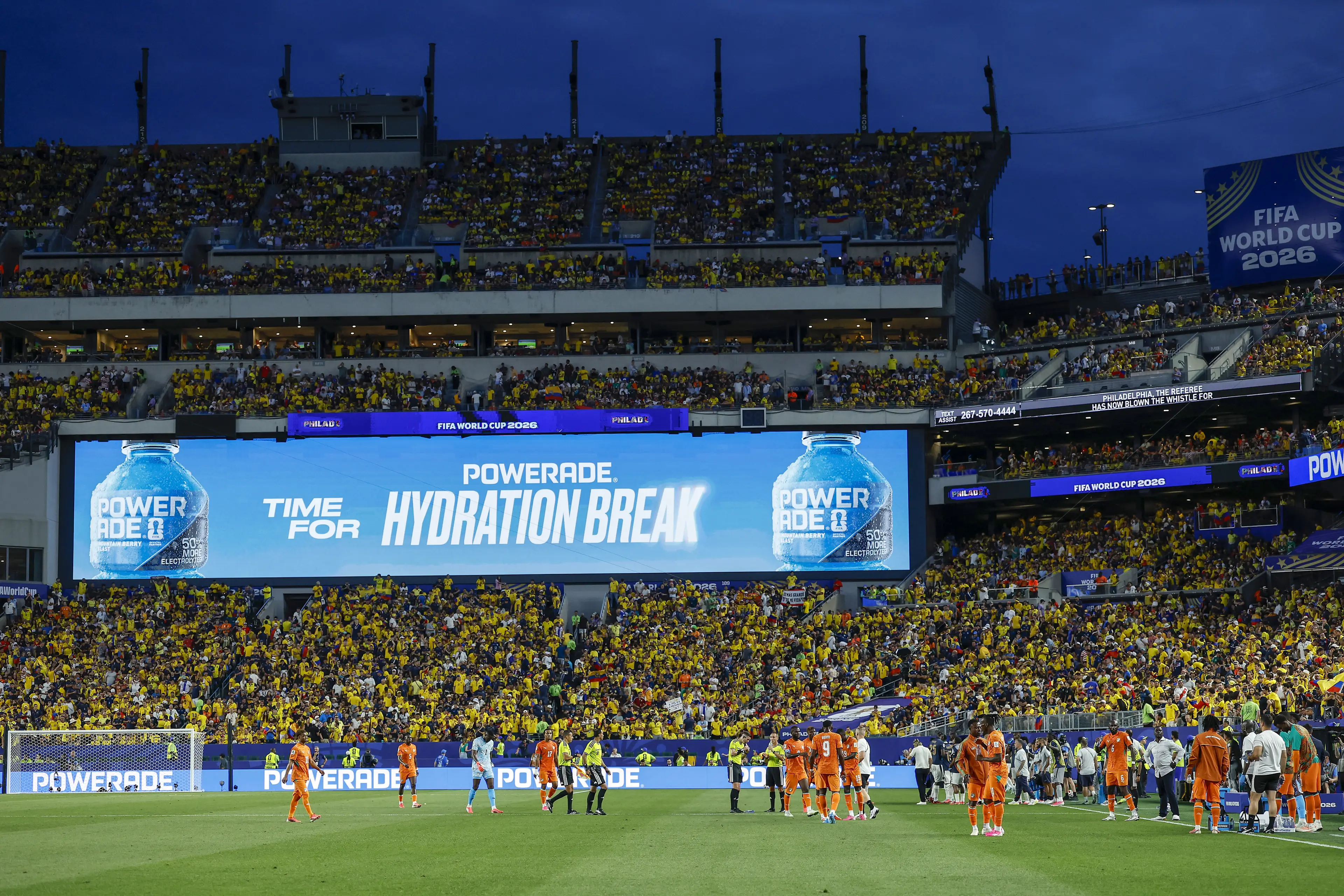
FIFA confirmed in December 2025 that there would be two mandatory hydration breaks during each of the 104 games in the 2026 World Cup, regardless of the weather conditions, to protect 'player welfare.'
The referee will blow for a hydration break at 22 minutes into the first and second halves, with play then halted for three minutes as players take on water.
Though play is being forcibly halted, the match clock continues to tick during the breaks, ensuring there is always a minimum of three minutes added time at the end of every half of football in the tournament.
When announcing the new regulation, Manolo Zubiria, Chief Tournament Officer, USA, said: “For every game, no matter where the games are played, no matter if there’s a roof, (or) temperature-wise, there will be a three-minute hydration break. It will be three minutes from whistle to whistle in both halves.
“Obviously, if there’s an injury (stoppage) at the moment of the 20th or 21st minute, and it’s ongoing, this will be addressed on the spot with the referee."
Why are football fans annoyed with the hydration breaks?
Water breaks have been used in World Cups before, starting in 2014, but they were always at the referee's discretion and only used in extreme heat, usually a Wet-Bulb Globe Temperature - which takes humidity, wind and cloud cover into account as well as heat - of 32°C.
Some experts have petitioned FIFA to lower that temperature to 26°C but while no one appears to be against hydration breaks if the conditions require them, the fact they are being enforced even when they are not needed is leading to resentment.18
The Netherlands' 2-2 draw with Japan on Sunday was played inside the enclosed, air-conditioned AT&T Stadium in Dallas while there was a storm outside, yet the players still had to stop playing.
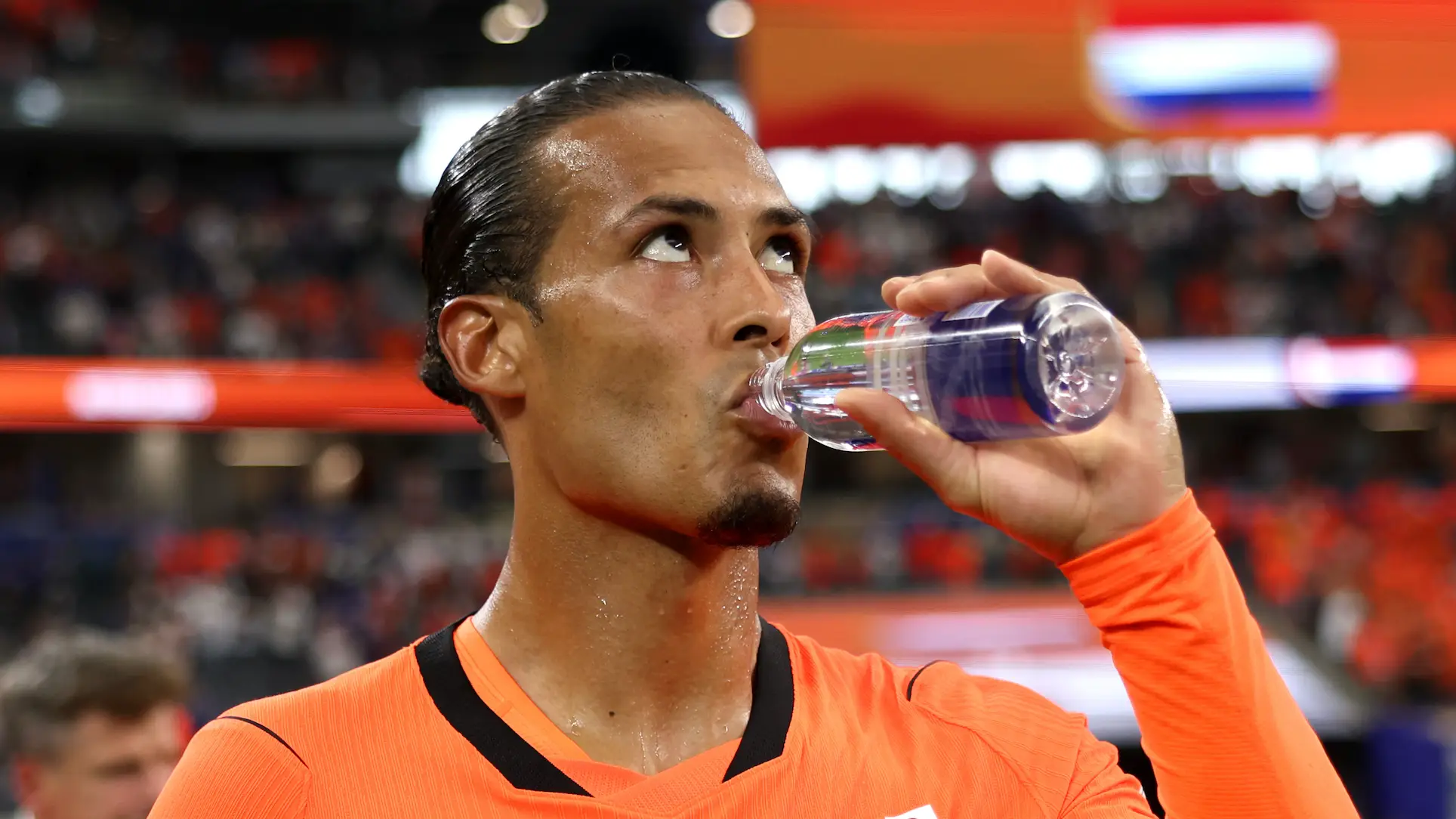
That prompted Dutch captain Virgil van Dijk to share his distaste for the breaks, labelling them as 'not great.'
Fans, pundits and players alike have shared their growing concerns.
There is fury that FIFA president, Gianni Infantino, has been able to fundamentally change the structure of the game - effectively changing a game famously of two halves to one of four quarters - without any challenge.
A stadium announce even called the hydration break 'the first quarter break' during a recent match, with fans concerned about the sport being Americanised and aping sports like basketball or the NFL.
X user @Matro25CANADA, posted: "The hydration break in Morroco vs Brazil game really messed with the flow of what was happening which was pure domination by the Africans.
"Worst addition to this World cup. Turns the match into actual quarters where teams can set up."
Echoing those thoughts, @DomsBig24962 said: "Hydration breaks drops the tempo of the game and it's just so so annoying but you cannot stop Gianni Infantino and Donald Trump from making money."
There is also anger that the breaks are being used for advertising.
"The hydration breaks are just farcical," @DanielHussey2 posted. "We’ve completely changed football so FIFA can show a few more ads. Going to get more frustrating as tournament gets into the knockout stages.
"And there’s nothing we can do."
Former Arsenal striker Ian Wright said on ITV: "I just think it's another way of getting adverts into it from an American point of view.
"They've used the fact that it's for the players, but it's not for me."
How much does an advert during a World Cup game cost?
FIFA announced in March that it would allow broadcasters to cut away from the live events to show adverts during hydration breaks.
Though there is a strict two minute and 10 limit applied to the break, which must end 30 seconds before the game restarts, the rules were broken the first time they were in place, with Fox returning to the action in the opener between Mexico and South Africa 10 seconds after play had resumed.
With broadcasters paying millions upon millions for the rights to broadcast the tournament, it's no surprise they are looking to maximise revenue.
Michael Johnson, a research analyst covering the U.S. sports industry for S&P Global, explained just how lucrative the additional advertising space could be.
"[It's] extremely valuable and could potentially command those Super Bowl level prices within that seven-to nine-million-dollar range," he told Reuters.
Why do the BBC and ITV not show adverts during World Cup breaks?
Thankfully for viewers watching the World Cup in the United Kingdom, rights holders ITV and the BBC are not showing adverts during the breaks and are instead continuing to broadcast live from the stadiums while the players have their drinks.
It was an easy decision for the BBC, given the state broadcaster famously does not carry advertising, aside from briefly promoting their own programming.
ITV, however, did consider showing commercials and held talks with advertisers, according to The Guardian, and showed similar mid-game adverts during the Six Nations.
However, they confirmed in April they wouldn't be doing so, with OFCOM regulations limiting the amount of advertising allowed during a broadcast potentially influencing the decision, according to The Times.
What impact are hydration breaks having on games?
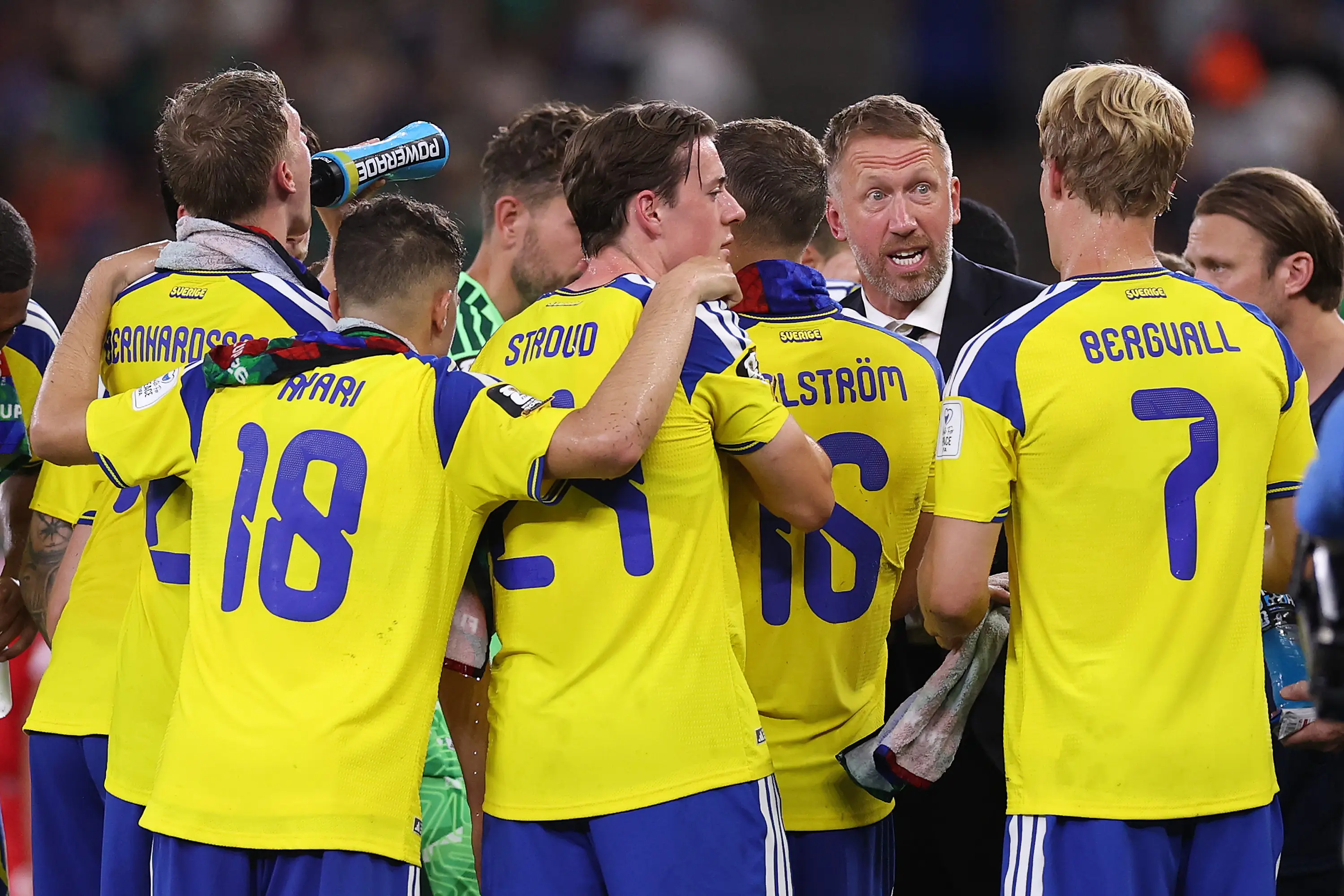
Though the sample size is small so far, it's already looking like the breaks are having a big impact on the games themselves.
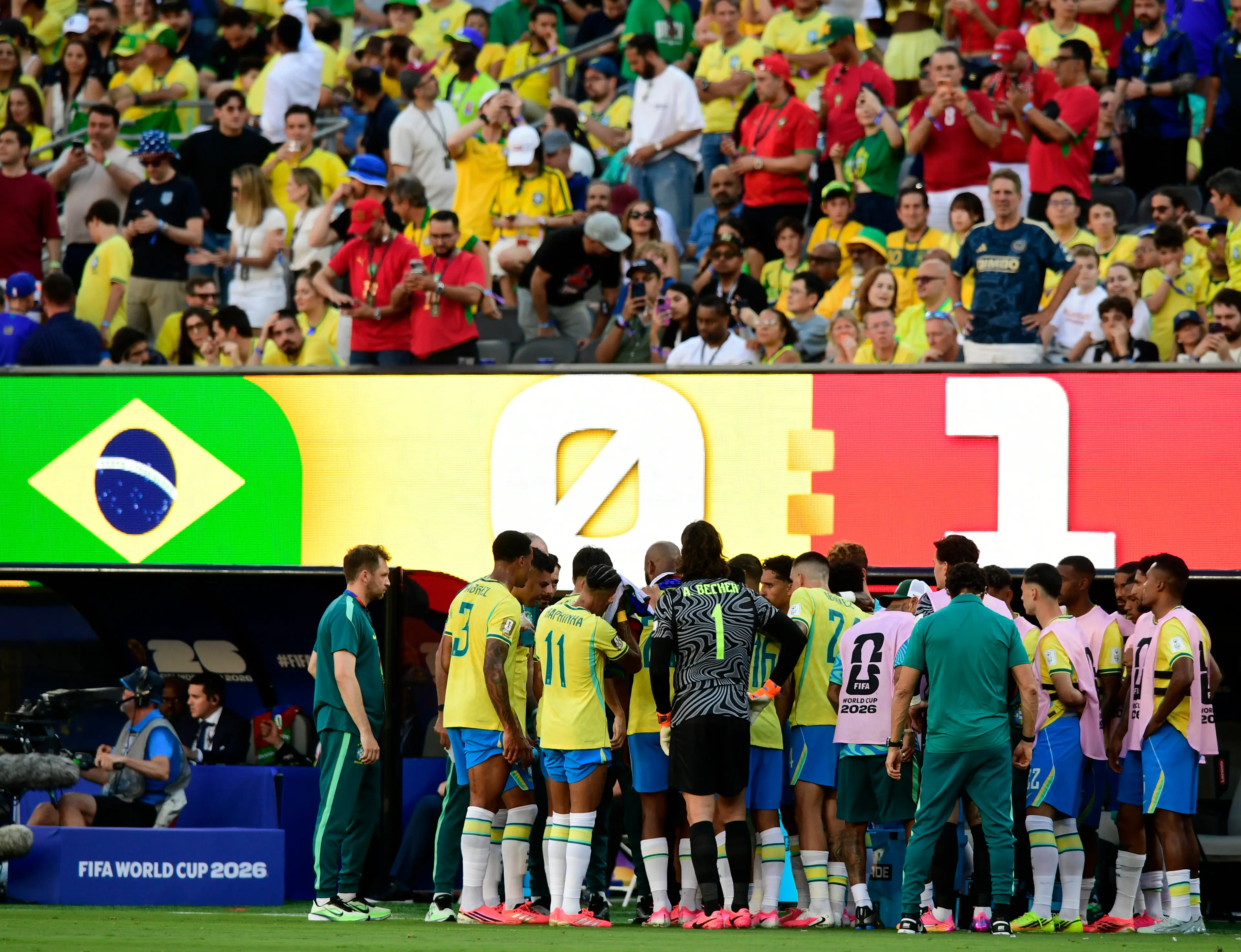
Brazil were under heavy fire in their opening match against Morocco and a goal down when the break gave them respite from the enslaught.
Six minutes after play restarted, Vinícius Jr levelled things up and manager Carlo Ancelotti admitted the break helped him manage his team.
"You can explain a problem to the players," he said afterwards. "[You can] make a tactical adjustment that can be very good."
Underdogs Curaçao had just scored an unlikely equaliser against Germany and had the four-time champions on the ropes before the stoppage gave Germany time to regroup, compose and run out 7-1 winners.
'Momentum', and the loss of it, is bound to be a hot topic throughout the summer, especially if games continue to hinge on the mid-half pause.
Football analyst Dan Evans tells LADbible: "What you can observe already is the experience of it.
"A break every 22 minutes interrupts the rhythm and flattens the atmosphere, just as a game builds intensity, the crowd is up and players are in the zone, everything stops.
"Players in that flow don't want to pause, and you lose some of the natural ebb and surge that makes football compelling.
"The tactical question that follows is who that reset helps. Momentum is a real variable, and the side that loses most from having it interrupted is usually the weaker one, because momentum is often the main asset an underdog has against a stronger team.
"A forced pause lets the favourite settle and reimpose its quality."
It's a debate that will rumble on until, and probably beyond, the final on July 19.
 Daniel Murphy