Meteorologist warns ‘super El Niño’ has become ‘mega El Niño’ as ocean hotspot hits 10C above normal

Experts have warned the Super El Niño which could bring stormy weather to Britain has now strengthened into a ‘mega El Niño’.
According to the Daily Mail, maps point to temperatures rising up to 10 degrees Celsius above average in parts of the Pacific, with the weather pattern likely to affect rainfall and temperatures across the planet in the next few months.
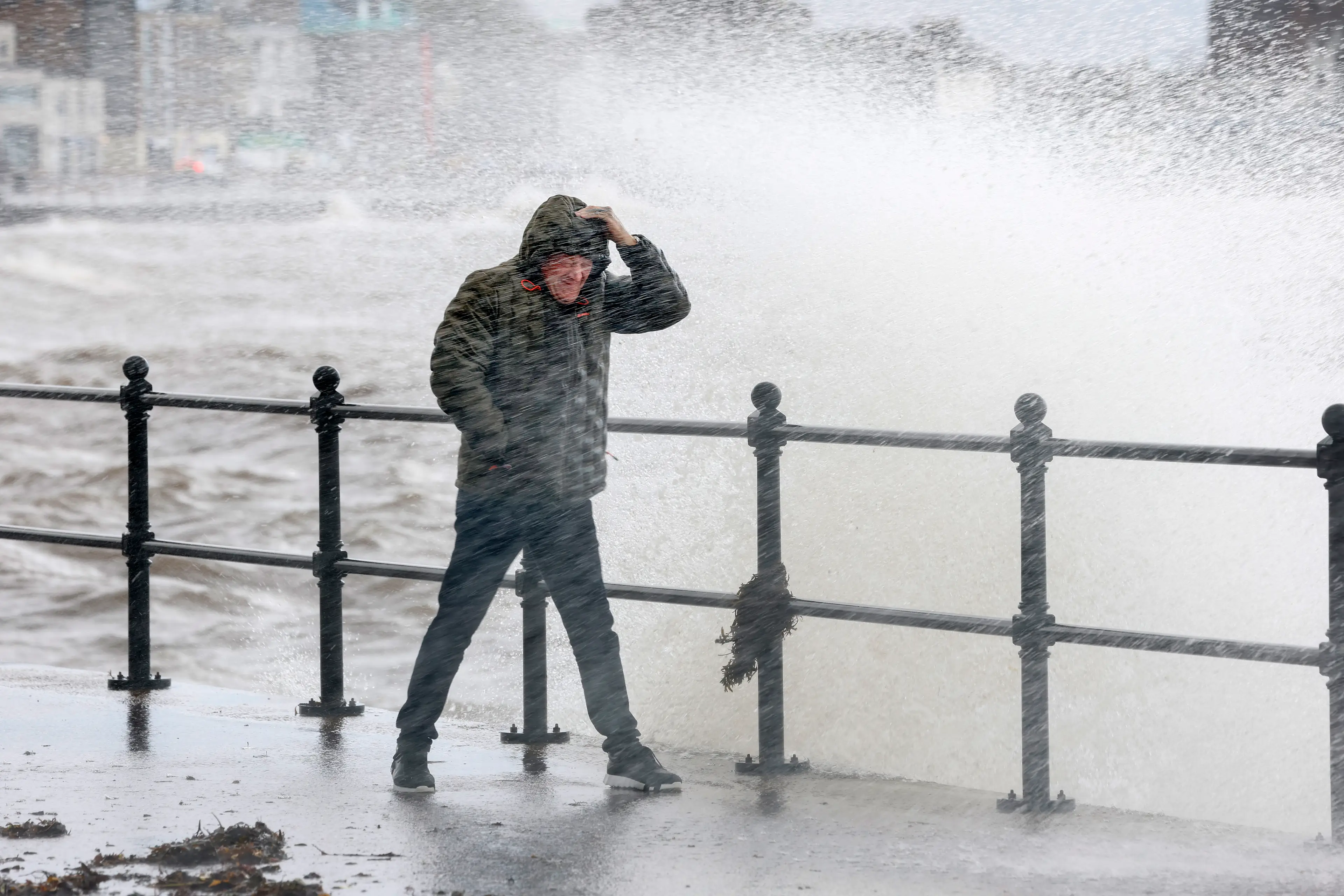
British households have been warned to brace for large winter storms by the Met Office.
Advert
However, in America those living on the west coast have already experienced extreme weather events linked to El Niño – with damaging winds, flooding and heavy rains all having already been unleased.
US meteorologist Ryan Maue wrote on X, “+10°C sea surface temperature anomaly near Galapagos and off coast of Peru.”
He chillingly added, “This is now a mega El Niño.”
It is feared the El Niño phenomenon could have a catastrophic impact on wildlife, with food chains disrupted and ecological networks thrown into chaos.
Iconic wildlife species including seabirds, sea lions, penguins, marine iguanas and more could be left without food, putting their survival at risk experts say.
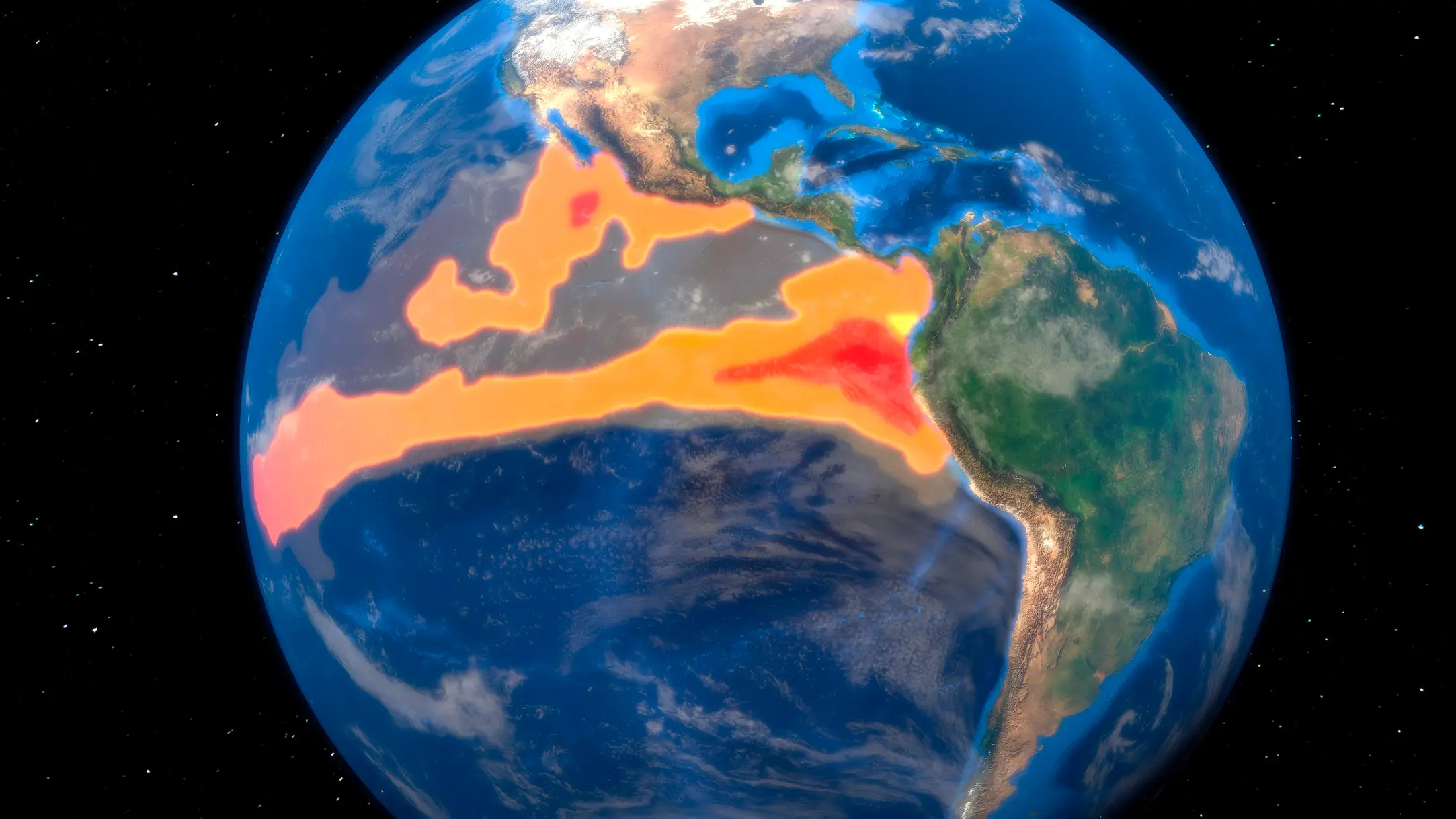
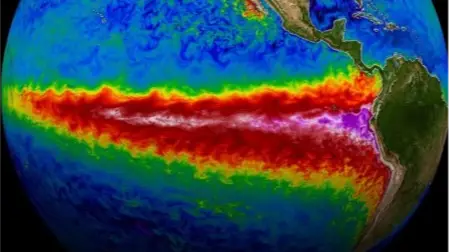
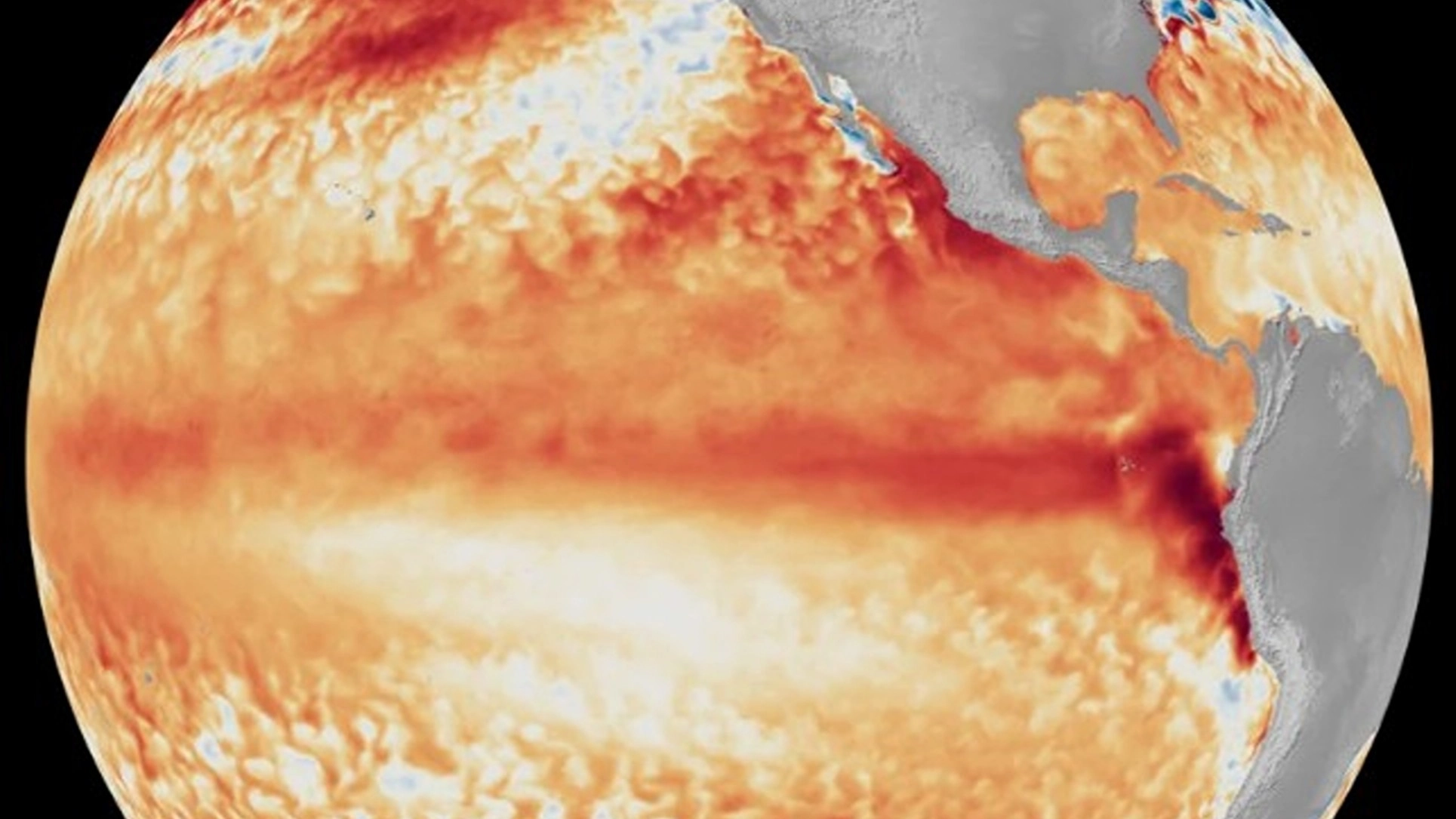
A map published online by the European Centre for Medium-Range Weather Forecasts shows a band of warm weather ranging across equatorial regions across the Pacific from the central Pacific to the coastline of South America.
The temperature increase has so far peaked to 10 degrees Celsius above normal close to the Galapagos Islands and the coast of Peru.
In the map, waters colder than average are represented in blue and warmer by yellow, bright red and dark red.
Author of The Language of Climate Politics Dr Genevieve Guenther, wrote on X: “Lots of aquatic life is dying in that heatwave.”
Another X-user commented: “It looks like a scar. Earth screams in pain. Next summer is going to be one ugly summer.”
Despite the alarming increase in temperature, not all the Pacific has been affected yet.
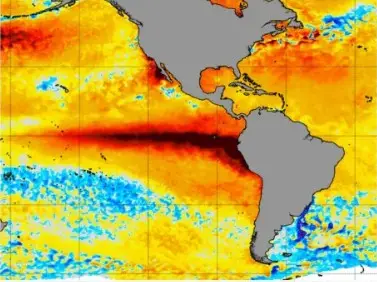
There is a particular hotspot in the ocean close to South America that is experiencing the extreme 10-degree Celsius warmth. Usually, a wider Pacific area experiences a milder 3- or 4-degree Celsius increase.
Climate scientist Rebekah Jones reportedly said: “I can't emphasize enough how potentially catastrophic this El Niño will be.”
The El Niño phenomenon is linked to a climate cycle that is known to switch between cold and hot periods every two to seven years, in what is termed El Niño-Southern Oscillation.
While in the hot phase, warm waters push atmospheric temperatures up, which affects the weather and increases planetary temperatures.
The World Meteorological Organisation said earlier in the month the current super El Niño is ‘off the charts’ and starting to ‘supercharge the weather’.
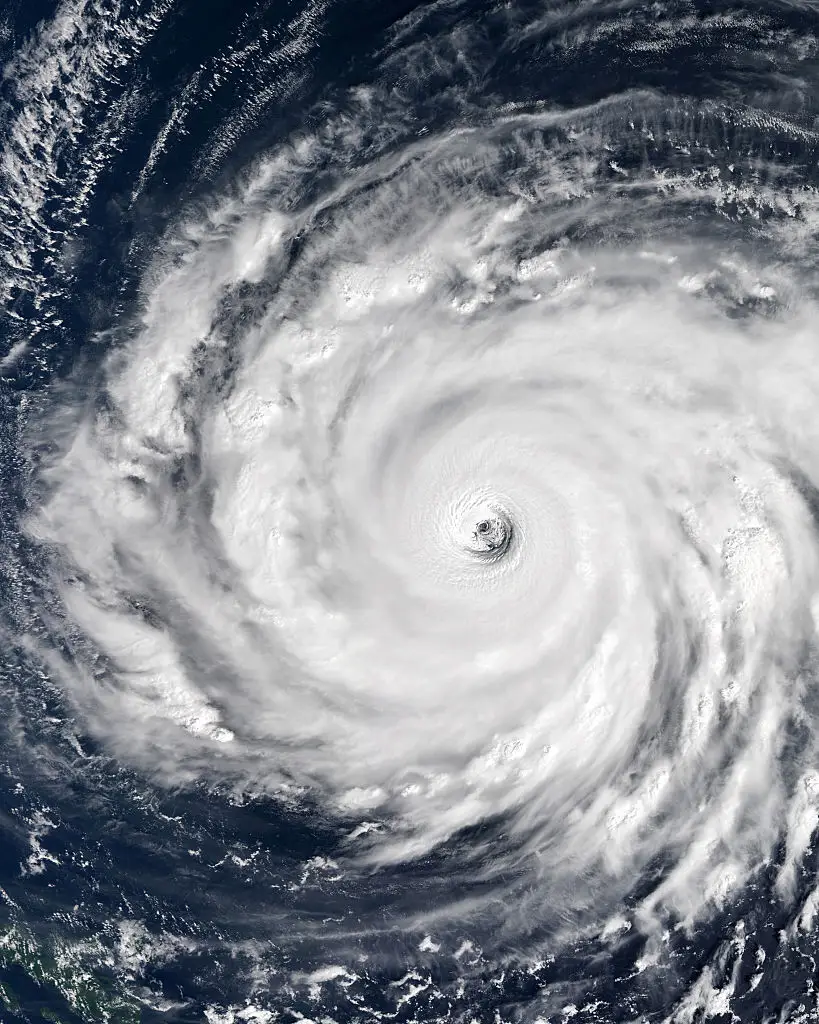
António Guterres, UN Secretary-General said: “We have entered a new age of climate extremes.
“A supersized El Niño is colliding with a planet already superheated by manmade climate change.
“Climate records keep falling. The human costs keep rising. And those least responsible are suffering first and worst.
“Leaders must get serious by cutting emissions faster, accelerating a just transition from fossil fuels and delivering the finance and protection vulnerable countries need.”
Topics: El Niño, Environment, Global Warming
 Michael D. Carroll