Safest countries in Europe to be in if WW3 breaks out after Switzerland issues chilling warning

Global tensions are continuing to rise, with multiple wars grinding on around the world, making people more worried about the possibility of World War Three.
Russia's invasion of Ukraine continues to grind on, with Putin also stepping up pressure on NATO with a campaign of disruptive attacks using cyber warfare and drones, which falls short of outright war but could still be highly disruptive.
The UK has even launched campaigns around resilience, advising that citizens may want to stock up on essentials amid growing concerns from climate change and hostile states.
Meanwhile, Donald Trump has repeatedly issued alarming threats to Iran as US and Israeli forces have carried out extensive bombing campaigns in the country, with images from Tehran showing apocalyptic scenes.
Advert
Israel has also launched attacks on Lebanon to its north, as well as invading a demilitarised zone between Israel and Syria.
Tensions also continue to ramp up in China, as the country sets its sights on Taiwan in another potential flashpoint in global instability.
It comes as Switzerland, known for its historically neutral stance, announced it has plans to strengthen its military.
"In response to the deteriorating security situation, Switzerland has three objectives: strengthen resilience, improve protection and enhance defence capabilities," the Swiss Federal Government said in an announcement on social media.
"The Federal Council has adopted Switzerland’s Security Policy Strategy 2026,"
But, if things do go very very wrong, then where might be the safest countries in Europe? Let's take a look.
Switzerland
Perhaps the most famous neutral country in the world, Switzerland hasn't involved itself in any global conflict for more than 200 years.

It is extremely unlikely to get involved in any potential third world war and there's some stunning scenery to boot, although it has faced criticism for its neutrality in the past, particularly after it homed Nazis in WW2.
The flag's a big plus at least.
Ireland
This would certainly be the shortest trip for people in the UK, and it's a great way to get back the benefits of being in the EU without feeling too far from home.
Brits aren't the most popular there, with Ireland's refusal to take part in WW2 coming in the wake of years of British subjugation, but it would probably be a safe option given Ireland isn't a NATO member.
The accent is lovely too.
Austria
Another holiday hotspot with beautiful natural landscapes is Austria, and the nation's historically neutral stance also means that it's unlikely to be a target for anyone who involves itself in a prospective third world war.
Although it's not a NATO member, which suggests it might be safe, it does border Ukraine, which perhaps makes it a little less safe than the aforementioned options.
Denmark
While Donald might not be the biggest fan of Denmark, given its refusal to hand over Greenland, the possession of that territory could prove critical if any war breaks out.
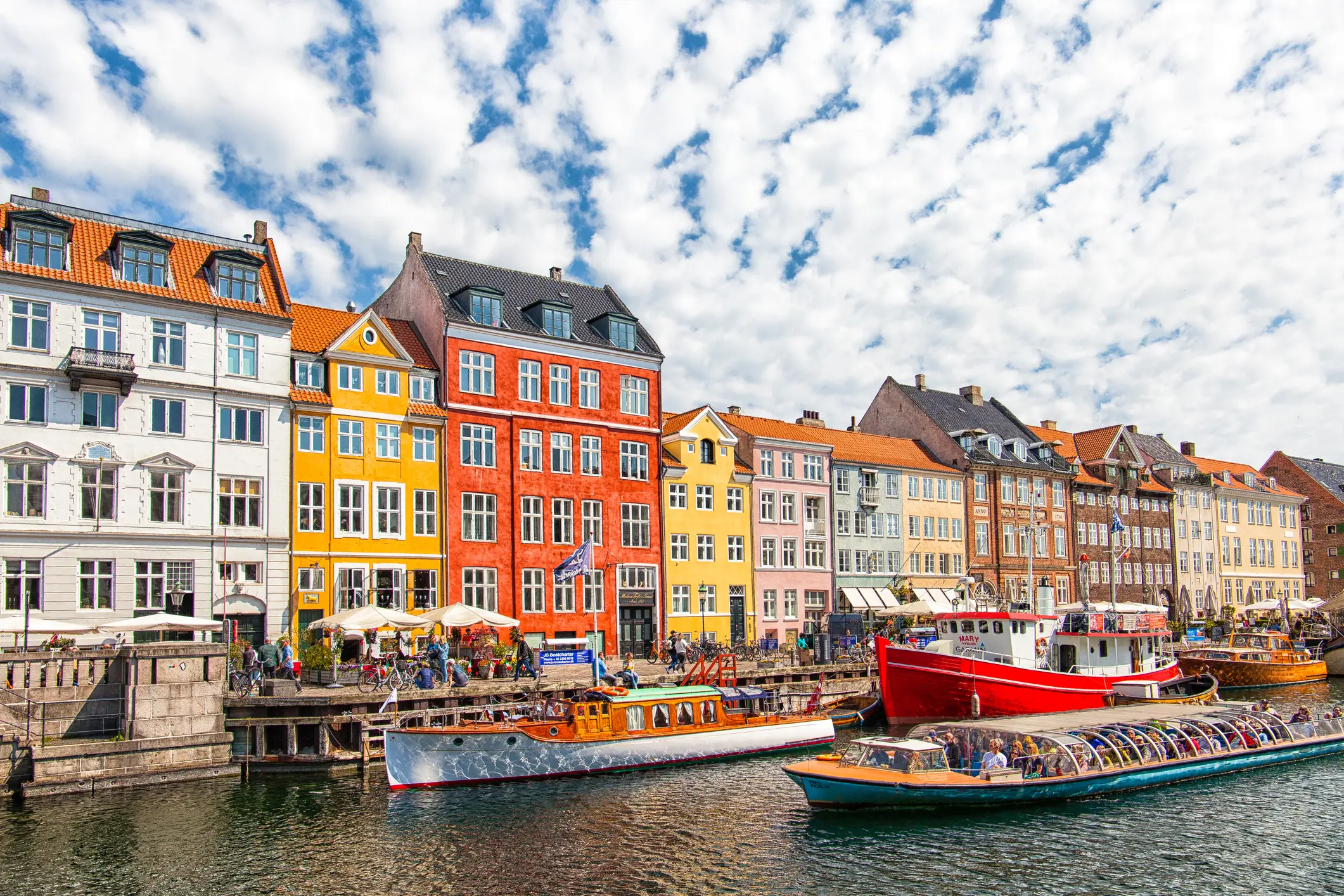
Denmark might be a relatively small nation but its geographic location and strong military makes it one of the safest options should war occur.
Portugal
Portugal's position on the far side of Europe makes it another safe option, given that any potential enemy countries would have to go through almost the entirety of Europe to reach it.
It's also a founding member of NATO, which would likely see it enter the conflict, but its inhabitants are also less likely to be affected by the fallout of the war.
Given the potential for a nuclear fallout which would impact billions, it's perhaps fair to suggest that nobody is truly safe should WW3 happen in the near future.
Iran strikes: what you need to know
Why are the United States and Israel attacking Iran?
US President Donald Trump announced on Saturday (28 February) that the US and Israel have started 'major combat operations' in Iran after explosions were heard in multiple cities across the country.
Following a significant buildup of US forces in the region in recent weeks, Trump declared in a video posted on Truth Social that 'we are going to destroy their missiles and raze their missile industry to the ground'.
Alongside hundreds of civilian casualties - including at least 165 people, most children, after a reported strike hit a school in Minab - Iran's Supreme Leader Ayatollah Ali Khamenei was confirmed dead following Israeli missile strikes around Tehran.
According to Trump, the aim of this weekend's attacks were to 'ensure that Iran does not obtain a nuclear weapon'.
This has come after weeks of Trump threatening military action in Iran if the Middle Eastern country did not agree to a new deal over its nuclear programme. However, Iran has insisted repeatedly that its nuclear activities are 'entirely peaceful'.
What areas of the Middle East have been affected?
In retaliation to the US and Israeli strikes, Iran has launched strikes of its own on Israel and Gulf Arab countries, which include Qatar, the UAE, Bahrain and Kuwait.
The BBC reports that at least nine people were killed in a strike on the Israeli city of Beit Shemesh, while military and civilian targets - including an American naval base in Bahrain and Dubai's international airport in the United Arab Emirates - were also targeted across the weekend.
Several videos have been posted on social media from tourists and civilians that show the damage inflicted across these areas from missile and drone strikes, including many British citizens who are currently stranded in Dubai.
Meanwhile, after Lebanon's Iranian-backed militia Hezbollah fired missiles at the Israeli city of Haifa, Israel responded with its own strikes.
On Tuesday (3 March), Israel's Defence Minister Israel Katz promised IDF troops on the ground would 'advance and seize additional strategic areas in Lebanon in order to prevent fire on Israeli border communities'.
Is the UK going to war with Iran?
This is a question that has been asked repeatedly since the major combat operation began in Iran, due to the nation being an ally of both the United States and Israel.
Prime Minister Keir Starmer confirmed that British planes were 'in the sky' in the Middle East as part of a defensive operation 'to protect our people, our interests and our allies', and condemned Iran's retaliatory attacks on 'partners across the region'.
On Sunday (1 March), the prime minister also agreed to a request from the US to launch strikes against Iran from British military bases.
While the UK did not participate in the strikes, Starmer released a joint statement with the leaders of France and Germany, calling for Iran to 'refrain from indiscriminate military strikes'.
"Iran can end this now," Starmer said. "They should refrain from further strikes, give up their weapons programme and cease the appalling violence and oppression of the Iranian people – who deserve the right to determine their own future."
However, the Secretary of State for Foreign and Commonwealth Affairs, Yvette Cooper, has said it is 'simply not true' that the UK is being dragged into another Iraq-style conflict in the Middle East.
While addressing a reported drone strike on a RAF base in Cyprus believed to have originated from Iran-backed militia Hezbollah, she told Sky News on Monday, 2 March: "We took a very specific decision not to provide support for strikes that were taking place over this weekend. We have been clear that we believe there should be a diplomatic process, negotiations process."
Trump, for his part, slammed Starmer on Tuesday, saying he 'has not been helpful' in the context of the situation in Iran.
He added: "It's very sad to see that the relationship is obviously not what it was."
Topics: Europe, Iran, Ukraine, World News
 James Moorhouse