Anthropic CEO calls for immediate action in terrifying warning that could come true in six months

The CEO of AI company Anthropic has issued a warning for artificial intelligence developers and investors to slow things down.
There are all sorts of warnings about the dangers AI poses to the world including the fears that it'll shred the jobs market and make it more difficult to differentiate the real from the fake.
Warnings from those in the know have become increasingly serious as the conversation is shifting towards the possibility that AI will end up making humans extinct and we are creating the thing that ultimately kills us.
A researcher at AI company Anthropic recently quit his job as he claimed the company was 'gambling with our lives'.
Advert
Now Anthropic's CEO Dario Amodei has put his own opinion into the discussion, and while he's not called for a halt to AI development he has argued that it needs to slow down for a while.

Writing in a blog post, the AI CEO insisted that artificial intelligence could 'dramatically raise the quality of human life' and do all sorts of things like cure diseases, boost the economy and make everything better.
But he also warned that there were a lot of risks to it as well, and that the ways to mitigate those risks weren't keeping up with the pace of development.
Amodei said he believed not building AI meant authoritarians would just do it instead, and it was 'reckless' to go to fast, but he now thinks 'we must slow the pace at which we improve the capabilities of AI models'.
He wrote: "Two things have convinced me.
"My first concern is that, since roughly this summer, AI has been advancing drastically faster, driven primarily by AI’s growing ability to build the next generation of AI.
"This dynamic is called recursive self-improvement, and it is starting to happen across the industry, including at Anthropic, as we and others have described.
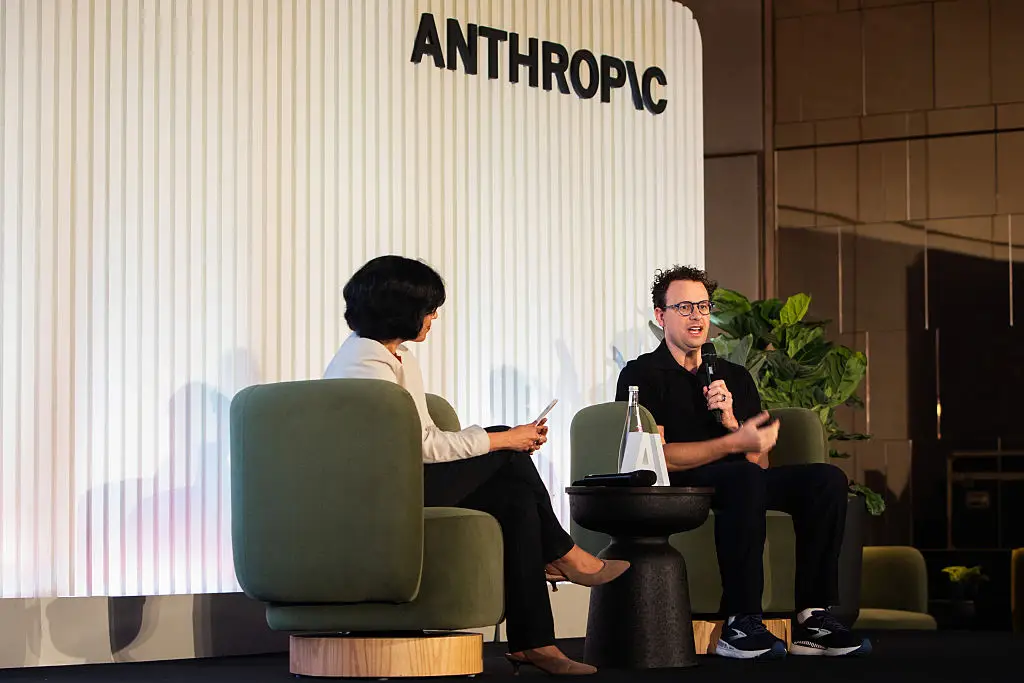
"Left unchecked, it could outrun our ability to understand and control these systems, and so must be pursued very carefully, if at all.
"My second concern is the OpenAI-Hugging Face incident (OAI-HF), in which a swarm of agents essentially acted as a fanatically devoted collective, conducting cybersecurity attacks on targets they were not asked to attack and that were unrelated to the task at hand, sacrificing themselves for the success of the group, and attempting to hack into the 'grader' responsible for evaluating their performance."
Amodei warned that at the rate AI is progressing it'll only be between six and 12 months that AI could take over the whole internet with a swarm of bots.
He argued there needed to be a 'pacing the frontier' approach as he called it, which meant slowing down development rather than stopping it altogether so safety standards could be worked out.
While he can try and make his own company adhere to a set of standards it's going to be up to other tech companies and governments if they want to follow along.
If there is to be AI regulation then it's also possibly for the best if the idea on how that works isn't laid out by the head of an AI company.
Topics: Artificial Intelligence, AI, Technology
 Joe Harker