Airports forced to change X-ray machines after what security could see was revealed

Airports have become a lot different over the years but some things have changed out of necessity rather than modernity.
While some folks prefer to arrive at the airport mere minutes before their flights, others feel safer in the practice of giving themselves a few hours in order to safely get through security and passport control, all with enough time to grab a coffee before the flight.
However, the recent installation of the European Union's new Entry Exit System has caused a lot of havoc for travelling passengers, with 150 of them even missing a Ryanair flight earlier this year.
And for some reason, people going through security still don't seem to understand that you can't have certain liquids or electronics in your bag, which just holds everyone else up.
Advert
Still, that's better than the explosive shoes that Richard Reid tried to sneak through security back in 2001, while in 2009 Umar Farouk Abdulmutallab attempted to sneak explosives through in his underwear.
This led to the introduction of high-tech X-ray scanners, with some US airports spending as much as $180,000 each on the Rapiscan security equipment.
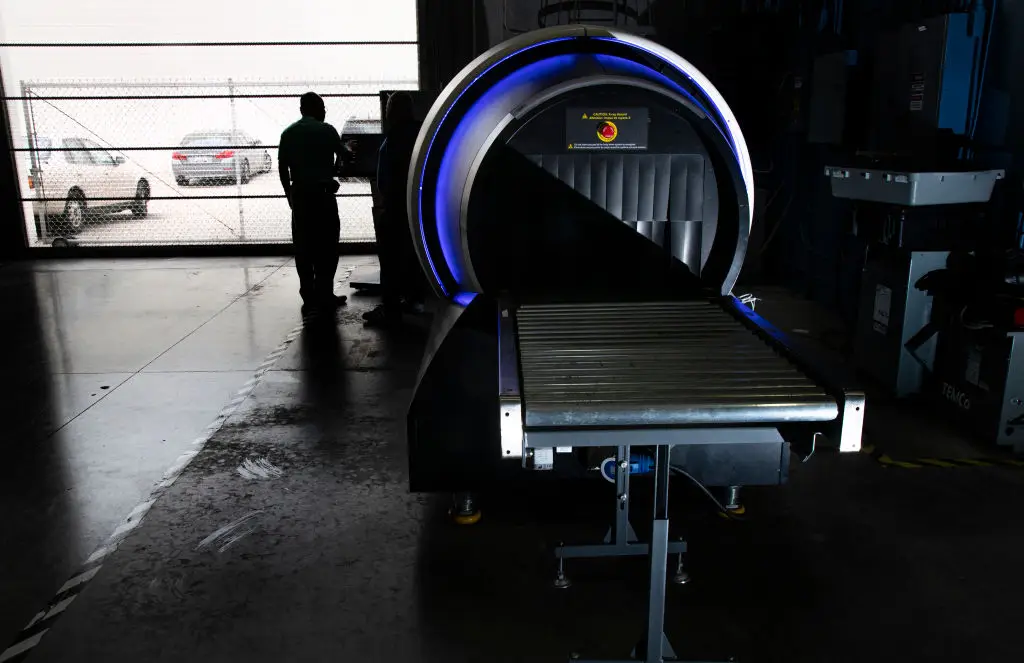
Security consultant Will Geddes previously told LADbible: “The biggest problem that obviously the TSA had was if it's body worn and you went through a traditional gate, it would just pick up anything metallic and there was no means of actually looking at the body intrinsically to find out if there was anything body worn.”
Geddes said after Abdulmutallab’s attempted bombing that obviously, 'all the airports went into this action, a sort of tailspin with we've got to get this new security in place now.’
He added: “Typically in the States, for federal agencies, the TSA especially, they just buy the first thing that they could possibly get.”
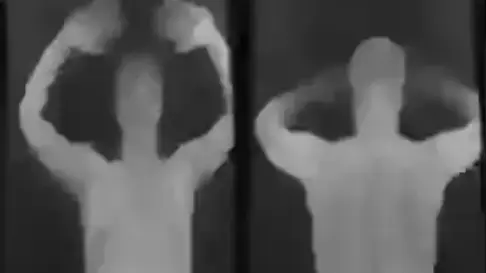
However, concerns were raised when the scanners were found to be a little too invasive, as TSA officers were essentially able to see everything when people passed through the scanners.
After complaints were made about the virtual strip tease that the officers were handed, Rapiscan was given until 2013 to update its technology to change this but failed to meet the deadline.
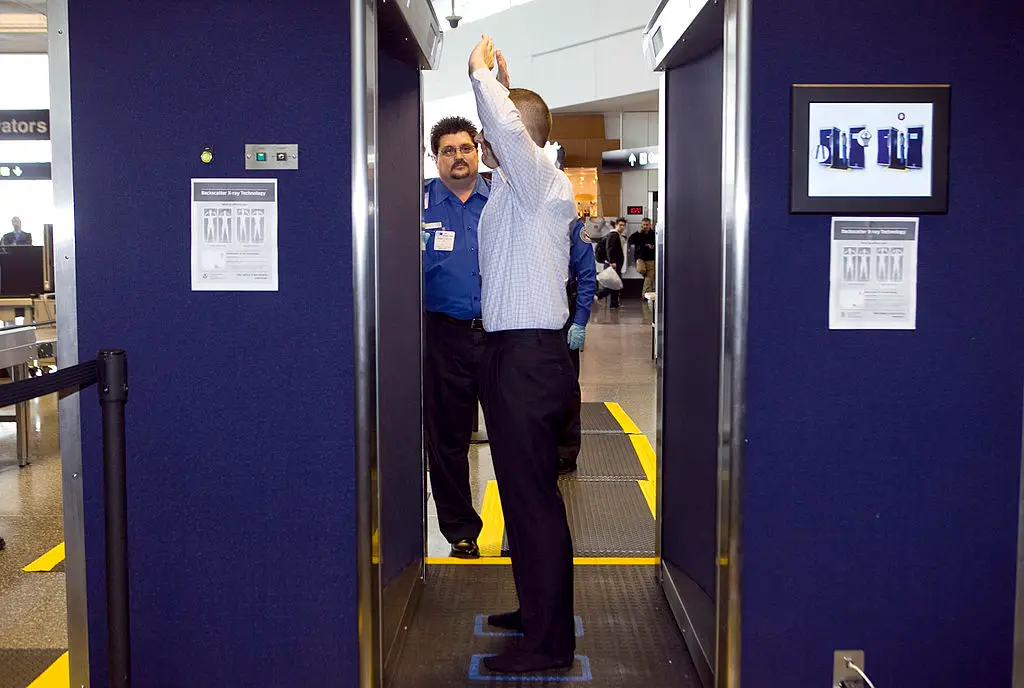
TSA later said: “TSA has strict requirements that all vendors must meet for security effectiveness and efficiency.
"Due to its inability to deploy non-imaging Automated Target Recognition (ATR) software by the Congressionally-mandated June 2013 deadline, TSA has terminated part of its contract with Rapiscan.
"By June 2013 travellers will only see machines which have ATR that allow for faster throughput.
"This means faster lanes for the traveller and enhanced security. As always, use of this technology is optional."
So thankfully it seems as if the travel agents will be treated to a little less the next time you pass through the scanner, although I wouldn't get too excited about it.
 James Moorhouse