
Nationwide and Santander confirm when mortgage payments will rise after Bank rate hits 4%

With interest rates going up to four percent it means that your mortgage stands a chance of increasing as well, especially if you're on a variable rate that chases the interest around.
The rate in the UK goes up and down with the time and conditions, and the banks you get mortgages with act accordingly, if you're on standard or variable rates they're going to go up with the interest rate increase.
After the Bank of England announced the rate raise yesterday from 3.75 percent to four percent (5 November), Nationwide and Santander announced when their mortgage rates would officially change and increase.
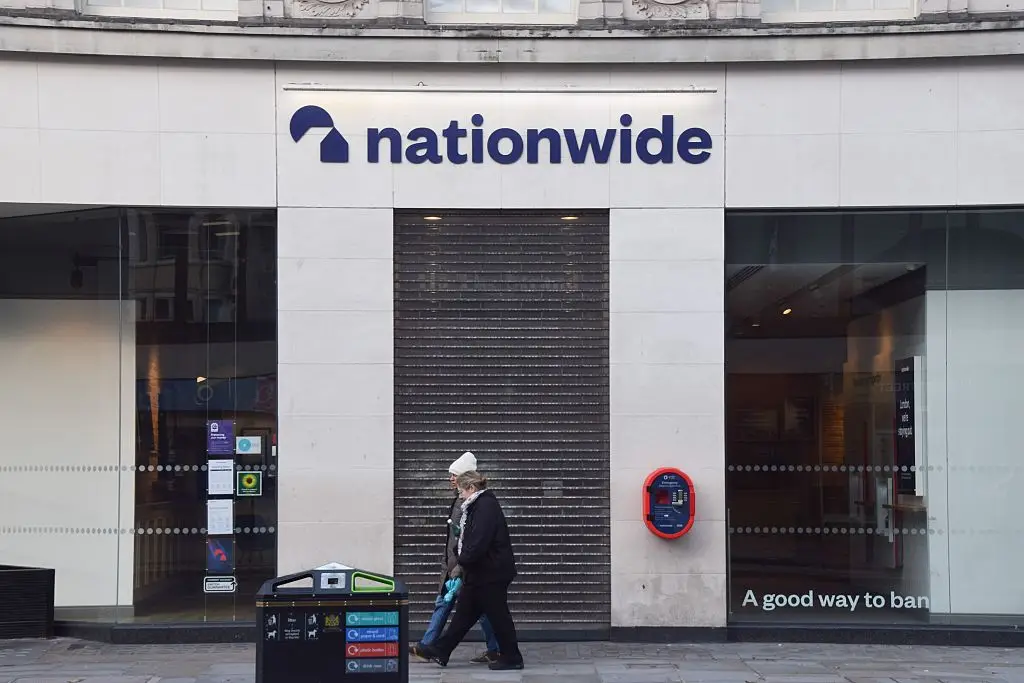
Nationwide have said that on 1 December their standard mortgage rate is going up from 6.49 percent to 6.74 percent, and their base mortgage rate rises from 5.75 percent to six percent.
Advert
A couple of days later on 3 December, Santander's customer tracker rate rises by a quarter of a percent, while their follow-on rate and its standard variable rate also increase, which means prices go up next month.
If you're with another bank it's worth checking their communications to see when their standard and variable rates will be going up.
How much your mortgage rate will rise
It all depends on what deal you're on, and how much money you've got on your mortgage.
Take a £200,000 mortgage for example, Lee Trett, Director & Co-Founder at Money Helpdesk, told LADbible that given the quarter percent rise those on trackers or standard variable rate deals it's another £30 a month, or £360 a year, to pay the same mortgage.
The rise is going to bite hardest for those who were on a lower rate for years and now have to contend with a much higher market.
He said: "The bigger shock is for people coming off cheap fixed deals taken out at two or three percent.
"With most fixes now somewhere between 4.8 percent and 5.8 percent, they could be paying an extra £200 to £400 a month or more, depending on how much they owe.
"Nobody’s surprised by the rise itself, but it’s another sign that higher borrowing costs aren’t going anywhere soon.”

The warnings for those on low rates about to expire were echoed by Tim Grimsditch, Managing Director at Unbiased, who explained that if someone had a £200k mortgage with 25 years left and they were going from around 4.5 percent to six percent they'd be looking at a monthly increase of £177.
His advice was that 'the most expensive outcome is doing nothing', and urged people to look for something better.
Lenders have priced this in for a while, KMD Financial Planning's Kris Dabner said, adding that some fixed rates have actually dropped recently.
That actually has been the case, as some lenders like Skipton Building Society have reduced their fixed rate deals by an average of 0.08 percent, with their biggest drop being 0.16 percent.
Explaining the rate reduction, Head of Mortgage Products Jen Lloyd said: "While interest rates have risen and the wider economic outlook remains uncertain, movements in the mortgage market have created an opportunity for us to reduce pricing in some areas."

Should first time buyers wait before getting a mortgage?
While those on the housing ladder are likely to be hit by an increase in their monthly mortgage, there's another matter for those on the outside looking in.
With interest rates going up and mortgages looking more expensive per month it's tempting to stay away, but Trett said it was a 'mug's game' to be waiting for the ideal moment.
“Trying to time the bottom of the market, whether that’s rates or house prices, is a mug’s game. If you’re holding out for two percent mortgages, you’ll be waiting a very long time," he warned.
"Those rates were the exception, not the norm.
"Now is the right time if you can comfortably afford the monthly payments at current fixed rates of around five percent without stretching yourself too far, and you plan to stay put for at least three to five years, allowing you to ride out any short-term dips in value.
"Getting on the ladder and building equity beats paying off your landlord’s mortgage every time.”

Mel Whiting, Head of Mortgages at Norton Finance, added that there was almost never a 'right time' to get on the housing ladder and trying to wait for it could leave you 'waiting indefinitely'.
She said: "The more important question should be whether buying is right for you now. If you have a suitable deposit, stable employment and income, and can comfortably afford the repayments even if your circumstances or costs change, it can still be worth exploring your options.
“First-time buyers shouldn’t panic simply because rates have risen, but equally they shouldn’t rush into making mortgage decisions because they’re worried about missing out.
"Look at the cost of buying as a whole, not just the mortgage rate, and make sure there’s enough room in your monthly budget for when the unexpected happens."
 Joe Harker