Eurovision song that came last sparked revolution that brought down fascist regime

The Eurovision Song Contest is just days away, and many people think it's just comedy songs and in-fighting between countries, but it has brought about real change in the past.
There's controversy every year over Eurovision song lyrics, last year it was Malta with the song 'Kant' (you can probably guess why), and this year that honour goes to Romania with their song 'Choke Me'.
The United Kingdom usually doesn't do very well and often receives the dreaded 'nul points' from other countries, but if we look back at 1974, a song which came in last place caused a huge ripple effect politically.
On April 6, 1974, Abba took the top spot with 'Waterloo', while languishing at the bottom of the scoreboard in joint last place was Norway, Germany, Switzerland, and Portgual.
Advert
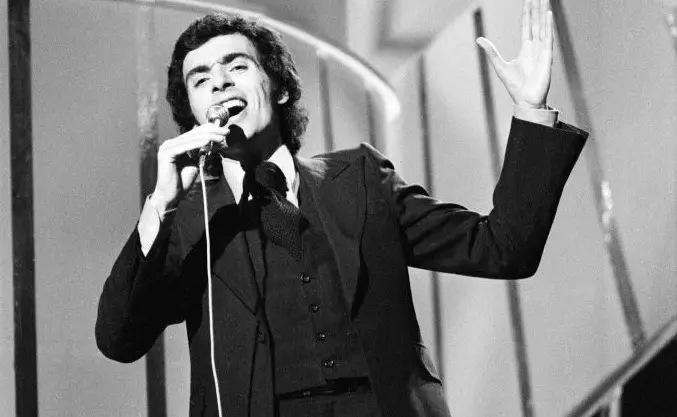
Portugal's entry was called 'E Depois do Adeus (And After the Goodbye)' and was performed by Paulo de Carvalho.
The tune itself wasn't political or controversial in any way, but it was written by José Niza, who was a known socialist activist.
According to The Guardian, in 1974, the country was at breaking point after 13 years of war, under the nationalist Estado Novo regime.
Junior officers in the military started to rebel, and formed a team called the Movement of Captains.
By April of that year, a plan had been formed to make a move to democracy, spearheaded by Maj Otelo Saraiva de Carvalho.
Carlos Almada Contreiras was the movement’s navy liaison, and knew they needed a signal which could be broadcast across the country to say "This plan is going ahead… there’s no turning back."
He remembered reading a book called The White Book on the Change of Government in Chile, which used a military warning system consisting of playing agreed-upon pop songs through civilian radio stations.
Radio broadcasts
They had a contact who worked at the Catholic station Rádio Renascença, and another at the Lisbon Associated Broadcasters.
Originally they chose a song called 'Venham Mais Cinco (Bring on Five More', apart from the state banned it under censorship.
The broadcasters also didn't want to play 'protest' songs, they needed something more subtle.
Enter, the Eurovision song. It was current, it wouldn't seem out of place being played, and the fact it was innocuous was exactly what they needed.
Carvalho referred to the song as 'some banality' that would go unnoticed.
Rádio Renascença,however, wanted something a edgier with its music and chose a song called 'Grândola, Vila Morena (Grândola, Swarthy Town)'
At 10.55pm on 24 April 1974, the Lisbon Associated Broadcasters played Paulo de Carvalho and 'E Depois do Adeus'.
One presenter on Rádio Renascença almost ruined the whole thing, by loading up an advertising reel moments before their song was supposed to come on, before an insider, who knew the plan, forced the sound technician’s hand and made the track play, just in time.
Siege and surrender
The Movement of Captains had their signal, and a coordinated military operation ensued.
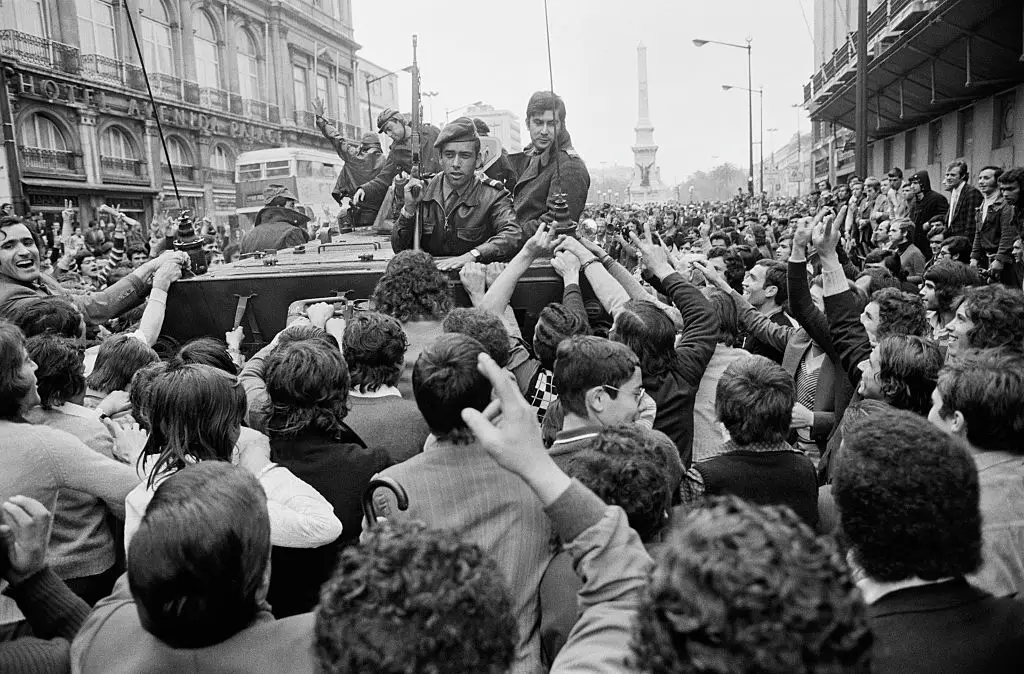
They undertook a siege which eventually caused then prime minister Marcelo Caetano to surrender, in central Lisbon.
Civilians took to the streets, urged on by the radio broadcasts.
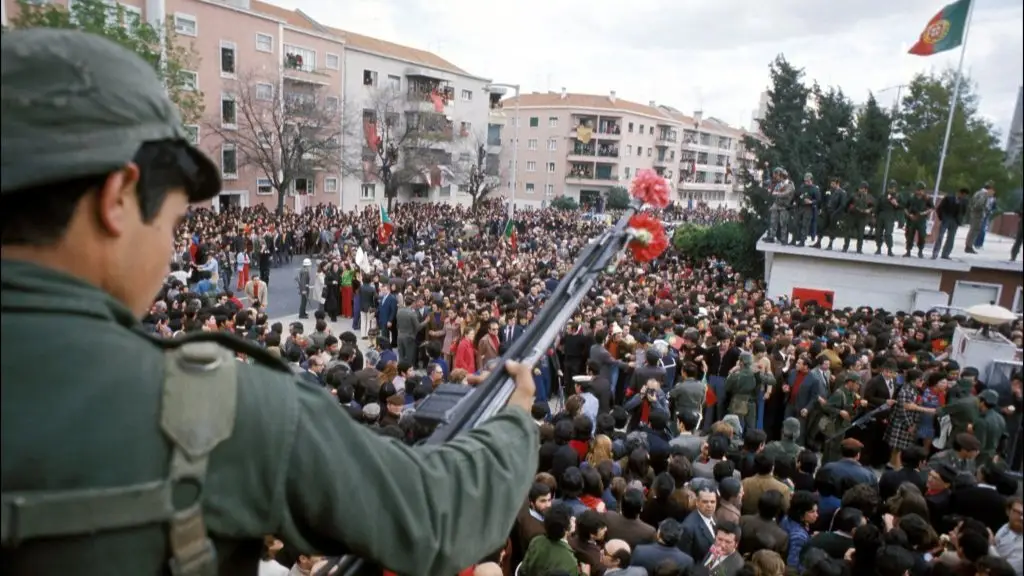
It took less than 24 hours for the dictatorship to fall, in what became known as the Carnation Revolution.
The nickname stuck after grateful civilians offered the soldiers flowers in the streets.
The two songs, 'E Depois do Adeus' and 'Grândola, Vila Morena' became part of history.
The following year, Portugal entered a song of hope into Eurovision, choosing 'Madrugada (Dawn)' which was performed by Duarte Mendes, who was one of the captains.
He wore a red carnation on his lapel too, and they didn't come last.
Topics: Eurovision, Europe, Politics, Music
 Jen Thomas