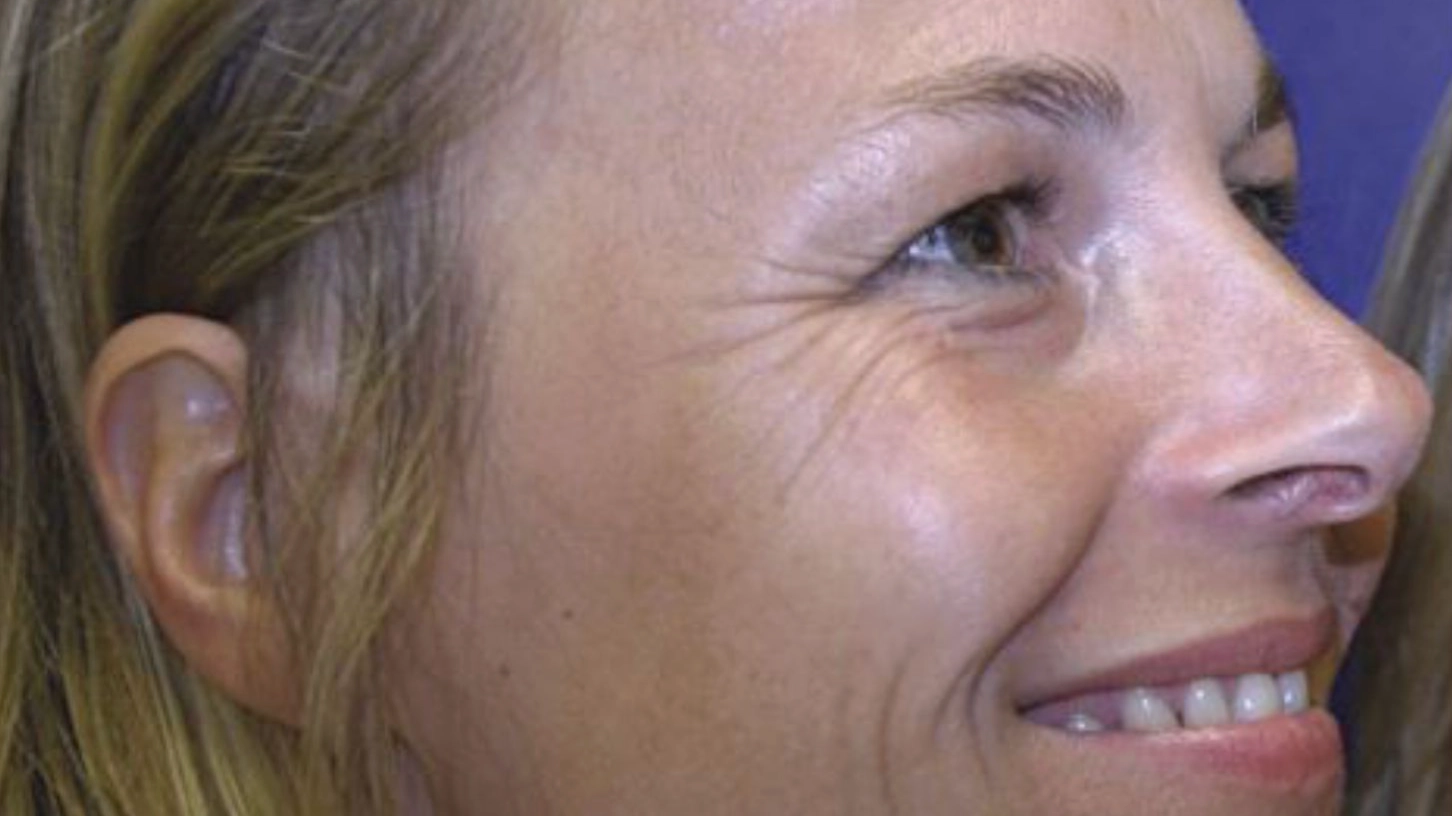
Identical twins show off difference in faces after only one used botox for 20 years

If you want to test what something does to the human body and you really need a control group as close to your test subject then identical twins are the ideal thing for you.
When a scientific study wanted to show the long-term effects of Botox on the face they got identical twin sisters to participate.
You will likely have heard of Botox, known medically as botulinum toxin, which can be used for cosmetics as it's meant to be used for treating stiff and spasming muscles but also reduces wrinkles and lines on the face, producing a younger looking visage.
At least for a while.
Advert
The study which started in 2006 followed them for years and the differences between the faces of the identical twins ended up looking pretty stark by the end.

Six years into the study and the non-Botox twin had a noticeably wider jaw, as well as a puffier visage, though it was unknown if this was related to the prescription drug.
Both women stated during that that they used sunscreen which helps to eliminate the possibility of wrinkles being caused by exposure to the sun's UV rays over long periods of time.
It’s also noted that they both had healthy lifestyles and hadn’t been using retinols for their wrinkles but they did live in different countries.
The non-Botox woman lived in Munich while her twin lived in Los Angeles with a higher UV index.
Dr Binder wrote in the study that long-term Botox treatment can help to prevent the development of wrinkles, 'not only by inhibiting the patient's ability to contract the target muscle but also perhaps through behavioural modification'.
The study concluded: "Long-term treatment with Botox can prevent the development of imprinted facial lines that are visible at rest. Botox treatment can also reduce crow's feet.

"Treatment is well tolerated, with no adverse events reported during 13 years of regular treatment in this study."
One woman decided she'd do a similar experiment with two halves of her own face.
Dr Bita Farrell decided to be a bit of a 'lab rat' to show just how much difference Botox can make.
With over 20 years of injecting experience, the board-certified physician injected the lower muscles on the right side of her face.
Dr Farrell explained she had targeted the DAO muscle, which pulls down the corners of the mouth, and the platysma muscle, which contributes to facial expressions and mouth movements.
"Now for you, two weeks later, I present my results as I try and contract my lower face muscles," the California-based content creator told social media users.
She could clearly be seen struggling to get any movement out of the right side of her face, while the left side was far more expressive.
 Joe Harker