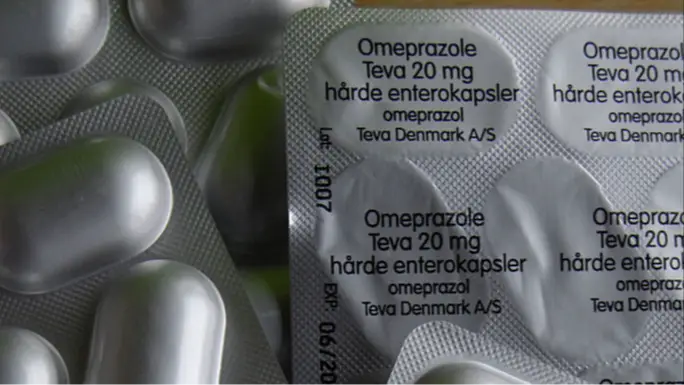
NHS doctor issues warning to Omeprazole takers

An expert has revealed advice to people who have been prescribed omeprazole and similar medications and urges them to routinely check for other health conditions.
Omeprazole, Lanzarote, esomeprazole, and other tablets that fall under the proton pump inhibitors (PPIs) you can be given by a doctor, are popular – but they don’t come without risk.
Now, if you’re not sure what a PPI is, it’s a medication that stops the production of acid in the stomach, which then helps people who have chronic acid reflux, gastroesophageal reflux disease, heartburn and indigestion, or other conditions that sees acid disrupt someone’s daily life.
Working to cut the acid production at its root means that it’s usually quite good for helping people in the long run, be it through a short few weeks on the tablet, or longer.
Advert
But if like some people (me included) who have been taking it for years, BBC Morning Live's Dr Punam Krishan has come out with a warning.

Between 2022 and 2023, over 73 million prescriptions were issued omeprazole in the UK alone, which equates to around 15 per cent of the population.
Despite it being so popular to prescribe in health care, its long-term use has been linked to some serious side effects, including migraines and stomach problems.
One of these problems is part of what the doc is shining a light on.
Dr Punam has revealed that if you’re taking PPIs, you should be getting routine medical reviews to rule out some conditions that are connected to the drug.
The NHS GP said: "Essentially these medications aren't there to be used unnecessarily or for a long period of time. They do require us to review them. And that's because if used over a long period of time, they can slightly increase your risk of things like low magnesium, low vitamin B12, but also increase the risk of gut infections, particularly Clostridioides difficile. We call that C. diff for short."
Symptoms of a C. diff infection include things like watery diarrhoea, per the NHS, as well as stomach cramps and pain, fever, nausea, and dehydration.
She went on to say of the condition: "Now, we have this bacteria in our bowel, you and I, we all have it, and it lives in balance. However, medications like PPIs can tip that balance."
She added: "And if you get overgrowth of this bacterium, it can cause persistent diarrhoea. That is a red flag.
"So you do need to speak to your doctor if that is an issue and you suddenly start developing diarrhoea. Or if you've got a change in bowel habit, we always say check in with your doctor. Just make sure that you are getting those reviews with your GP."
So, when are the other times you should get checked out?
If your symptoms return soon after finishing your prescription of omeprazole, if they worsen, or if you get black stools or bloody vomit, or trouble swallowing, it’s time to book an appointment.
Or, if you are low on magnesium and find that you're experiencing things like muscle cramps, fatigue, an irregular heartbeat, or feeling sick, it could be an indication to see your GP.
As for low vitamin B12, you might find you experience fatigue, weakness, a swollen red tongue, memory problems, heart palpitations, and digestive issues, per the health service.
Dr Punam went on to say that while 'medications are great’, there are other things you can do to help, like eating smaller meals.
She said to prop yourself up, wear loose clothing, drink gentle teas, and be mindful of your eating habits.
 Britt Jones