
Doctor who takes 10g of creatine a day explains true effect of 'loading phase'

A doctor with a focus on science and health education has come out to reveal why creatine has exploded in popularity recently, as well as the optimum dose to see the most benefits, and if the ‘loading phase’ is worth it.
Creatine – ever heard of it? It’s likely you have if you’ve ever wandered into a gym, down a health and fitness aisle, or watched a gym bro explain his daily routine.
But is it any good?
Andrew Huberman, a neuroscientist and professor in the department of neurobiology, and psychiatry and behavioural sciences at Stanford School of Medicine, has bigged up the use of this powder for years – particularly the ‘loading’ and ‘maintenance’ phases. That’s when you take a lot more than usual, before tapering it down, cutting it out, and repeating the cycle.
Advert
As has Dr Rhonda Patrick, a biomedical scientist who previously explained in A Dairy of A CEO last year, that creatine is optimal for brain and muscle and peptides, and cognition health.
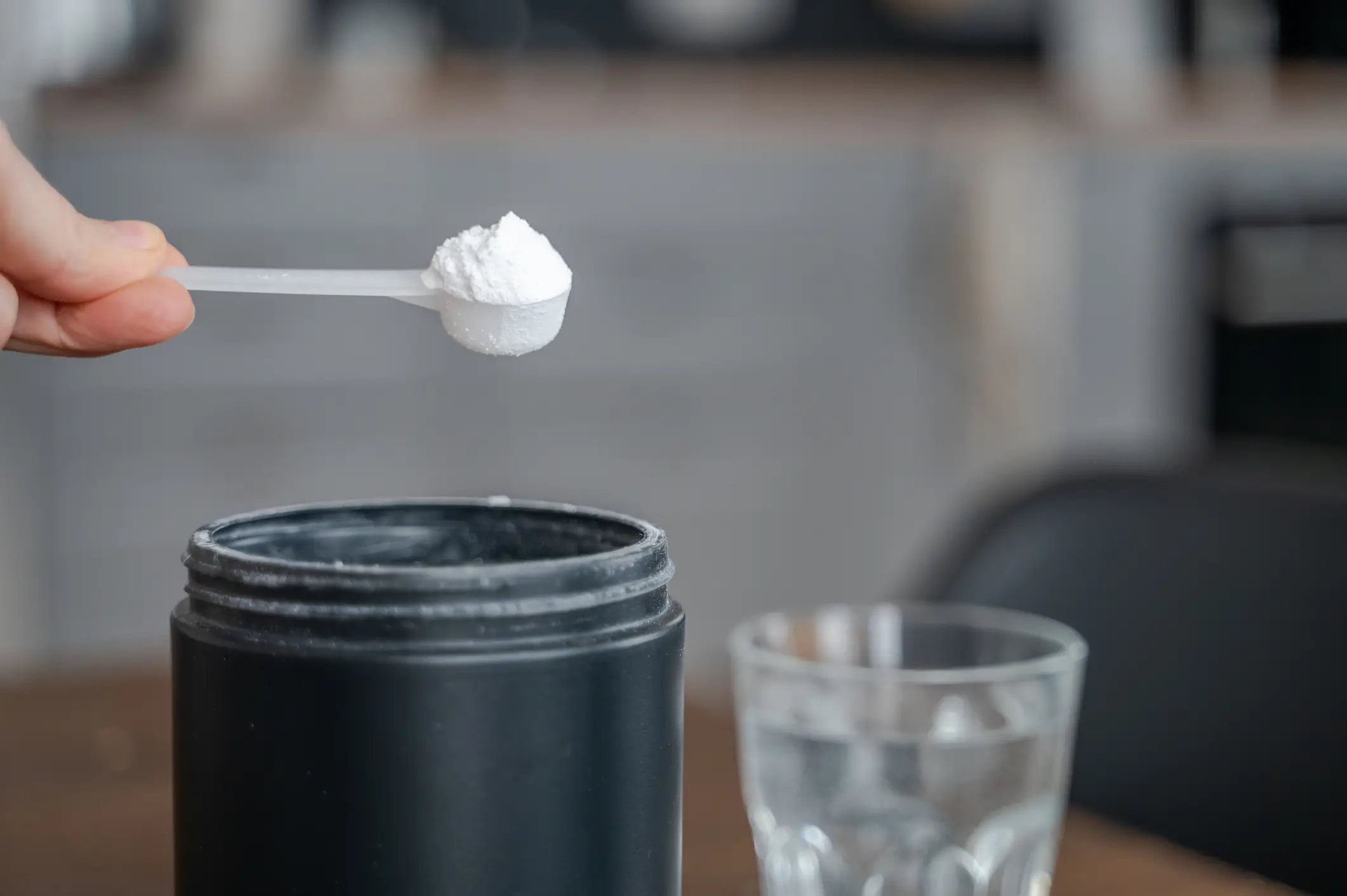
But now, the pair have joined forces to talk about the supplement, what it is, and whether the elusive ‘loading phase’ is actually a real method where results can be seen.
Appearing on the Huberman Lab podcast in March, the pair chatted about loading up on creatine – a naturally occurring compound that is created by amino acids that essentially recycles your energy storage, so your muscles can work for longer.
However, reports from media outlets like the BBC, reveals that early research suggests it can do a lot more.
Like improve focus, aging, and cognition.
Huberman also backs this up, revealing that he still loads up, but he doesn’t think ‘there's any real merit to the loading phase, maintenance phase idea’.
However, Dr Patrick explained that the loading up phase comes down to research studies pushing more creatine into subjects, so they can see the results quickly.
"First, I want to talk about your loading phase,” she said to him, telling him that loading up came about with the pure intention to help scientists see its impact faster.

"That was really for the studies that were being done, right? Because if you're taking five grams a day of creatine, it takes about three to four weeks for your muscle creatine stores to become saturated and researchers aren't going to wait that long."
Calling it an ‘experimental protocol’ for researchers to see faster results, she said real people don’t see muscle saturation with a normal dose of creatine until three weeks after starting a five-gram-per-day dose.
But if you were to double up, you might get the best of both worlds where you see faster results (not as fast as loading), and sustainable benefits.
"I was taking the five grams a day because that's really what most of the studies show”, she revealed. "When you're getting to that 5-gram range, muscles are really consuming it. There have now been, I think, a handful of studies showing that when you start to get above that...once you start to get to 10 grams, then if you look by MRI, you can start to see that creatine levels are increasing in certain brain regions. The 10 grams of creatine a day, which is now what my baseline is, is based off of that.”
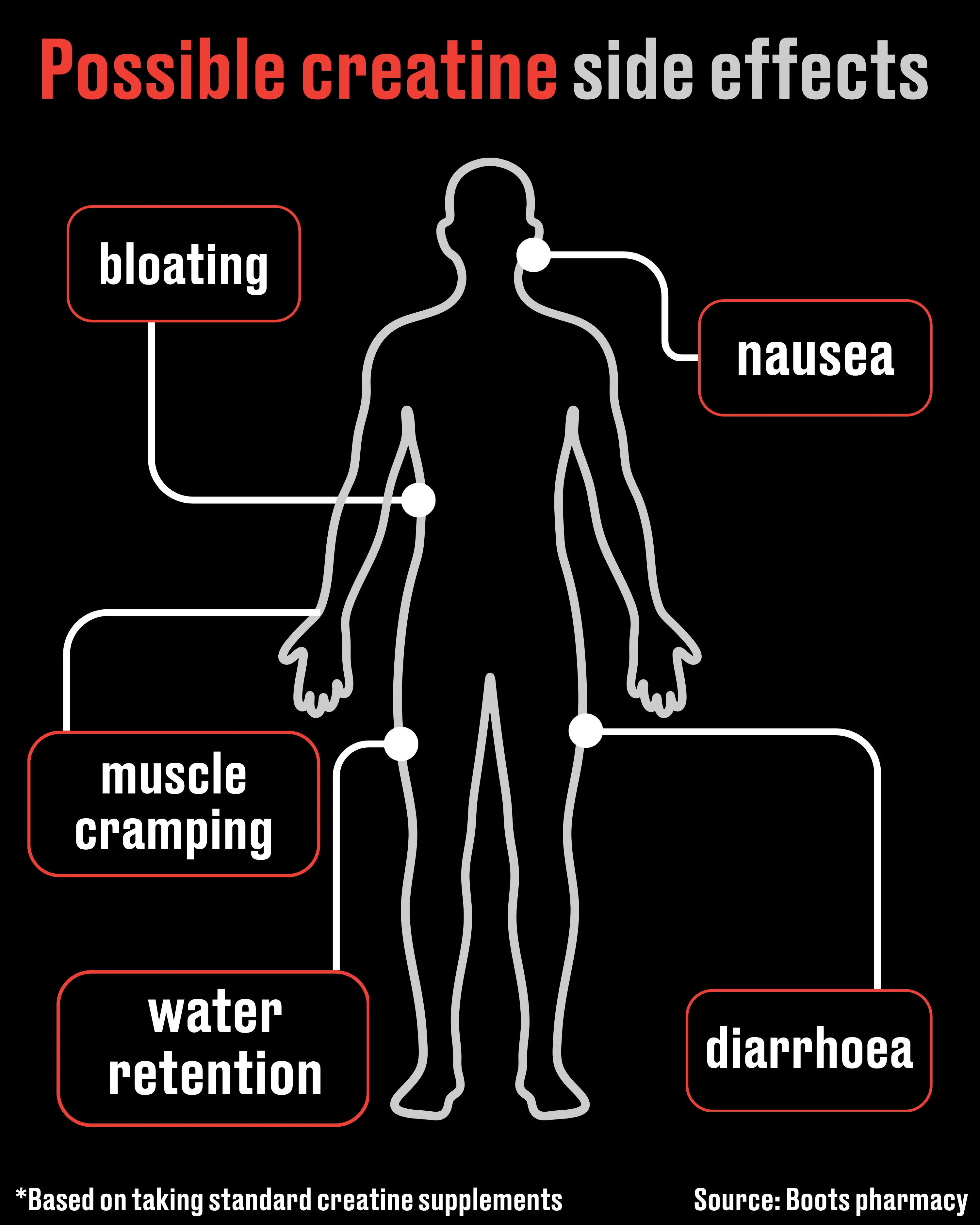
While 10 grams is fine each day, loading up on more could end up giving you some icky side effects, says Chris Mohr, Ph.D., R.D., co-owner of Mohr Results.
He spoke with Men’s Health, explaining that loading gave him pains and aches like ‘gut cramps,’ and frequent bathroom breaks.
But according to Holland & Barrett, it can also cause some users to experience excess gas, the runs, hair loss, dehydration, dizziness, weight gain, water retention, and more.
So, be careful.
 Britt Jones