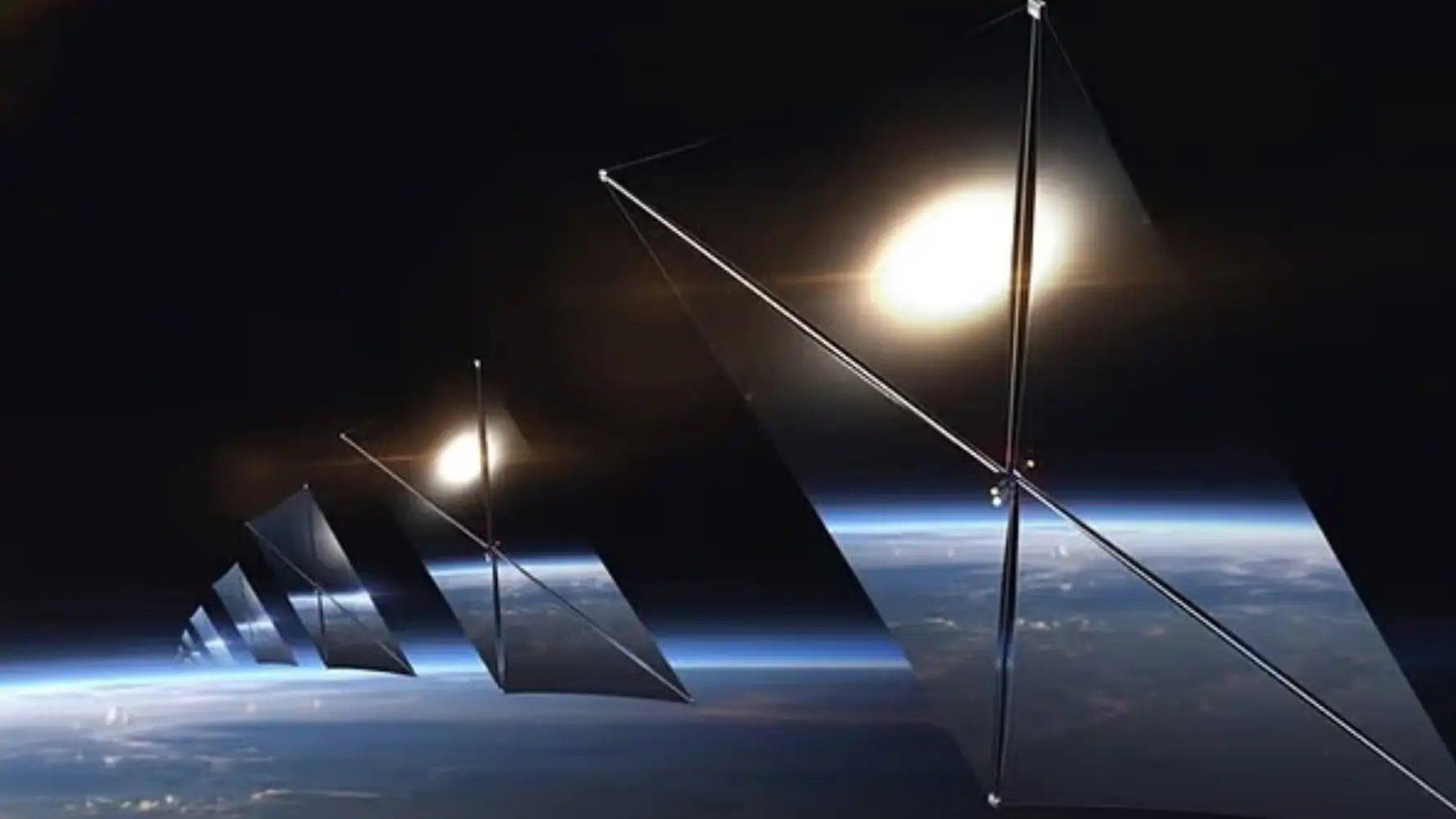
Scientists warn of ‘planetary scale' disruption over plans to launch 50,000 mirrors into space

Scientists have raised concerns over a US start-up's plan to launch 50,000 space mirrors into orbit.
The space mirror project is the brainchild of tech company Reflect Orbital, which wants to give humanity sunlight on demand. The start-up suggested the 24-hour sunlight could be used to replace streetlights, provide light to disaster-stricken areas and even allow solar energy plants to run for 24 hours a day in order to maximise energy production.
An idea which, in theory, sounds like a pretty cool idea, right?
No more 5pm sunsets in winter, as you could enjoy the beauty of the sun's rays around the clock.
Advert
However, the prospect has left numerous experts worried about the potential for disruption to our bodies and the planet's ecosystems.

Following the company's submission of a planning request to the US Federal Communications Commission (FCC), leaders from several international scientific societies have shared their concerns in a series of letters sent to the regulator.
Concerns about the impact on sleep
A major concern raised by scientists is the impact 24-hour sunlight could have on a person's sleep schedule.
"The proposed scale of orbital deployment would represent a significant alteration of the natural night-time light environment at a planetary scale," presidents from the European Biological Rhythms Society (EBRS), the Society for Research on Biological Rhythms, the Japanese Society for Chronobiology and the Canadian Society for Chronobiology said of the plans, via The Guardian.
The group went on to stress the potential risks of disruption to the human body's circadian rhythm, our internal biological clock responsible for regulating sleep-wake cycles.
These rhythms can influence both our mental and physical behaviour, with disruption linked to mood disorders and disruptions to metabolism, which may cause conditions such as diabetes and obesity.

Humans wouldn't be the only species impacted by the changes either, with several animals reliant on nighttime for nocturnal migration.
"The alternation of light and dark is not a trivial background condition. It is one of the oldest organising principles of life on Earth," added representatives from World Sleep Society, European Sleep Research Society, Sleep Health Foundation, Australian Sleep Association and Australasian Chronobiology Society.
Food security
The shift from natural light/dark cycles could also have a knock-on effect on our ecosystems, with changes in plants' seasonal cycles presenting a risk to future food security.
"We’re saying, please think before you go through with this, because this could have global implications for things like food security," Prof Charalambos Kyriacou, a geneticist at the University of Leicester and president of the EBRS, said.
"Plants need the night. You can’t just get rid of it."

The plans come just months after companies such as Amazon and SpaceX mused about launching satellite constellations as a solution for future AI data centres – fuelling very real concerns about Kessler syndrome.
Meanwhile Royal Astronomical Society (RAS) has voiced its alarm over the move, noting concerns about the impact of astronomical observations.
"These proposals would not only have a disastrous impact on the science of astronomy, they would also hinder the right of everybody on Earth to enjoy the night sky. That is unacceptable," Dr Robert Massey, Deputy Executive Director at the RAS, said.
"The stars above us are a valued part of human heritage – deploying more than one million exceptionally bright satellites would utterly destroy this and permanently scar the natural landscape.
"We hope the FCC wholeheartedly rejects the plans."
LADbible Group has approached the FCC and Reflect Orbital for comment.
 Brenna Cooper