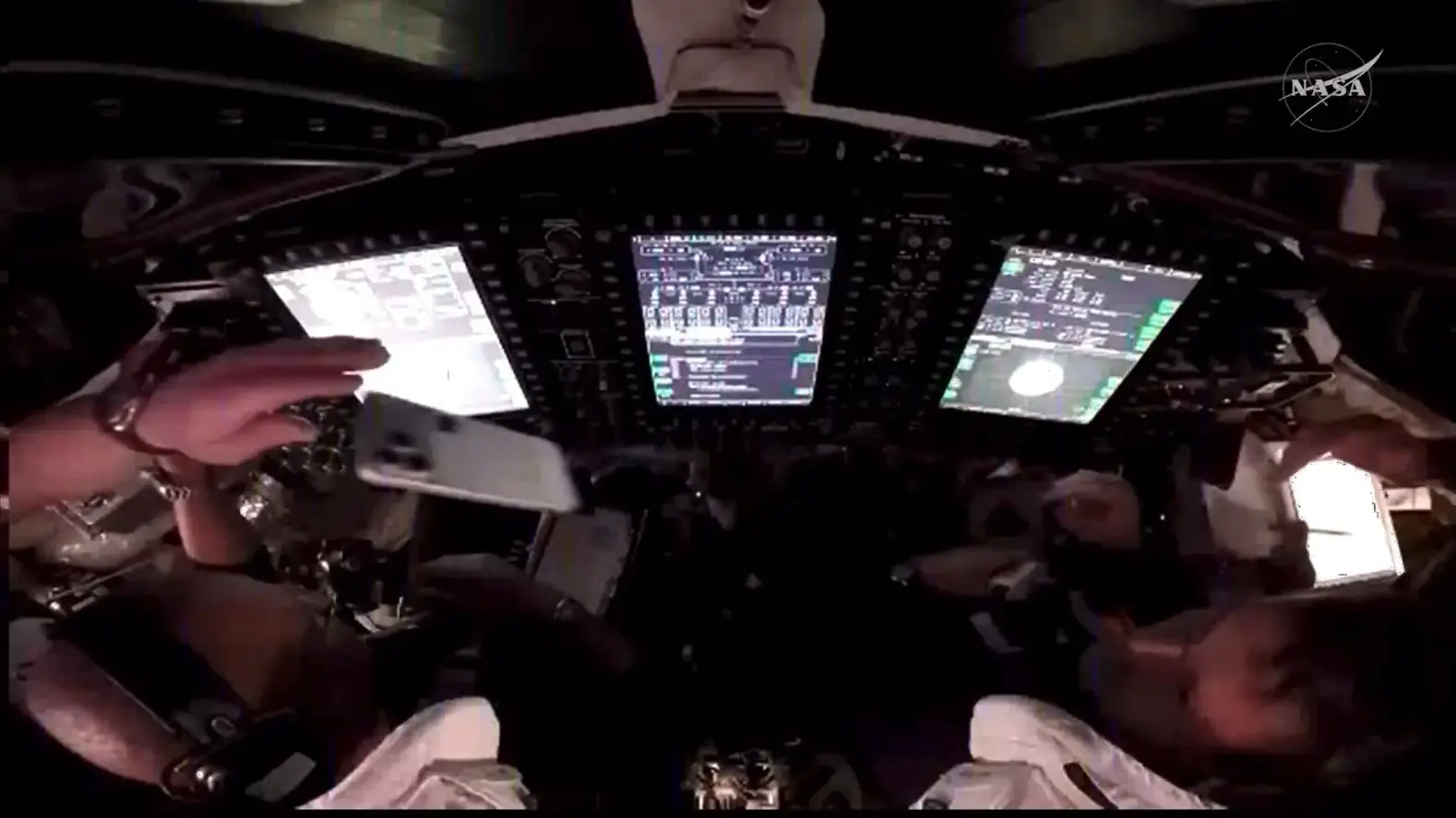
Why Artemis II crew are taking iPhones to space as they float around cockpit

Artemis II is well and truly underway following a successful life off on Wednesday evening (1 April), with the spacecraft currently in Earth's orbit.
The four-man crew is set to approach the Moon in the coming days if all goes to plan, though if just one thing isn't good to go, the whole mission may be called off.
But while the Orion spacecraft is planned to go around the Moon, there are no plans for the crew to step foot on it, instead staying around 5,000 miles from its surface.
Those onboard will also get the clearest-ever view of the dark side of our natural satellite, while also marking humanity's furthest ever journey into space.
Advert
The crew on board, which consists of NASA's Reid Wiseman, Victor Glover and Christina Koch are joined with Jeremy Hansen of the Canadian Space Agency, are set to conclude their 10-day mission on 11 April.
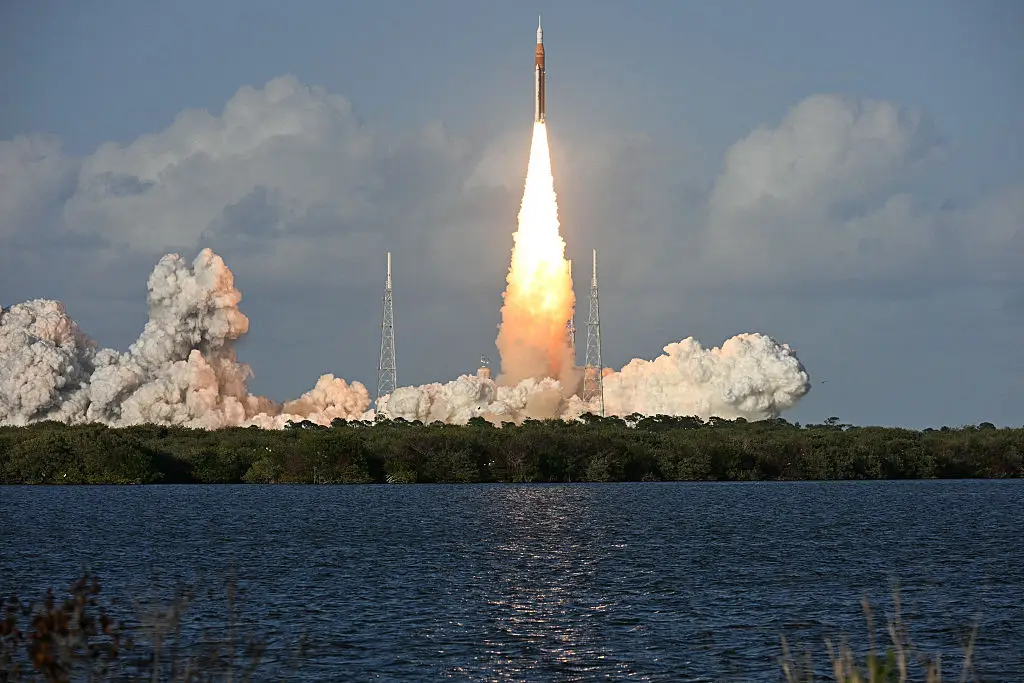
Shortly before take off, the weather aspect was raised as a concern, though this proved to be okay following a successful launch.
After sorting a toilet issue which rose after entering Earth's orbit, the crew are now working to 'prepare for the perigee raise brun', lifting the lowest point of Orion's orbit around our planet and propelling it towards the Moon.
But before they had even step foot on the spacecraft, a question was raised about why the astronauts were given phones before setting off.
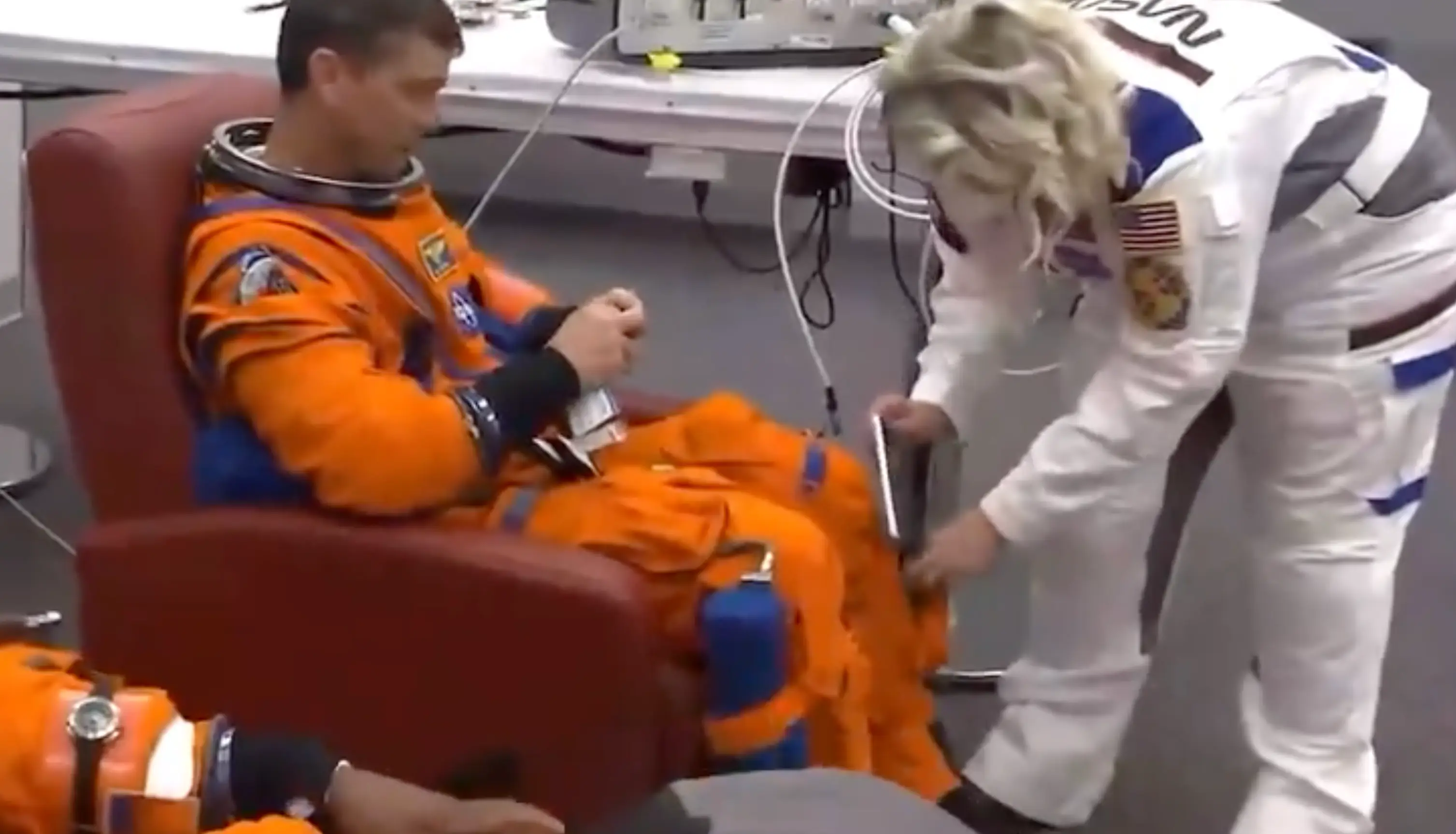
It turns out that they were carrying their personal iPhones for the journey, marking the first time that NASA has allowed crew members to take personal smartphones beyond Earth's orbit.
The move was approved before launch, with a video showing the devices being packed into their suits, and another revealing the phones being thrown around in zero gravity.
It marks a milestone for NASA, who are now allowing astronauts to use consumer-grade devices on missions.
NASA Administrator Jared Isaacman announced the move earlier this year, meaning that documenting missions are more simple and even more personal.
Speaking on X, he explained: “We are giving our crews the tools to capture special moments for their families and share inspiring images and video with the world.
“Just as important, we challenged long-standing processes and qualified modern hardware for spaceflight on an expedited timeline.
“That operational urgency will serve NASA well as we pursue the highest-value science and research in orbit and on the lunar surface.”
At its furthest point, the spacecraft will be around 230,000 miles from Earth, as long as tonight's 'trans-lunar injection' burn goes ahead as planned, and mission control give the green light to head into deep space.
The manned mission will be the first to approach the moon since Apollo 17 in 1972, though they will only reach there five to six days after launch.
As they pass the dark side of the moon, crew will also be cut off from communicating with Earth for around half an hour before coming back out on the other end.
Why won't NASA's Artemis II astronauts land on the Moon?
History has been made as NASA's Artemis II mission launched from Earth to the Moon on April 1 with a manned crew.
This is the first time in over 50 years that a crewed mission has been sent to the Moon; the last time was the Apollo 17 mission in 1972, which saw Commander Gene Cernan and Lunar Module Pilot Harrison Schmitt walk on the lunar surface.
Artemis II - made up of NASA astronauts Reid Wiseman, Victor Glover, Christina Koch, and Canadian Space Agency astronaut Jeremy Hansen onboard the Orion spacecraft - is a ten-day mission filled with science, spacecraft tests, medical checks, survival training and more.
But what it won't be doing is landing on the Moon.
Simply put, the Artemis programme isn't built to put Artemis II on the Moon, and the Orion spacecraft doesn't have landing capability.
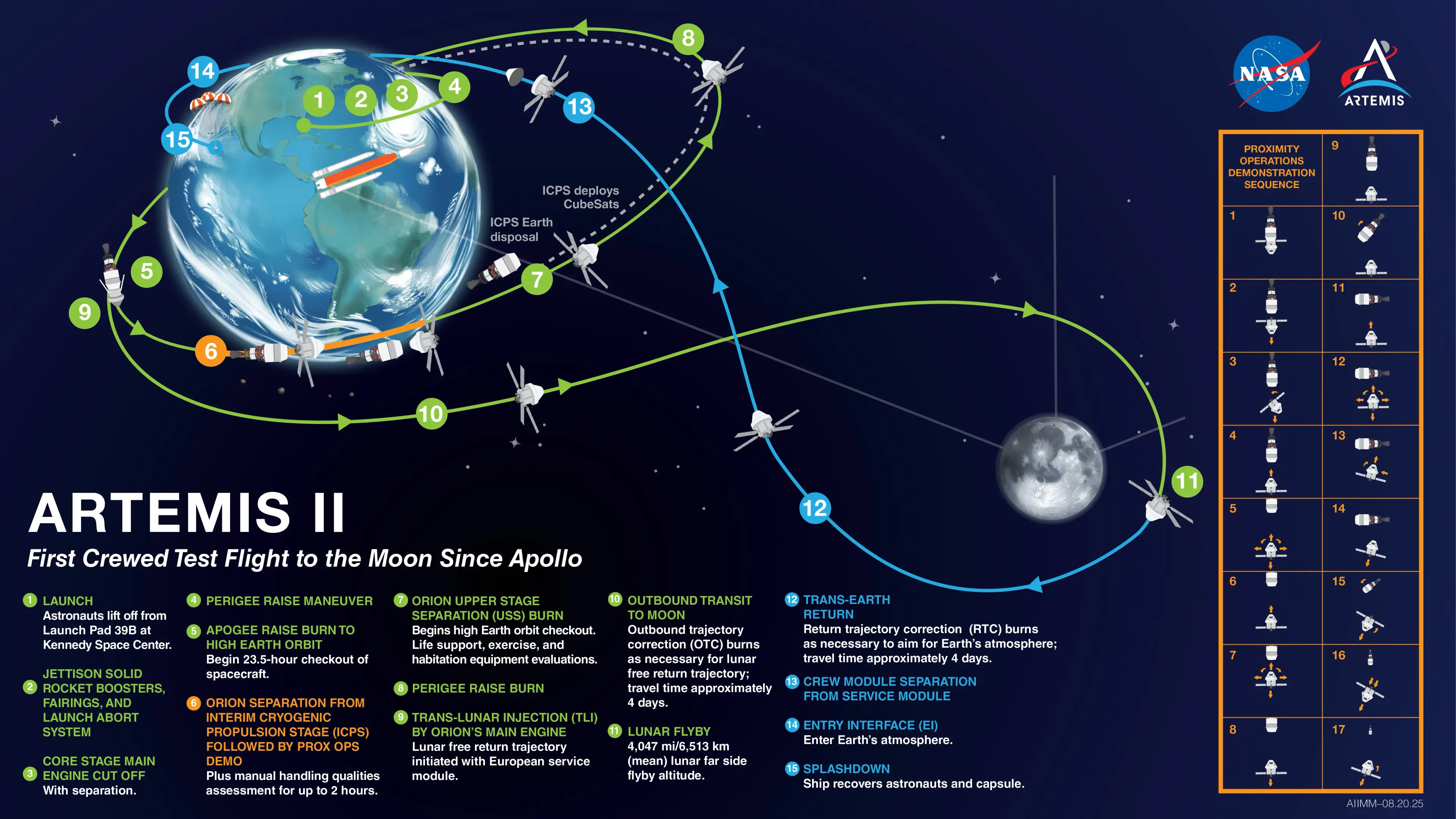
It's important to note that Artemis II is a 'test mission' to the Moon, but this time with crew. Artemis I successfully sent an uncrewed Orion spacecraft to lunar orbit and back in late 2022.
NASA hopes that this mission 'will confirm all the spacecraft’s systems operate as designed with crew aboard in the actual environment of deep space'.
"The mission will pave the way for lunar surface missions, establishing long-term lunar science and exploration capabilities and inspire the next generation of explorers," the space agency said in their mission description.
NASA originally had hopes that Artemis III would pull off the first lunar landing in 2027, however, the agency restructured the programme earlier this year, resulting in Artemis III becoming a mission that will practice docking and rendezvous operations in Earth orbit between Orion and one or both of the program's private crewed landers.
If all goes well, NASA aims to have astronauts on the Moon in 2028 with Artemis IV.
 Joshua Nair