
Specific iPhone settings to capture rare six-planet parade in night sky this weekend

Every now and then we Earthlings get treated to the sort of planetary displays that astronauts and other space folks get to see on a regular basis.
There's a rush to grab our phones every time we see something like the Northern Lights or a solar eclipse, especially over here in the UK where we usually avoid looking at the sky at all costs.
So when those rare occasions do come around, it seems as if the whole of the country gets excited about casting our eyes to the skies above, only for the clouds to usually ruin our chances.
However, this weekend we should have the opportunity to capture a cosmic treat, which will see six planets visible with the naked eye in what if often called a planetary parade.
Advert
Mercury, Venus, Saturn and Jupiter should be visible to the naked eye on Sunday in the UK, while stargazers will also be able to spot Uranus and Neptune through their telescopes, even if they're not quite the quality of the James Webb one they have over at NASA.
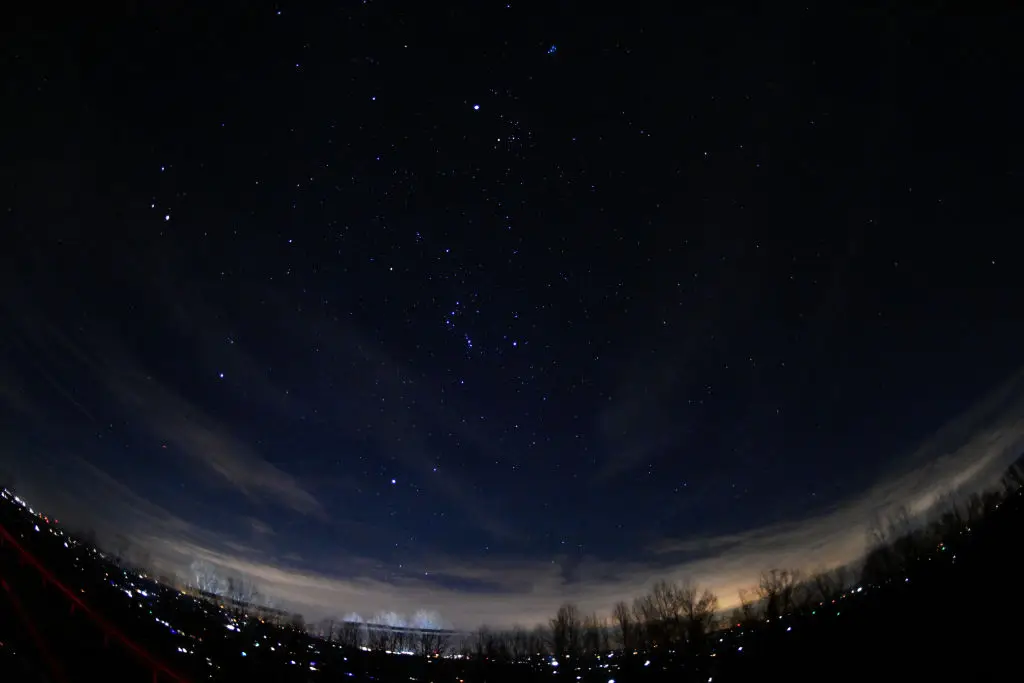
Dr Becky Smethurst, Royal Astronomical Society Research Fellow at the University of Oxford and YouTuber explained to the BBC that the planets 'will be in a straight line, but it's a straight line on a curved sky … all the planets orbit in the same flat plane."
She added: "If you think about taking a ball of pizza dough and setting it spinning above your head, it flattens out. That's what happened to the gas cloud around the Sun that ended up forming the planets, and why they're all in the same flat plane."
"When we look up at the night sky, all the solar system objects take roughly the same path … they're not all lining up in a row in their orbits, they're just sort of on the same side of the solar system right now."
If you are thinking about heading outside on Sunday night in the UK, you'll probably be desperate to get your own evidence of the beautiful planetary parade, because of course Facebook and Instagram friends need to know that you've ventured outside.
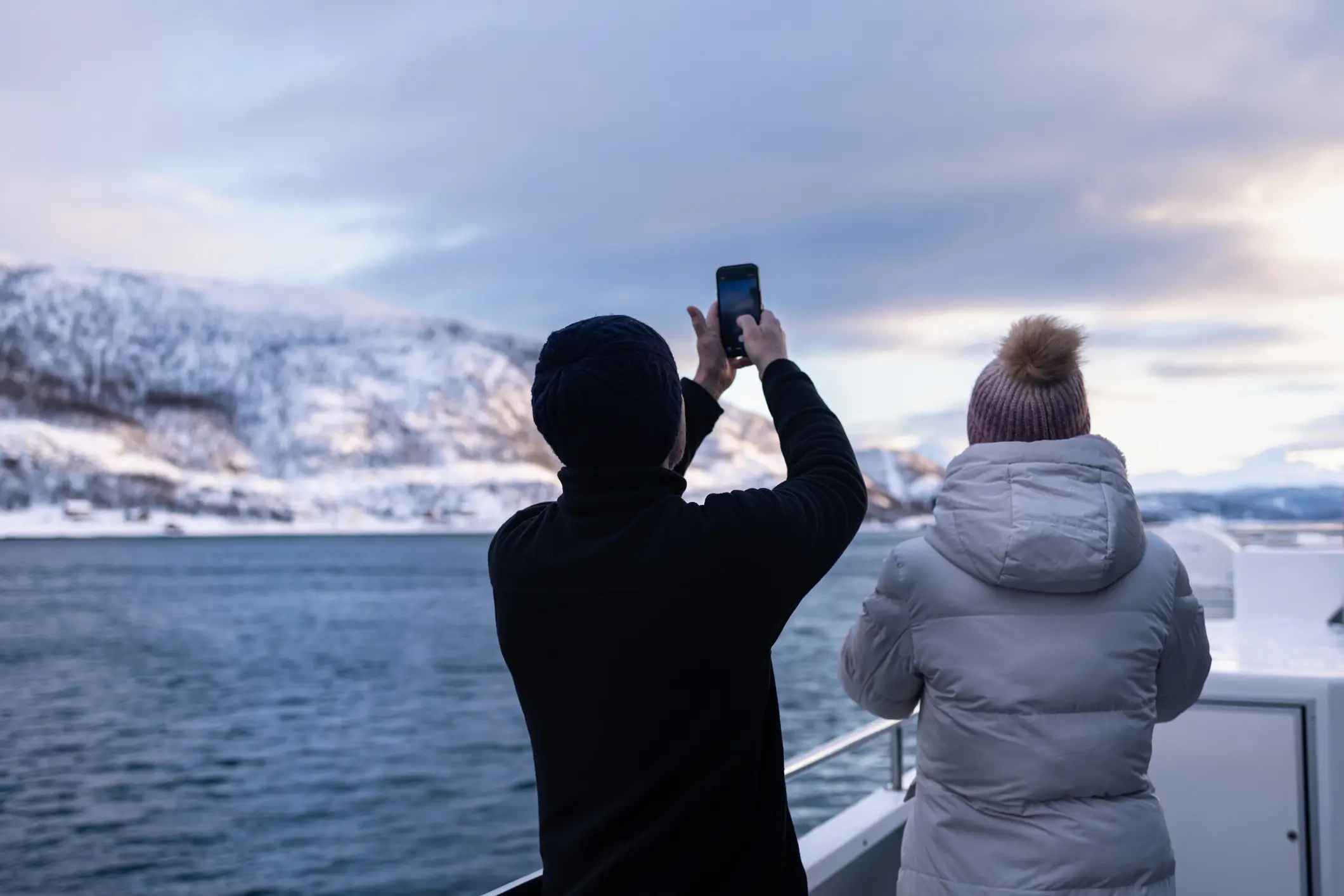
Fortunately, for those of you who aren't that tech savvy and want to avoid getting some grainy photos that you will never look at again, a photographer has explained the specific iPhone settings you'll want to use.
Newcastle-based photographer - who goes by the name Wil Photography (@wil_photography) - explained: "If your phone has night mode simply use that and either use a tripod or lean it against something for 10-15 seconds exposure, click on screen to focus on distant bright star and that should work."
Night mode should switch itself on automatically but if it doesn’t, then you just need to tap the little night mode icon at the top of the screen to turn it on and off.
"If not then download an app called nightcap camera for iPhone or Open camera for Android," Wil added.
"With settings - iso 2000 lowest number for f and shutter speed around 10 seconds, again using a tripod, make sure you focus on a distant bright star."
If technology isn't really your thing, or you haven't shelled out for a new iPhone in ages then fear not, you can always capture the moment through your eyes rather than a screen.
After all, there's probably going to be someone out there who gets a better picture than you anyway.
 James Moorhouse