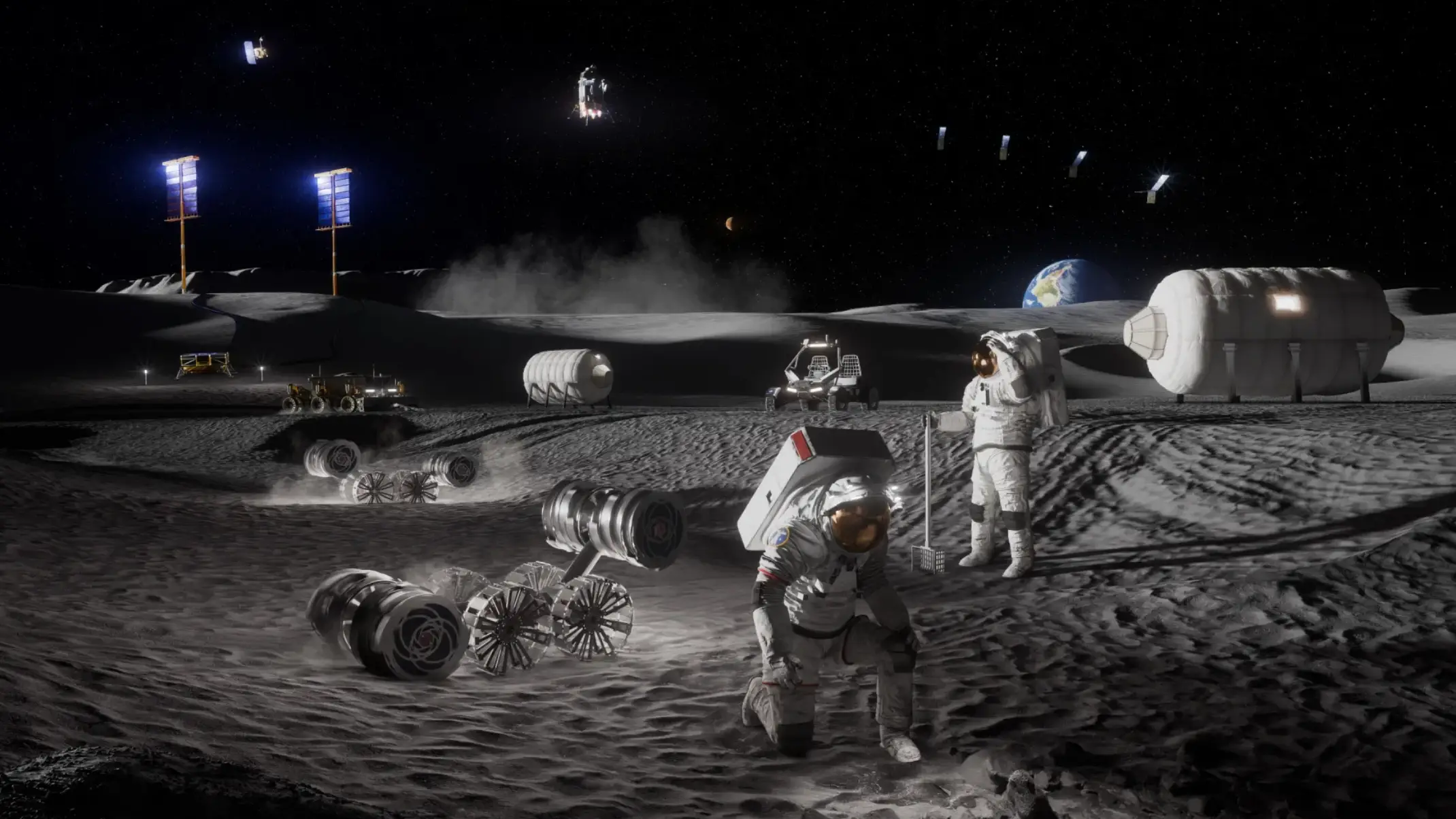
NASA unveils plans to build permanent base on the Moon by 2032

NASA has unveiled its plans to build a permanent base on the Moon and is aiming to have a ‘sustained human presence’ on the lunar surface by 2032.
Earlier this year, the US space agency sent astronauts Reid Wiseman, Victor Glover, and Christina Koch and Jeremy Hansen further into space than anyone has ever been on its Artemis II mission.
Following the success of the mission, NASA has now revealed its plans to build its ‘Moon Base’ and to send humans to the lunar surface for the first time in more than 50 years.
NASA described Moon Base as an 'initiative designed to enable sustained human presence and expanded scientific and commercial activity at the lunar South Pole' and said it will make 'living and working on the Moon' a reality.
Advert
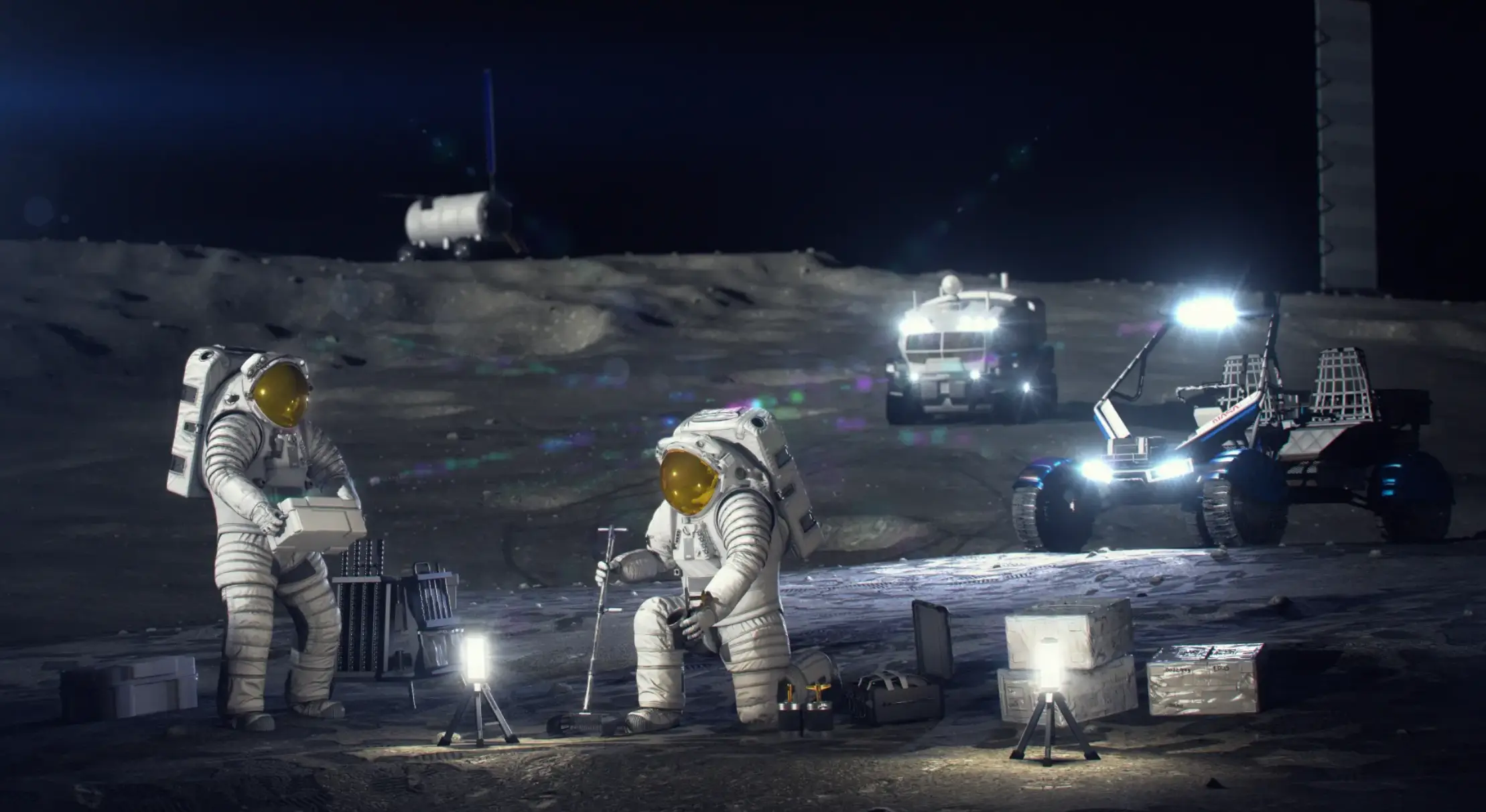
NASA gave the update from its Washington headquarters this evening, where it laid out Moon Base’s three phases.
Phase one, which is already underway and will continue until 2028, involves robotic missions to check out the Moon’s South Pole region, test out new technologies and help the space agency prepare future astronaut missions.
Phase two, which is currently scheduled to start in 2029, will see NASA assembling semi-permanent infrastructure on the lunar surface and kick-starting early habitation and logistics operations.
The final phase is slated to start in 2032, and will see the space agency creating a sustained presence on the Moon with routine crew rotation and continuous surface activity.
Carlos Garcia-Galan, programme executive for Moon Base, said NASA envisions the base sprawling ‘hundreds of square miles’, making it comparable in size to a largish city, with its perimeter marked by drones, called MoonFall.
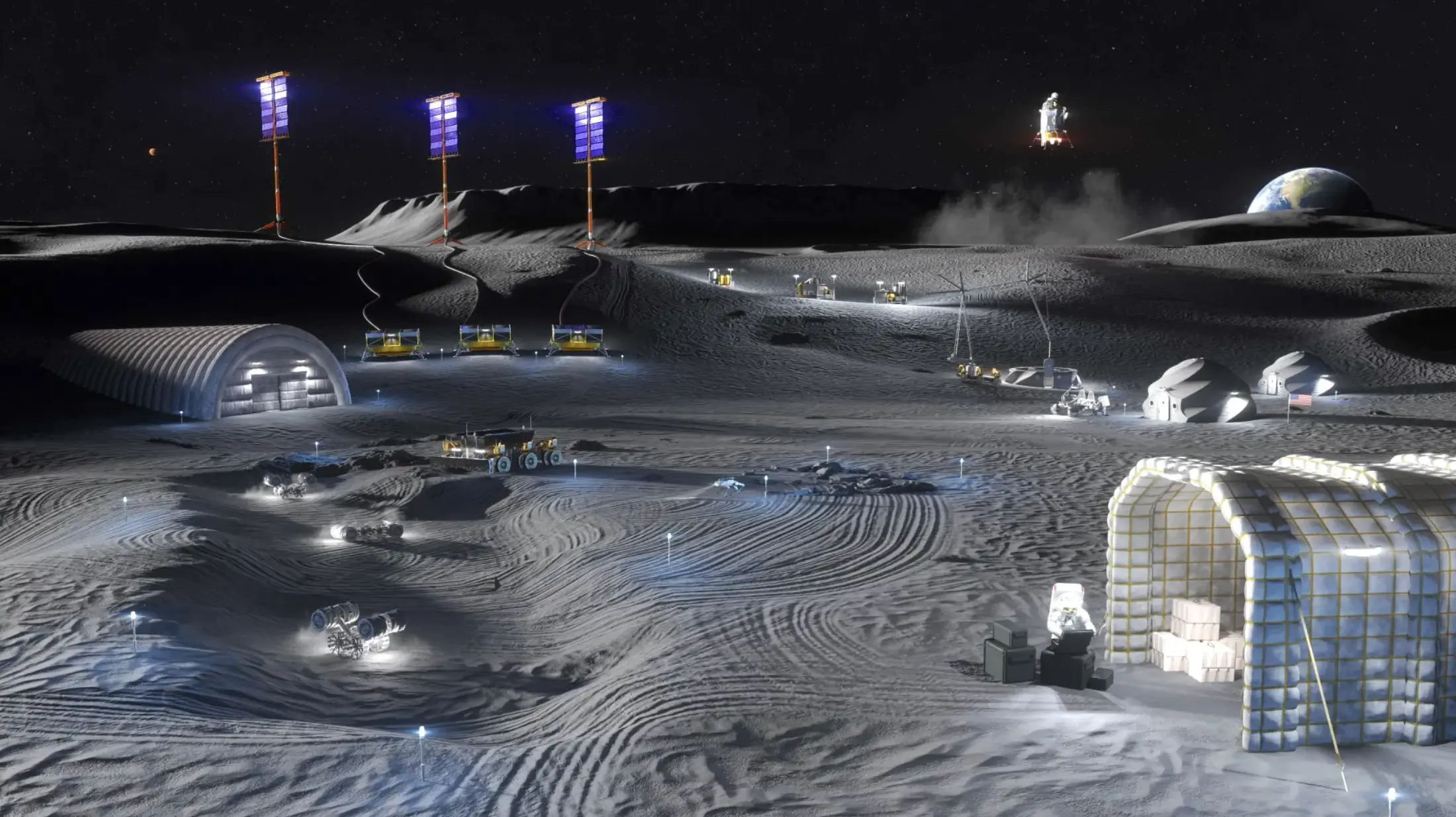
“The Moon Base will be America’s and humanity’s first outpost on another celestial world,” said NASA Administrator Jared Isaacman.
“Every mission, crewed and uncrewed, will be a learning opportunity as we return to the lunar surface, build the infrastructure to stay, and master the skills required to live and operate in one of the most demanding and dangerous environments imaginable.
“We will go for the science, for all we stand to gain from an economic and technological perspective, for the innovations that will make life better here on Earth, and to prepare for where we will inevitably go next.”
NASA also announced a major contract with Jezz Bezos’s Blue Origin, which will be tasked with delivering parts of its hardware, alongside multi-million dollar partnerships with Astrolab and Lunar Outpost to create and deliver the first phase of lunar terrain vehicles.
 Claire Reid