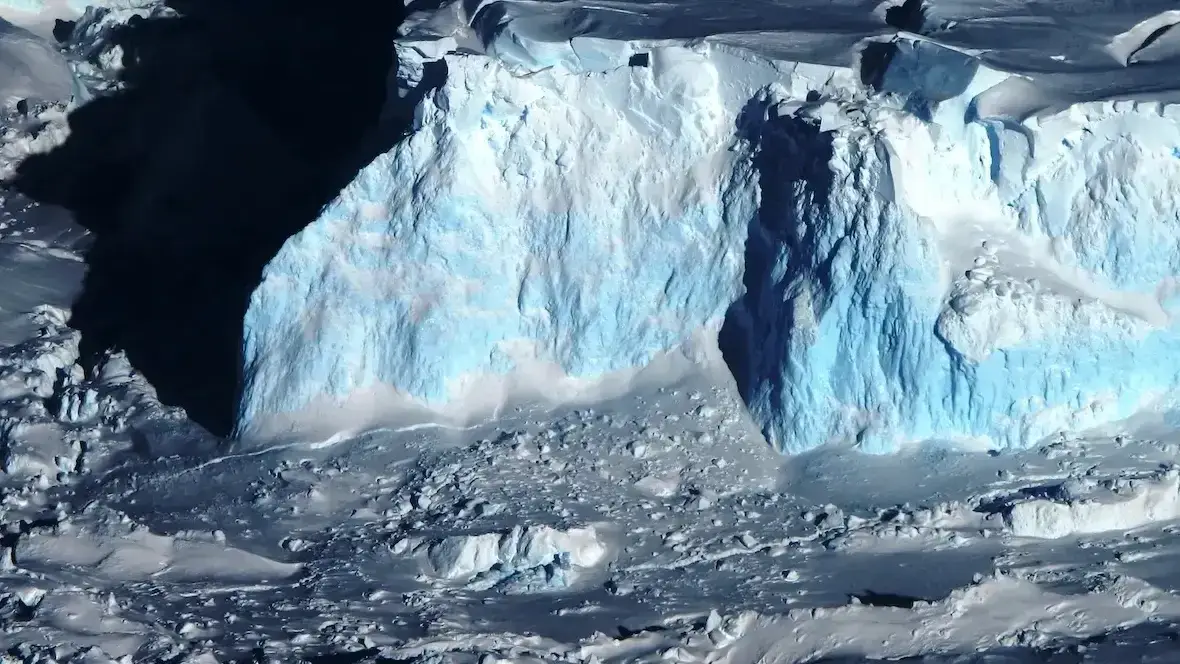
Scientists issue warning as 'Doomsday Glacier’ size of Britain could collapse

Antarctica's ‘Doomsday Glacier’, which is responsible for part of the world’s sea level rise, is on the edge of collapsing this year – leading to scientists to reveal just how dangerous this moment will be.
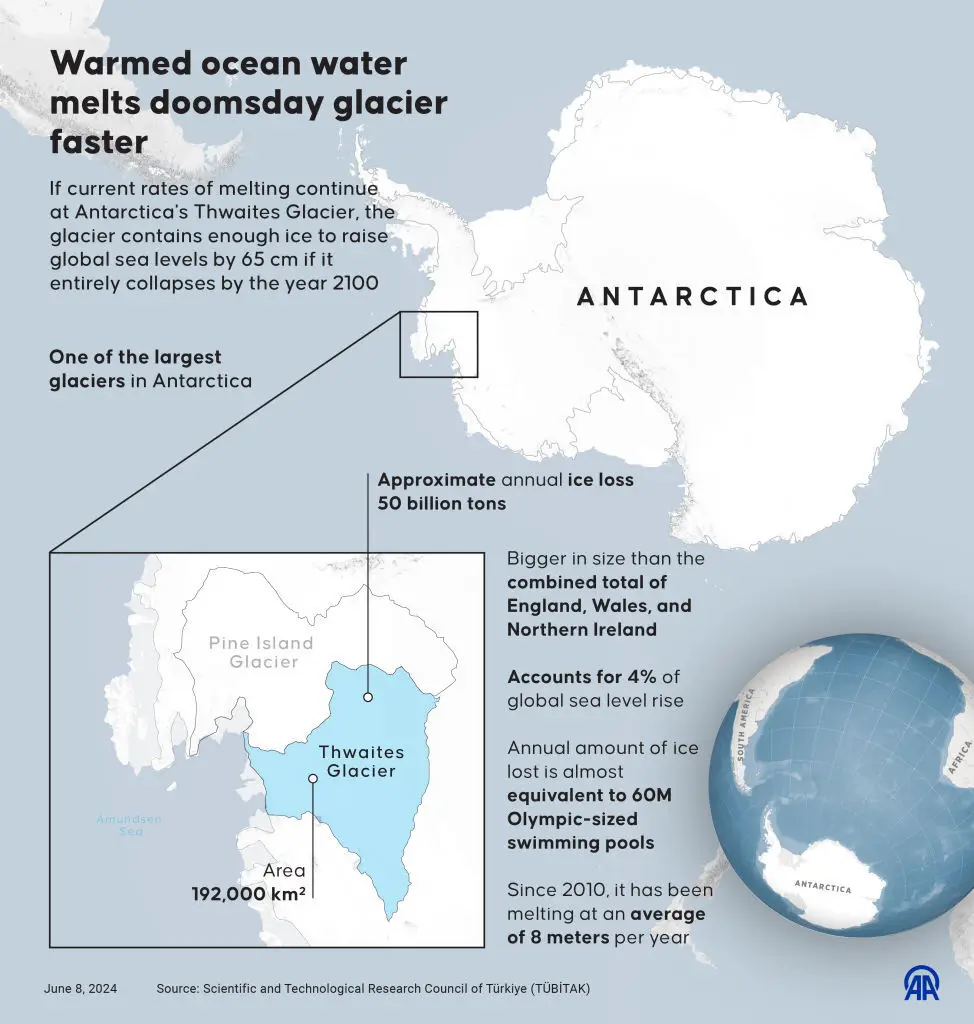
Antarctica’s Thwaites Glacier, aka the 'Doomsday Glacier', takes care of about four percent of all global sea-level rise, and is roughly the same size as Britian.
Scarily, studies have shown that it holds enough ice to account for as much as a 60 cm rise in global sea levels, but if it was to collapse?
That’s three metres of extra water all over the world.
Advert
Previously, research revealed that parts of the UK could be underwater before the next century begins, as climate change continues to melt glaciers and polar ice sheets at a rapid rate.
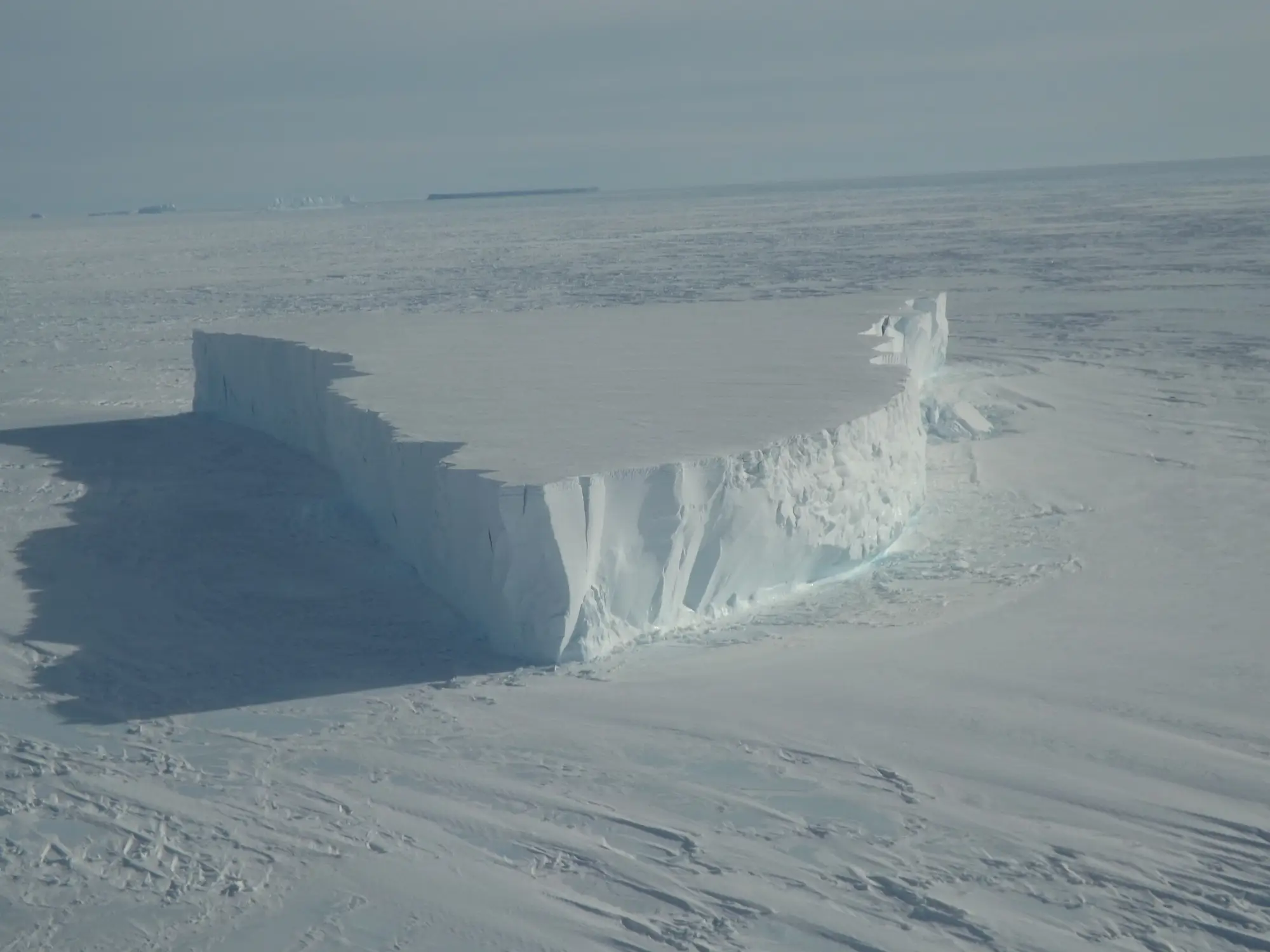
However, scientists now think that the timeline for the iceberg to melt has been cut all the way down – to a matter of months.
Specifically, they believe the Thwaites Eastern Ice Shelf (TEIS), a wall of ice that’s holding back the glacier's eastern side from sliding into the ocean, is deteriorating.
Considering it’s the size of Greater London at 1,500 square kilometres, it wouldn’t have a small impact if it slid away.
According to Dr Robert Larter, a marine geophysicist with the British Antarctic Survey, this event is ‘very likely to happen sometime this year’.
Speaking to Live Science, Dr Larter said: "The last bit of ice shelf in front of the glacier is poised to disintegrate. We don't know quite how this ice shelf is going to break up, but it's definitely going to go."
According to scientists, the issue is that the subsurface waters are heating up, which then heats up the underneath of the ice sheet.
What’s even more frightening is that this heating is occurring right at the point where the wall is embedded in the foundation, weakening that bond.
Dr Larter said: "It's tearing away from the glacier at the moment, and its internal structure is getting more and more fragile. You can see the fractures and rifts growing in sequences of satellite images."
The main fear is that if this happens, other countries will be put at risk of rising sea levels, potentially seeing parts of the world thrown underwater.
In response to this threat, Marianne Hagen, co-lead of the Seabed Curtain Project, is investigating the option of building a seabed barrier 50 miles wide and 150 metres tall to stop it from collapsing into the sea.
She told IFLScience: "Just because it's extremely difficult is not an excuse not to try.
"For me, it's kind of a no-brainer. If it's possible to take 65 centimetres of global sea level rise off the table for everybody, with one single targeted intervention in one location, I'm willing to explore it. I think we have an obligation to do so."
Topics: Science, UK News, World News, Environment
 Britt Jones