FIFA confirms it is ‘assessing match reports’ after Argentina sparked outrage with Falklands banner

FIFA has said it is ‘assessing match reports’ before deciding whether to take further action against Argentina after players brought a provocative banner onto the pitch following last night’s World Cup match against England.
Argentina beat the Three Lions 2-1, securing themselves a spot in the final against Spain.
However, during the match, tensions between the two teams were high - which had been expected - with Jude Bellingham seen engaged in a heated exchange with Lionel Messi in the first half.
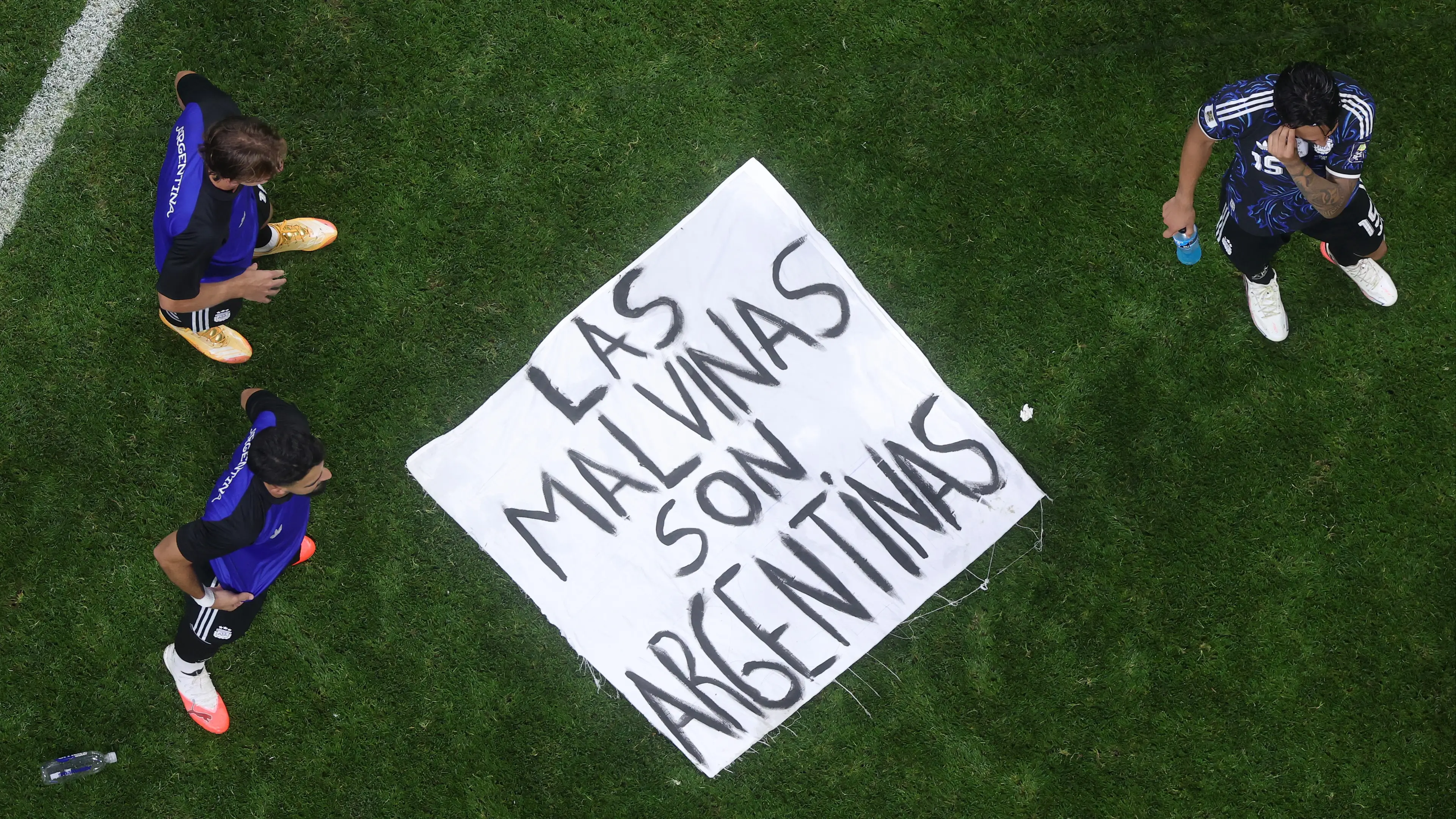
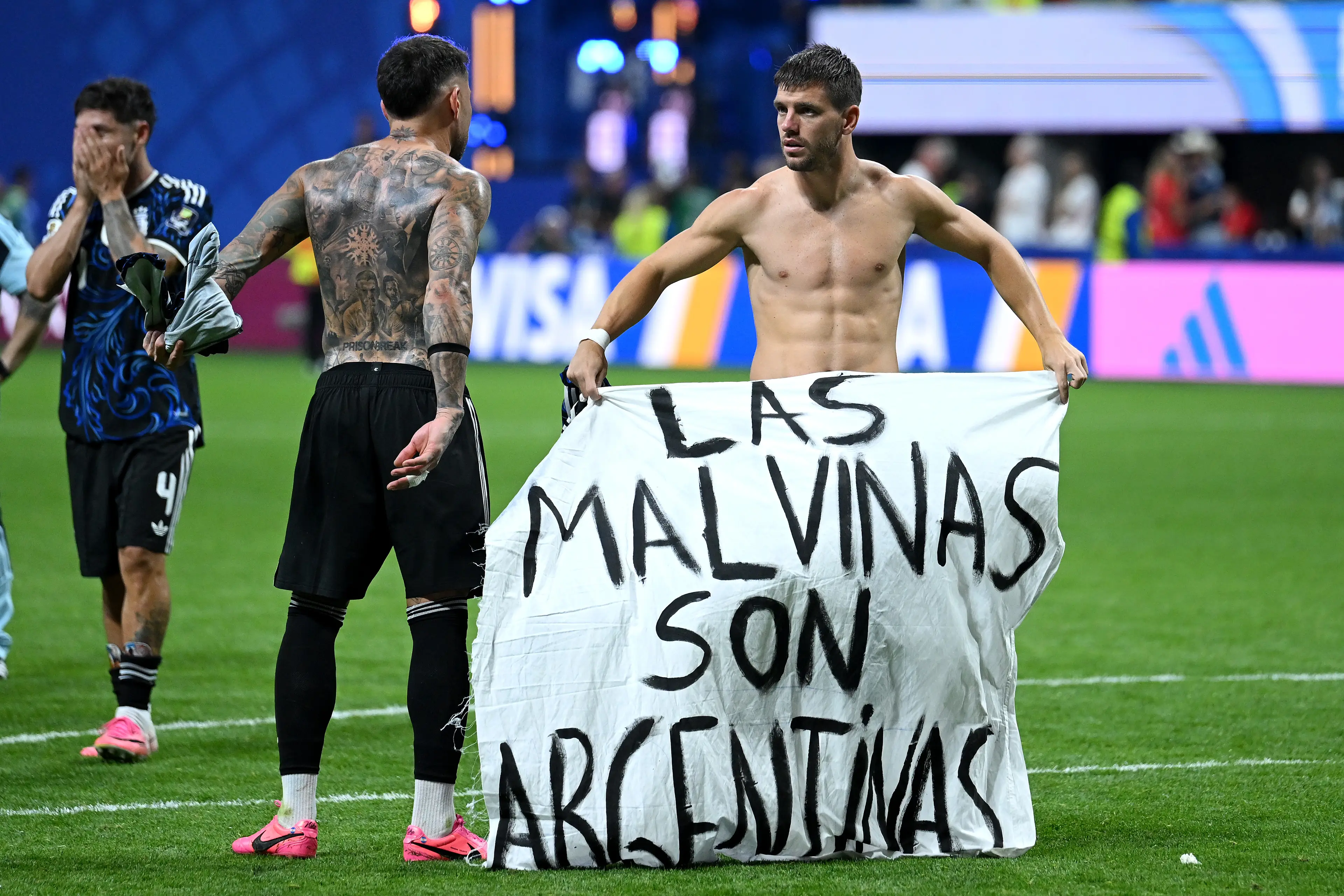
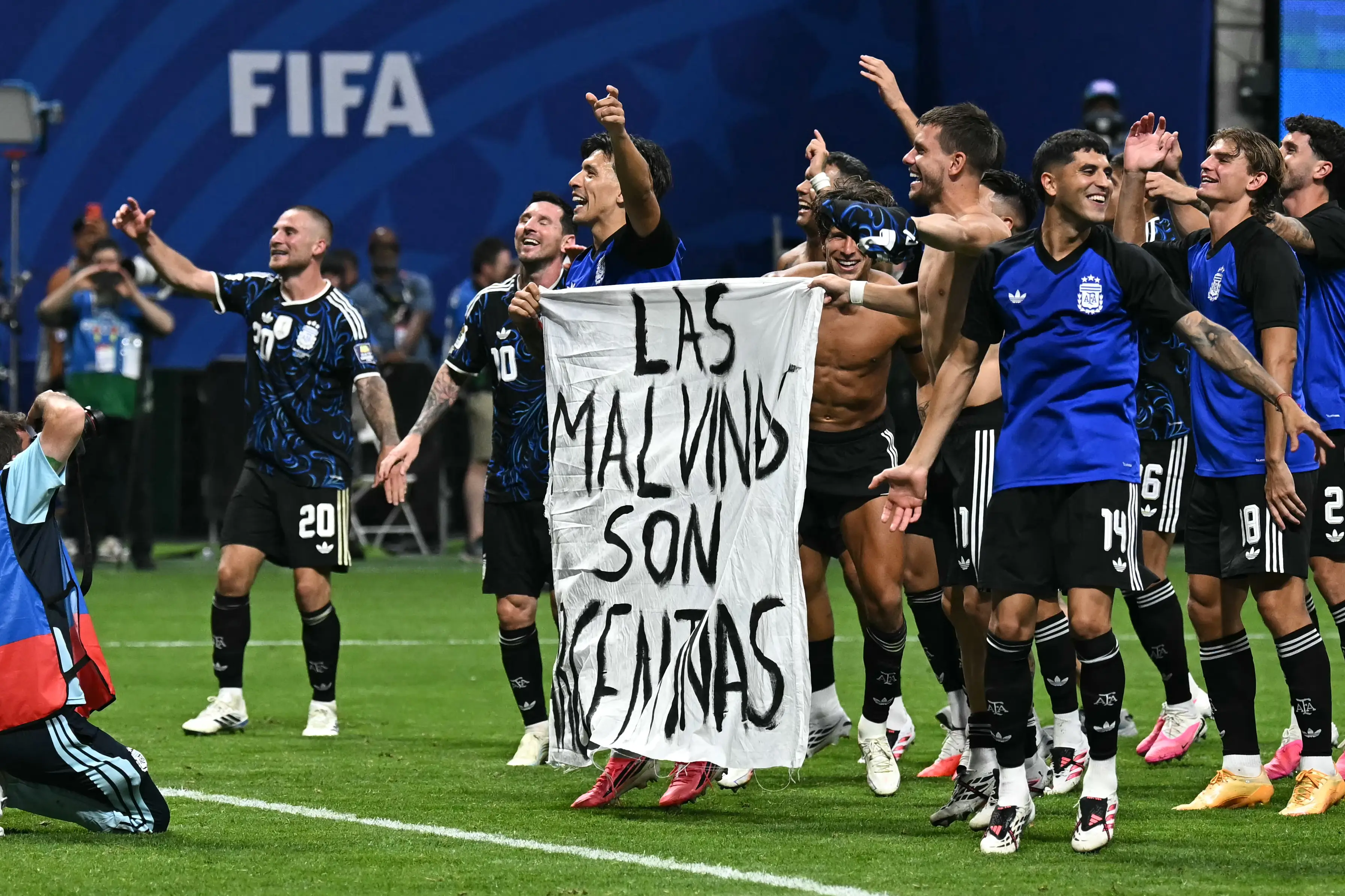
After the match ended, Argentina sparked outrage after unfurling a banner that read ‘Las Malvinas son Argentinas,’ which translates as ‘The Falklands are Argentine’.
Advert
The banner stoked old tensions between the UK and Argentina, as many have felt it is disrespectful to the memories of people killed in the Falklands War.
Speaking earlier today (Friday 17 July), a spokesperson for Sir Keir Starmer said: "The World Cup might not be ours, but the Falkland Islands definitely are. Our position is unchanged. Self-determination rests with the islanders and our commitment to the Falklands will never waver."
The Falkland Islands government also issued a statement branding the incident 'particularly insensitive’ and wrote a letter to FIFA urging it to sanction the side.
Following the backlash, FIFA has said it is now ‘considering’ the circumstance before deciding whether further action should be taken.
A FIFA spokesperson told LADbible: “As is standard procedure, FIFA’s independent Disciplinary Committee is currently assessing the match reports and considering the relevant circumstances before deciding on potential further steps based on the Fifa Disciplinary Code.”
It's unclear if FIFA will launch a formal investigation into the incident.
FIFA’s stadium code of conduct prohibits ‘any materials, including but not limited to banners, flags, fliers, apparel and other paraphernalia, that are of a political, offensive and/or discriminatory nature, containing wording, symbols or any other attributes aimed at discrimination of any kind against a country, private person or group on account of race, skin colour, ethnicity, national or social origin, gender identity and expression, disability, language, religion, political opinion or any other opinion, birth, wealth or any other status, sexual orientation or on any other grounds.’
The International Football Association Board (IFAB), which sets the rules for the game, also has a clear policy when it comes to political flags, messages or symbols.
“Equipment must not have any political, religious or personal slogans, statements or images. Players must not reveal undergarments that show political, religious, personal slogans, statements or images, or advertising other than the manufacturer’s logo,” IFAB’s rulebook states.
“For any offence the player and/or the team will be sanctioned by the competition organiser, national football association or by FIFA.”
What consequences could the team face?
FIFA's disciplinary code indicates that the majority of incidents such as this which involve political gestures result in a financial penalty, and not a sanction relating to the sport or competition.
So the most likely outcome is a fine, as well as the possibility of a warning for future conduct of this nature in the sport.
Argentina’s football association has previously been fined $20,000 for holding a banner with a similar message before a game against Slovenia in 2014.
The Argentinian football association have also been fined in previous World Cups. In 2018, they were fined around £18,000 over fans' homophobic chants during World Cup qualifying matches, with Chile, Mexico, Peru and Uruguay also fined.
They were also fined £230,000 at the Qatar World Cup after a match had to be abandoned, with Brazil also copping a £500,000 fine.
Topics: World Cup
 Claire Reid