'UFO mothership' spotted by fans on SpaceX livestream

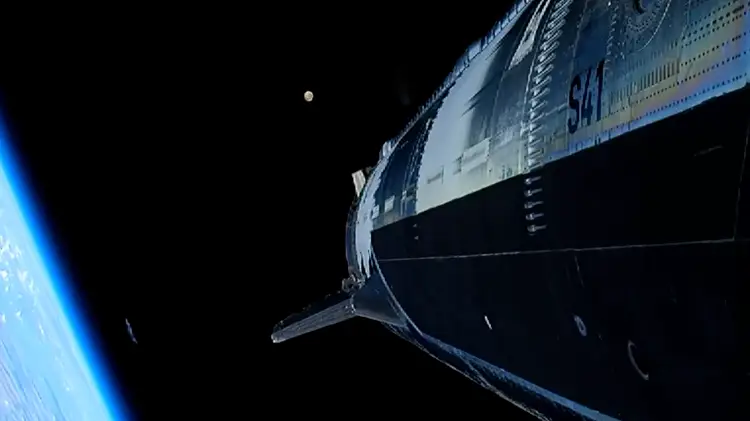
Eagle-eyed stargazers spotted a mysterious object that looked like a ‘mothership’ during the SpaceX livestream.
The SpaceX Starship blasted off into orbit for the first time on Monday (28 September) and deployed 26 Starlink V3 satellites.
But things didn’t run entirely smoothly, after an engine issue meant that the planned 10-hour trip into space was cut down to just three before it splashed down in the Pacific Ocean.
In a statement, SpaceX said: “Out of an abundance of caution given the engine issue experienced during ascent, the flight control team decided to limit the duration spent on orbit and proceeded with de-orbiting Starship to a splashdown location in the northern Pacific Ocean.”
Advert
However, folks who tuned in to watch Starship head into orbit spotted something unusual trailing behind the spacecraft.
Just under eight minutes into the stream, those looking closely saw a small slightly curved streak of light tucked away in the back of the shot.
Screenshots of the object were quickly shared online with one X user writing: “They just livestreamed what looks like a UFO mothership trailing Starship over Texas.”
Another said: “I think we all just saw a UFO live-streamed.”
Someone else commented: “Hey @SpaceX what is this city sized craft orbiting the horizon?”
But we all get too concerned about an impending alien invasion, someone else suggested that the object was a streak of gas left behind by the spacecraft’s engines.
As yet, neither NASA or SpaceX have commented on the UFO.
NASA Administrator Jared Isaacman has since praised SpaceX for the launch, writing on X: “Gorgeous launch, getting Ship to orbit and managing every step in a safe, responsible, and especially inspirational way.
“NASA, along with the rest of the interested public, is excited to help where we can and for Starship missions to become routine!”
The successful mission will have come as a relief for both SpaceX and NASA, with the US space agency hoping to use Starship to carry astronauts to the moon as part of its ambitious plans to return to the lunar surface in the near-future.
Earlier this year, NASA unveiled fresh details about its plans to build a permanent base on the moon and said it is aiming to have a ‘sustained human presence’ on the lunar surface by 2032.
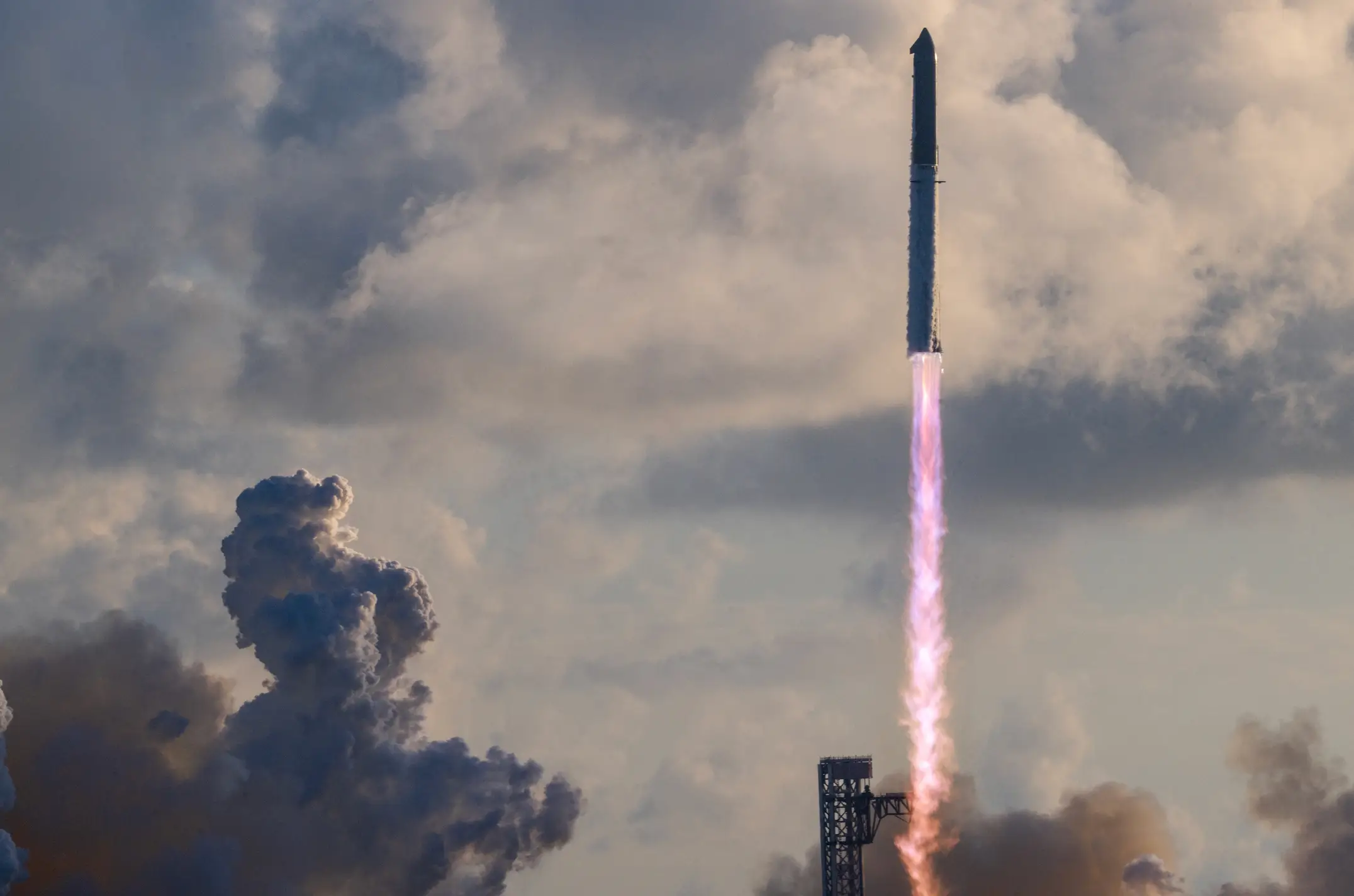
NASA described its Moon Base as an 'initiative designed to enable sustained human presence and expanded scientific and commercial activity at the lunar South Pole' and said it will make 'living and working on the moon' a reality.
Carlos Garcia-Galan, programme executive for Moon Base, said NASA envisions the base sprawling ‘hundreds of square miles’, making it comparable in size to a largish city, with its perimeter marked by drones, called MoonFall.
“The Moon Base will be America’s and humanity’s first outpost on another celestial world,” said NASA Administrator Jared Isaacman.
“Every mission, crewed and uncrewed, will be a learning opportunity as we return to the lunar surface, build the infrastructure to stay, and master the skills required to live and operate in one of the most demanding and dangerous environments imaginable.
“We will go for the science, for all we stand to gain from an economic and technological perspective, for the innovations that will make life better here on Earth, and to prepare for where we will inevitably go next.”
 Claire Reid