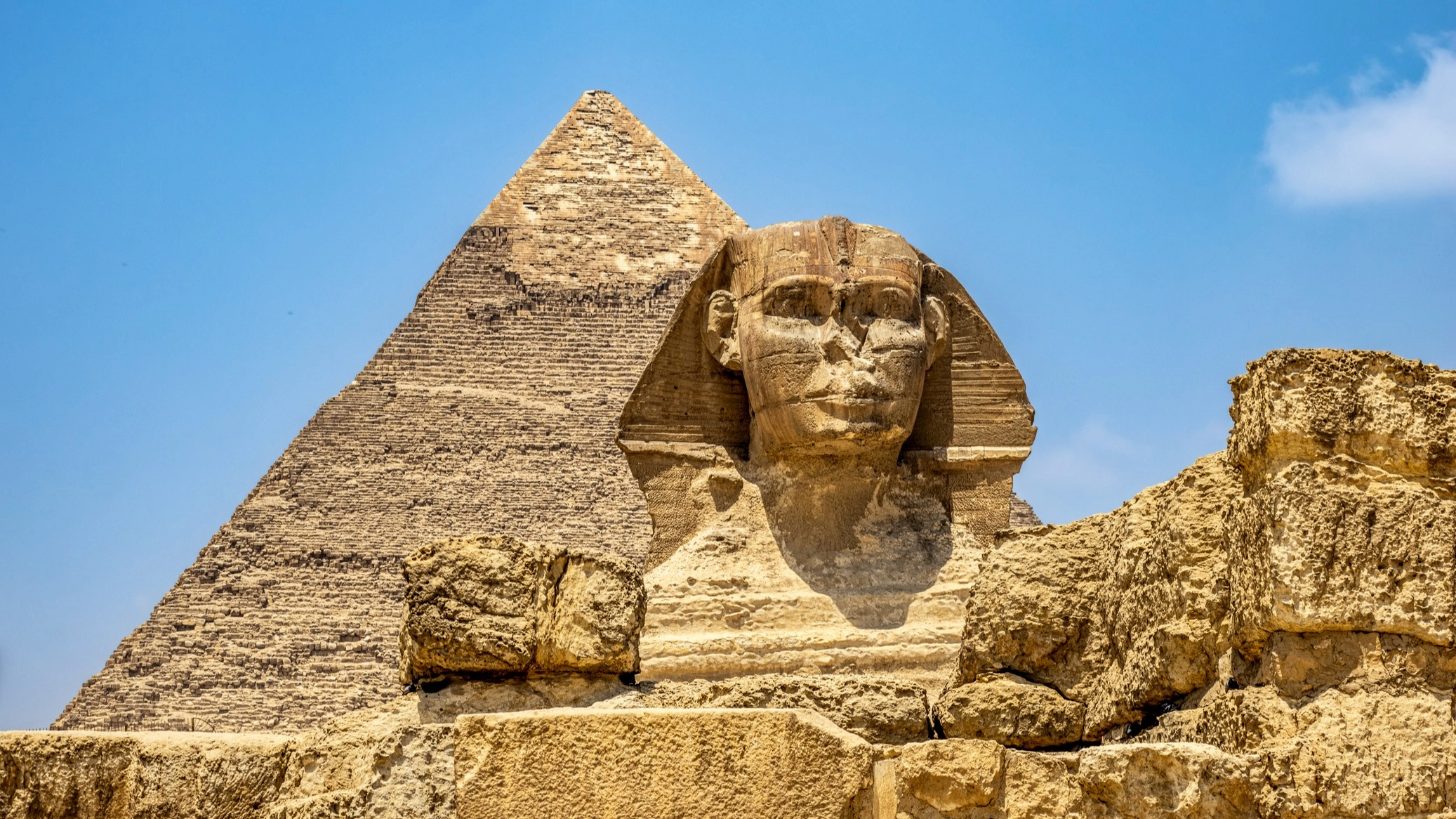
Researcher claims missing 'code' found in Great Pyramid may finally reveal true purpose of ancient wonder

For thousands of years, the Great Pyramid of Giza has been understood mainly as a tomb built for Pharaoh Khufu.
Researcher Sefy Levy now offers another possibility that instead the pyramid was designed as a message.
Levy writes in his ‘The Pyramid As Memory’ hypothesis that its meaning is hidden in its shape and measurements.
By analysing the monument with fractions used by ancient Egyptian scribes, he found numbers that appear to match important natural cycles.
Advert
One result, 27.5, is close to the number of days between the Moon’s nearest approaches to Earth. Another result, 70, resembles the period during which Sirius disappears in the Sun’s glare.
These matches lead Levy to argue that the pyramid was intended to preserve knowledge of mathematics, time and the sky.
As Levy puts it, the pyramid was not simply a container for knowledge, it was ‘the knowledge, made stone’.
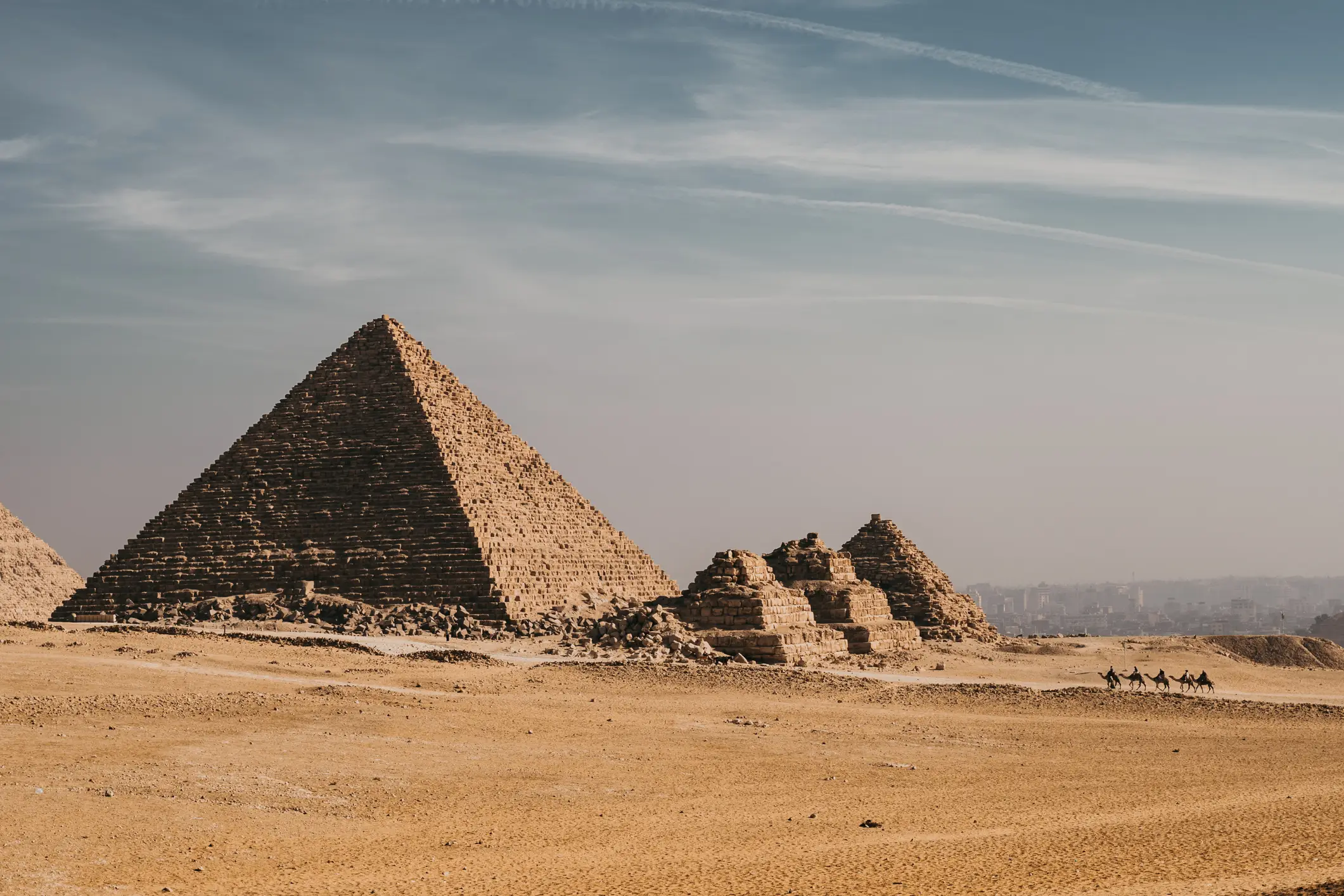
It’s an incredible hypothesis, but remains highly speculative because Levy’s paper has not been peer-reviewed, and there is no ancient text directly connecting the pyramid’s dimensions with astronomy or the Eye of the Sahara.
Because the measurements and astronomical values were already known, some of the similarities may also be coincidences discovered after trying different calculations.
The traditional explanation therefore remains stronger: the pyramid formed part of Khufu’s funerary complex.
Levy’s theory does not overturn that view, but it invites readers to consider whether the monument may also have carried a wider symbol.
“The landscape-scale and hydrological evidence constitutes the strongest evidential tier; the mathematical encoding claims are the most novel and the most in need of independent verification,” he writes.

“On the reading proposed here, the Great Pyramid was built to permanently encode the Zep Tepi cosmological system in the most durable medium available. It is not primarily a tomb. It is a three-dimensional cosmological monument that recreates the primordial landscape from which Egyptian civilisation derived its sacred worldview.
“The pyramid was not built to last forever because it contained something valuable. It was built to last forever because it was something valuable — the permanent recreation of the First Time, the moment when the ancestors’ world was whole, before the flood of sand took it away.
“The knowledge that generations of visitors sensed in the empty chambers was not concealed inside. It is the form they were standing within. On this reading, the pyramid is not a container for knowledge. It is the knowledge, made stone.”
Topics: World News, History
 Anish Vij