Nobel Peace Prize winner has chilling warning for when humanity will end

Decorated theoretical physicist David Gross believes the end could be nigh for humankind.
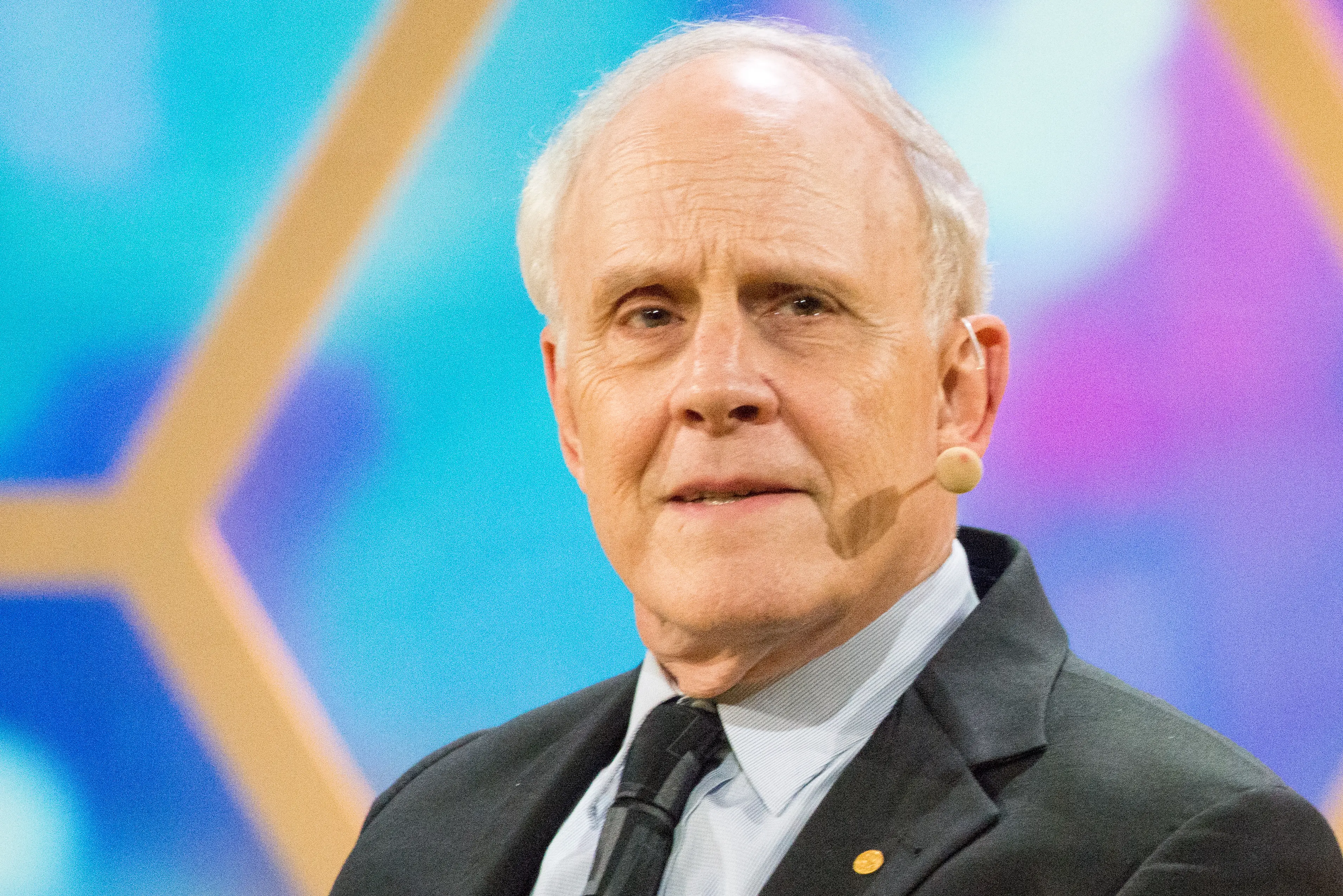
Co-winner of the Nobel Prize in Physics 22 years ago - sharing the honour with Frank Wilczek and Hugh David Politzer - for the 'discovery of asymptotic freedom in the theory of the strong interaction', Gross spoke to Live Science about the very real nuclear threat we're facing each and every day, as well as artificial intelligence.
In his rather educated eyes, it's unlikely that any of us will survive past the year 2060.
"Even after the Cold War ended, when we had strategic arms control treaties, all of which have disappeared, there were estimates that there was a one percent chance of nuclear war every year," began his chilling warning.
Advert
"I feel it's not a rigorous estimate that the chances are more likely two percent. So that's a one-in-50 chance every year. The expected lifetime, in the case of two percent per year, is about 35 years."
This particular calculation is derived from equations not too dissimilar to those which were used on determining the half-life of radioactive materials.
"Things have gotten so much worse in the last 30 years, as you can see every time you read the newspaper," Gross went on to argue, alluding to tensions across India, Iran and Pakistan, and Russia and Ukraine.
Gross also pointed to the fact that in the last decade, the number of signed nuclear treaties is non-existent.
"There are now nine nuclear powers," he noted. "Even three is infinitely more complicated than two."
Even if the nuclear superpowers of the world get their acts together and make eternal peace with each other, that's not going to halt the rise of AI.
The string theorist added: "The agreements, the norms between countries, are all falling apart. Weapons are getting crazier. Automation, and perhaps even AI, will be in control of those instruments pretty soon. It's going to be very hard to resist making AI make decisions because it acts so fast.
"You asked me to think about the future, and I am obsessed the last few years, thinking about that, not the future of ideas and understanding nature, but of the survival of humanity."
Somewhat horrifyingly, the 85-year-old revealed that AI is occasionally guilty of 'hallucinating', meaning it can generate inaccurate outputs.
Despite this frightening prospect, Gross highlighted how historically, far-reaching public awareness and scientific warnings have resulted in successful worldwide responses in the past. Just look at climate change.
"We made them; we can stop them," he declared, referring to nuclear weapons.
Topics: Science, Russia, Technology
 Dan Seddon