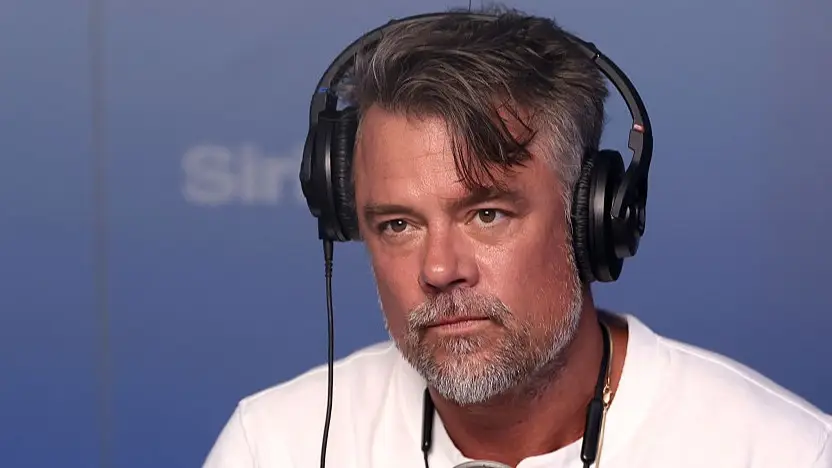
Doctor explains truth behind testosterone therapy as actor Josh Duhamel says treatment made him 'stronger'

A doctor has explained the truth behind testosterone replacement therapy (TRT) after actor Josh Duhamel said the process made him feel 'stronger'.
The movie star and former model, 53, spoke of how he discovered he had low levels of testosterone in his early 40s.
On Dave Asprey's 'The Human Upgrade' podcast on 16 September, Duhamel spoke of how the treatment helped him.
He now injects testosterone three times per week. It is a medically supervised hormone treatment designed to restore testosterone levels in those with clinically low testosterone, known as hypogonadism.
Advert
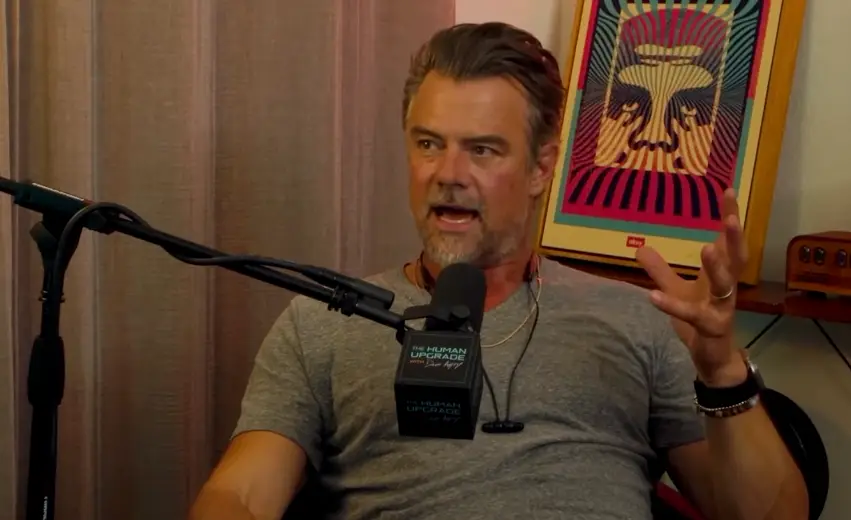
"I feel better now than I did in my early to mid-30s," the actor said. "I'm not even kidding you. My joints, my back, my knees. I just feel stronger."
However men are using TRT without a clear clinical need. As per Epic Research, the share of male patients being prescribed testosterone has been increasing since 2021.
The American Osteopathic Association reported that this is in part due to social media and a crisis dubbed 'physique culture', with men resorting to off-label testosterone use.
This is to more rapidly build muscle, reduce body fat, and achieve an idealised physique rather than having a true clinical need.
Harvard Health also said that as testosterone levels naturally decline by about 1 percent per year after the age of 30 or 40, marketing campaigns by digital health services and health platforms frame this natural drop as a condition that needs 'fixing' in men.
When a man with normal testosterone levels takes external testosterone, the body identifies the excess and shuts down its own natural production, which can also cause the likes of infertility and testicular shrinkage.
However for men who have clinically low levels of testosterone, and suffer with effects such as loss of libido, loss of muscle, increased body fat and osteoporosis, TRT can be officially prescribed by a doctor.
Doctor reveals truth behind treatment
Speaking directly to LADbible, Dr Fraser Gordon, NHS consultant physician and medical director at Xvera, explained just how common low testosterone is - but how easy it can be to miss with many of the other symptoms also common among other conditions.
"It is more common than most men realise," he said. "In one large European study, around one in six men aged 40–79 had testosterone levels in the low or borderline range.
"But the difficulty is that it can be remarkably easy to miss. That is made even worse because, as men, we are often brilliant at ignoring symptoms and putting them down to stress, getting older, work or simply life.
"And because low testosterone can present with reduced libido, lower energy, erectile problems, loss of muscle mass or strength, and changes in mood or concentration, it is very easy to explain those symptoms away rather than think they may have a medical cause.

"Poor sleep can make you tired. Stress can affect libido. Obesity can affect testosterone. Depression, medication, thyroid disease and anaemia can all produce overlapping symptoms.
"That is what makes diagnosing testosterone deficiency much more complicated than simply ticking a few symptoms on a questionnaire."
"I actually think celebrity stories like this can be extremely useful, as they get men talking about something many of us are exceptionally good at ignoring: our own health.
"If your energy has changed, your libido has disappeared, your sexual function has changed, you are losing strength, or you simply no longer feel like yourself, it is reasonable to find out why."
Warning over fertility impact
Explaining exactly what TRT is and how it's used he added: "Most of us immediately think about bodybuilding and that heavily 'juiced' look.
"But medical TRT is not the same thing. We don’t give people huge amounts of testosterone or push their levels to those seen with bodybuilding.

"It is purely there to replace testosterone that their body is no longer producing adequately and bring it back into a normal range.
"For a man who genuinely has testosterone deficiency, TRT can be a game changer. It improves libido and sexual symptoms, and can improve things such as muscle mass, body composition and overall wellbeing.
"But it is not a magic anti-ageing drug. It is replacing what should be there already."
On whether the treatment is safe, Dr Gordon said that once treatment has started, it needs to be monitored regularly to make sure levels are safe and appropriate, and that symptoms are actually improving.
However one main issue is the impact on fertility, because as he explains, getting testosterone from outside the body can impair the signals telling the testes to make their own testosterone and sperm and reducing production.
"If somebody wants children now or in the future, that conversation needs to happen before treatment starts, not six months afterwards.
"There are other approaches TRT specialists can sometimes consider where preserving fertility is particularly important. This is why you need the oversight and input of doctors trained in these areas."
 James Holt