Brits with savings stashed away in current account given four-day warning

Millions of Brits could be missing out on one of the best tax breaks by letting their cash sit in the bank.
With the tax year starting on 6 April, savers have just four days to take advantage of a valuable perk before it closes at the end of the tax year.
While it's common to assume keeping money in a regular savings or current account is the safest option, it can mean missing out on hundreds of pounds of tax-free interest or even longer-term investment growth available through Individual Savings Accounts (ISAs).
And finance educator Mathew Gay, known as The Quid Squid to his followers online, says anyone with spare money might want to consider moving it into a tax-free account before the looming deadline hits.
Advert
“The big thing to remember is that your ISA allowance is a use-it-or-lose-it situation,” Gay told LADbible. “You get up to £20,000 each tax year, but if you don’t use it, it doesn’t roll over.
“If you haven’t got a decent emergency fund yet, that definitely comes first. And no, emergency funds shouldn’t be invested.”
New ISA rule change after Easter Sunday
From April 2027, under-65s will only be able to place £12,000 per year into a cash ISA.
“The message from the government is pretty clear. They want to nudge more people towards investing for the long term rather than keeping everything in cash,” Gay says, noting that the change is unlikely to affect most everyday savers.
“If someone has £20,000 lying around, they more than likely invest anyway, so this shouldn’t really affect the average person.”
Cash vs investing: what £20,000 could earn
If someone placed £20,000 into a Cash ISA paying around four percent interest, it could generate roughly £800 over a year if the rate stayed the same.
“That’s decent for doing very little,” Gay says.
"A Stocks and Shares ISA could make more, but that is not guaranteed, and this is where people sometimes get caught out.
“Investing can grow your money much more over time, but it can also go down, especially in the short term. That’s why you see the ‘capital at risk’ warning on investing content.”

The difference between ISA types
Cash ISAs and Stocks and Shares ISAs work very differently.
“A Cash ISA is basically your money staying as cash and earning interest — nice and simple,” Gay says.
“A Stocks and Shares ISA is where your money gets invested instead. It has more chance to grow, but also more chance to wobble about.”
In simple terms, cash offers stability while investing brings greater potential returns — along with greater risk.
A simple way for beginners to start investing
For people interested in investing through a Stocks and Shares ISA, Gay recommends starting cautiously.
“The first thing I’d do is work out what you can actually afford to invest without stressing yourself out,” he says.
“That means understanding your income, your bills and what is realistically left over each month.”
Once that is clear, he thinks beginners should focus on diversification rather than trying to pick individual winning stocks.
“I’d keep it simple by looking at a diversified fund where your money is spread across loads of businesses,” Gay explains. “That lowers the risk compared with trying to guess the next big winner.”
And patience is key.
“Investing isn’t really a get-rich-quick thing,” Gay says. “It’s more of a sit down, shut up and let it do its job thing.”
Don’t rush investment decisions
While opening an ISA before the deadline can be sensible, Gay warns people not to panic-invest just because the clock is ticking.
“The tax wrapper and the actual investment decision are two separate things,” he says. “It’s the second bit where you want to take your time and get it right.”
Another option: the Lifetime ISA
Savers may also want to consider a Lifetime ISA (LISA), which can be particularly useful for first-time buyers or retirement planning.
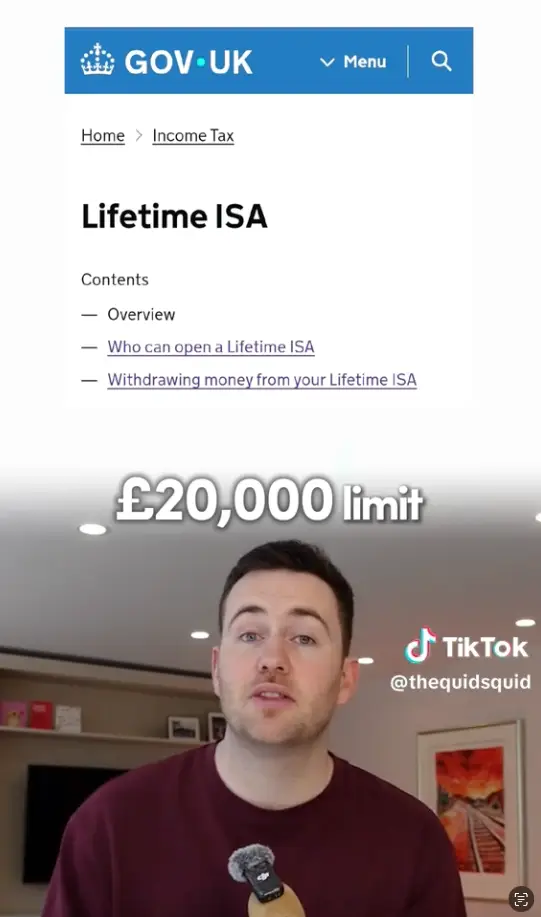
You can contribute up to £4,000 per year — part of the £20,000 overall ISA limit — and the government adds a 25 percent bonus, worth up to £1,000 annually.
However, withdrawals outside the rules can trigger penalties.
“It can be brilliant,” Gay says, “but only if it matches what you actually want the money for.”
Ultimately, he says, savers should think about their goals before making any decisions.
“ISAs are one of the best tax perks we get in the UK,” he adds. “But before doing anything, know what the money is for — because your savings should match your goal, not just the deadline.”
Gay gives online financial education for informational purposes only and does not provide financial advice.
 Anish Vij