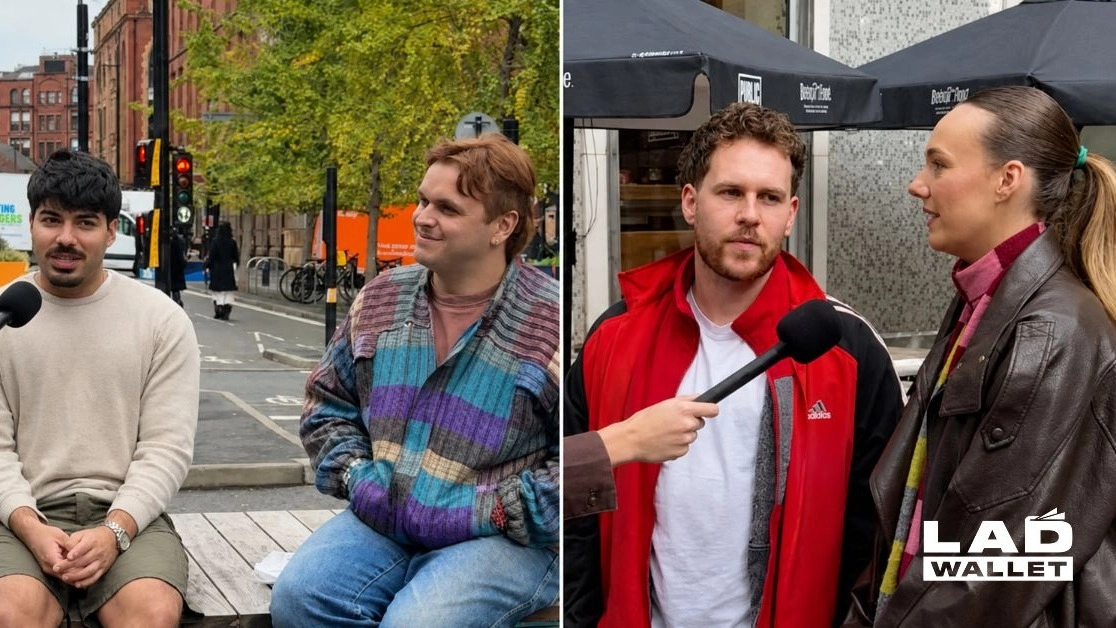
Autumn Budget: Young Brits share heartbreaking reality of trying to buy a home as one says ‘I’ve given up’

For young people today, getting on the housing ladder or making ends meet with unattainable minimum wages feels often like an impossible task.
On Wednesday (28 October), the Government announced their first budget since Andy Burnham became Prime Minister earlier this year.
Chancellor of the Exchequer John Healey made a myriad of announcements aimed at helping support Brits, saying: “Those are the storms we face. We can’t wish them away. We must choose the course we steer through them.”
Advert
These were most notably that households in certain council tax bands would get a £100 support payment towards energy costs, a new first-home buying scheme for young people to get themselves on the ladder and small hikes to the minimum wage.
But in practice, what difference do these changes really make to people?
LADbible headed out onto the streets to ask people what they made of the announcements, what their major financial concerns were, and what more needs to be done to help grapple with the soaring cost of living.
"I've given up"
Couple Anthony, 29 and Chloe, 28 both say the thought of getting a mortgage feels impossible for them and other young professionals, even with new measures announced, despite both of them working in the teaching profession.
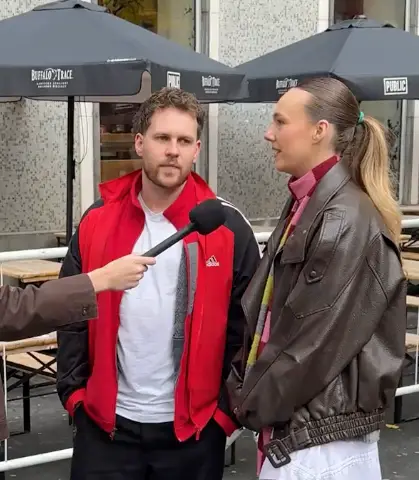
“Its f----d”, Chloe said when responding to the ‘singles tax’, a term used for the extra financial burden single people and solo occupants face.
Anthony added: “It’s impossible to sort of live without being in a shared accommodation in something like a spare room, for someone to be single and have their own flat and their own space to themselves paying for that, rather than getting into shared housing sort of situation is extremely difficult.
“We're both teachers and we do teaching support and it's stuff which is integral to the country with a lot of that sort of going on.
“It’s really hard to understand the fact that you're doing something which is good work, which needs to be addressed in the country and needs to be sorted, and they need support, but you're not getting the pay for it, which you need to live as a normal person in the UK.”
Chloe, whose main concern is the rising energy bills, meanwhile added: “I've given up on being on the housing ladder. I just think prices for houses are ridiculous.

“The deposit you need is ridiculous. And obviously they brought in that thing where they're gonna help. But regardless of all these things, you’ve got the backlash of everything else costing a bunch of money.”
She continued: “All of our bills have gone up this year. We've just moved in together. But as a single person, I would not have been able to afford all of that, especially on a teacher wage as well.
“You pay all this money to big corporations and the Government, and what the f— are we seeing for it?”
Young people are 'focused on careers'
Maddie and Georgia, both 22, said their main focus and plea for Government help is on proper career support to ensure people have enough money to put away and to be able to live in skilled professions after years of studying.
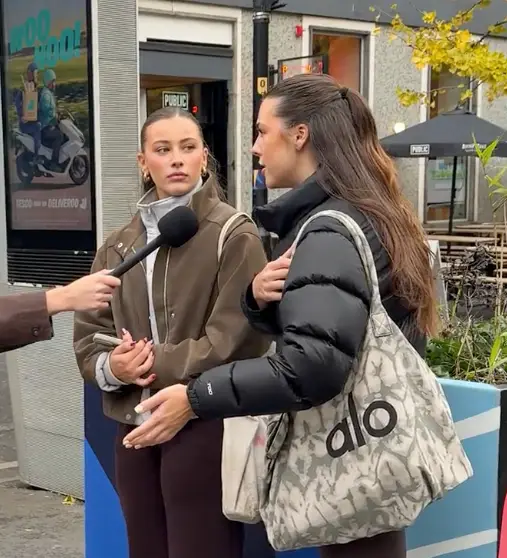
“I think with careers being such a big thing, I feel like everyone is so driven on that,” Maddie explained.
“I feel like moving out is a lot more challenging, especially for me because I do musical theatre, so I’m having to travel back and forth from London so I am not able to save money and am focusing on my career.
“I feel like everyone wants their own house eventually, but when we were younger it feels like we wanted to be moved out in our 20s, but I’ve literally not got any savings. I don’t think it’s possible at any point.”
Georgia, who echoed the same sentiment, continued: “It’s like we are trying to find a full time job in the career that we want to get in, but then we need to do internships, which aren't well paid either.
“So then it's like, can you even afford to go out with your friends on a weekend? Probably not. I feel like it's really centred around careers.”
On the news of the minimum wage uplift, both Maddie and Georgia said they didn’t feel it was enough or in line with the real living wage, after the Government announced an increase to £13.20 an hour for over 21s.
“It’s not enough, because I feel like there’s so much you need to pay for nowadays. Like you just can’t keep up with it.”

As Georgia added: “There’s always something to pay for, like getting to and from work. If you get a job in the city then it’s trains or buses, or if you get parking it’s that and petrol.
“So whether you’re in the job you want to get into, it’s sacrificing a lot more money on getting to the job. So it feels like a lose-lose situation.”
Young people struggle to afford soaring rent
As part of the Government announcement, it was revealed that a one-off £100 payment was on its way to households as a supplement towards Energy Payments.
This will be for roughly 20 million homes in council tax bands A to D, in light of the January energy hikes which are expected to be ‘significant’, with the cap jumping from between 16 to 26 percent.
Asked simply if the £100 boost was enough, Zain, 24, who recently graduated, answered simply: “No. Next question.”
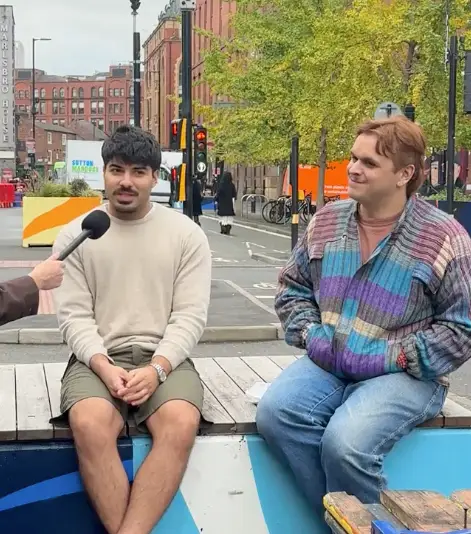
The main topics of interest were the worries over home ownership and wages, as well as other everyday increases to the likes of supermarket shopping and travel.
“I feel during Reeves’ last budget, there were a lot of jobs that were declining back then, and now the pressure has moved onto young boys and girls basically,” Zain said.
As friend Hayden, 23, said his main worry is affording the rent, with no prospects of realistically getting on the housing ladder. On the salary increases, they both said the minimum wage uplift is still not enough to get by with other soaring expenses.
“I think paying the increasing rent and all the energy prices are just crazy,” he explained. “Four or five years ago it was such a different story.
“Now, it’s all just a lot. The jump is so noticeable in the last few years. Eating out is sometimes ten pounds more expensive [for a meal]. And then on groceries, even though I go to the cheapest shops like Lidl or Aldi, even there it’s getting more and more pricey.”
Asked what their priorities would be for financial relief from the Government, Zain said he ‘wouldn’t know where to begin’.
“I don’t even know what would help me,” he said. “I feel a bit clueless sometimes.
“I think more and more people our age are definitely coming to the idea that they don’t want to just settle down now because of all the financial uncertainty, not just with housing but having kids.
“Ten years ago maybe I wanted that, but now it’s like, I wouldn’t be able to afford that because I’d be struggling for a long time.”
Meanwhile pal Hayden said: “Especially in our generation, I think it’s more feasible to have quick experiences and spend a bit more money to travel.
“Even though my parents were telling me to put money aside and save for a house, I don’t feel like I am ever going to be able to get on that property ladder or see where I will be comfortable enough to even take out a mortgage.”
"Over half my salary goes on rent and bills"
Sitting enjoying a drink in Manchester’s Stevenson Square was 23-year-old pals Thea and Fran weighed in on the debate.
They both said that over half of their income, which is just slightly above the newly announced minimum wage baseline, vanishes once rent and bills have been paid, leaving very little to live on while saving up on the side.
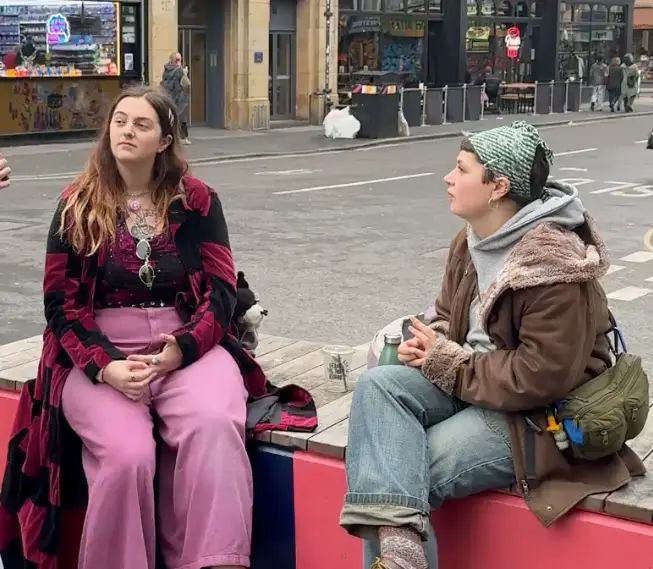
"Two thirds of my pay is on rent," Thea said. "Whatever's left over has to spread over the rest of the month. But if bills are then more expensive, I'd have less for food shops and other stuff."
As Fran said 'over 50 percent' of her income goes on rent and utilities, along with around £100 on transport costs each month.
"After that, there's no money to put into savings," she explained. "It's not even like I can potentially change my situation in the future living like that."
Both friends called on the Government to do more for renters and rent control - although it was announced that the Renter's Right Act earlier this year would force landlords to only increase rent costs once a year, with 2 months' notice, and it must align with local market averages.
Responding to the minimum wage increase, Thea explained: "I am on just over minimum wage at the moment. I am on £13.71 and I'm a bar supervisor. And it isn't enough for what the job is, or for the majority of jobs.
"I think with rent costs and other costs being as much as they are, it does need to be more than it is."
"With things happening in the world at the minute, it's all only going to get worse," Fran added. "We can't afford basic food, it's gone up in the past five years. And our salaries haven't in the same way."
Results from our LADbible poll
We polled our readers on X following the budget announcements on Wednesday. On the £100 one-off energy payments for households, 68.8 percent were in favour of the move. 18.8 percent argued to 'bin it', while 12.5 percent were unsure.
Meanwhile, on the fuel duty cut being extended until July in a bid to keep petrol costs lower, 79 percent were in favour of this. 8.4 said to 'bin it' and 12.6 percent were unsure.
For the increase to the minimum wage, which will impact 2.3 million people, 52.4 percent were in favour. 26.6 percent argued against it and 21 percent were unsure about the move.
62.9 percent of respondents backed the new 'Your First Home' scene, 15.7 percent voted against it, and 21.3 percent were unsure.
However overall on the Autumn budget, only 24.4 percent of people voted they were happy with the announcement. 46.3 percent voted 'not for me' as 29.3 percent said they were unsure.
 James Holt