
'Biggest ever great white shark' makes 'sudden movement' near coast

Tagged by researchers last year, the biggest great white shark ever recorded in the Atlantic has made its way up and down the US coast.
Contender weighs in at nearly a whopping 1,700 pounds and is measured at an also mega 13 feet and nine inches. Since OCEARCH began tracking his movements on 17 January in 2025, he’s travelled over 6,800 miles.
And now the shark has made a ‘sudden movement’, that could be very helpful for science. Contender previously got pretty close to the coast of a popular tourist destination, six miles off St Augustine in Florida.
That came as his tracking story was described as one of OCEARCH’s ‘most fascinating’, going from the Florida-Georgia coast into Canada and back.
Advert
In the early hours of this morning (6 April), he pinged further north, off the South Carolina and North Carolina coasts.
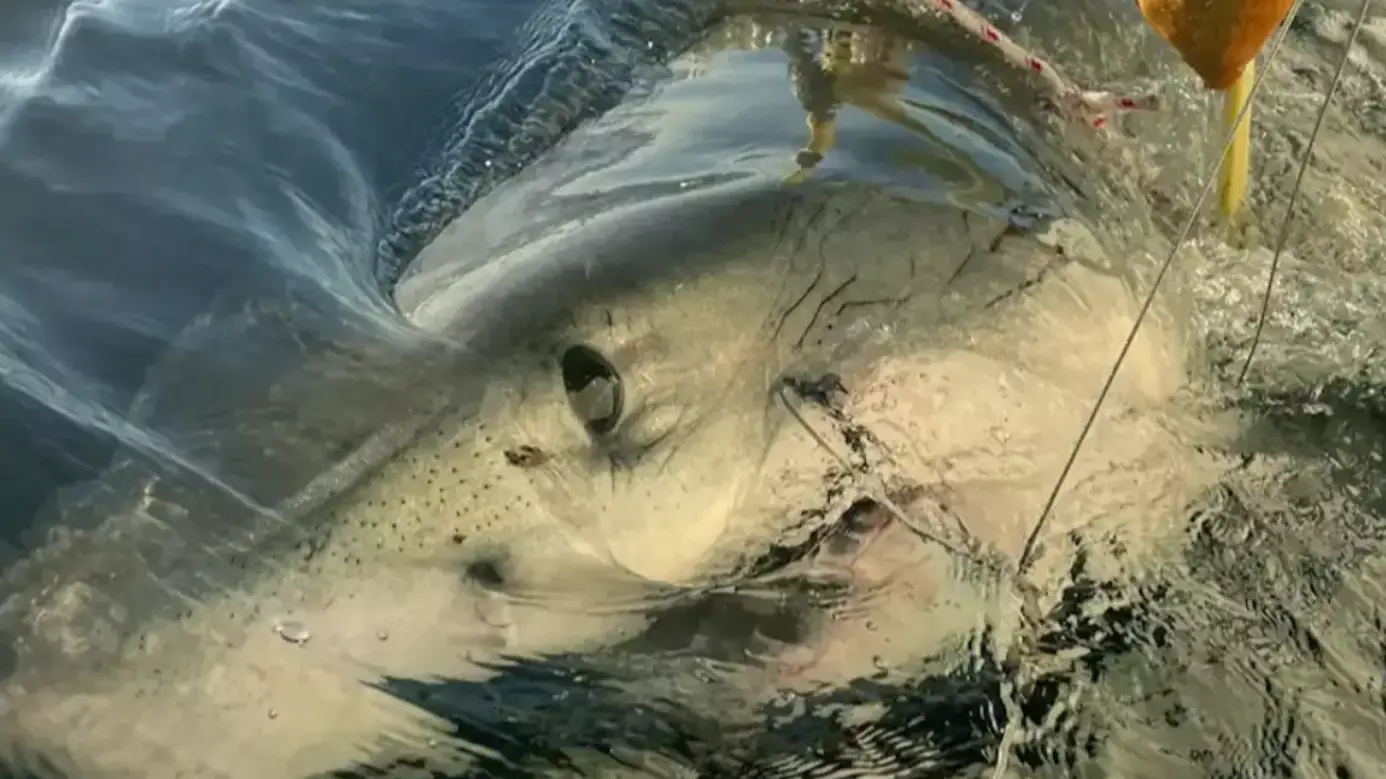
Contender suddenly moved into, offshore waters earlier this month as scientists said it was possibly for breeding purposes ‘although it is not certain’.
OCEARCH Senior Data Scientist John Tyminski said: “This sudden movement could be to forage in deeper waters, but we cannot rule out the possibility that it’s related to reproduction at this time of year.”
The researchers added: “Each new ping deepens our understanding of these apex predators—their life history, movements, and potential breeding areas—offering critical insights for conservation.”
OCEARCH said on its social channels that these trends are common among mature male white sharks, such as Contender.
He’s a particular point of interest for the researchers as they reckon he could hold the key to one of the ocean’s many mysteries: where great whites mate.
“Contender has become a pretty famous shark, in part because he's the largest mature male that OCEARCH has ever tagged,” Tyminski previously said.
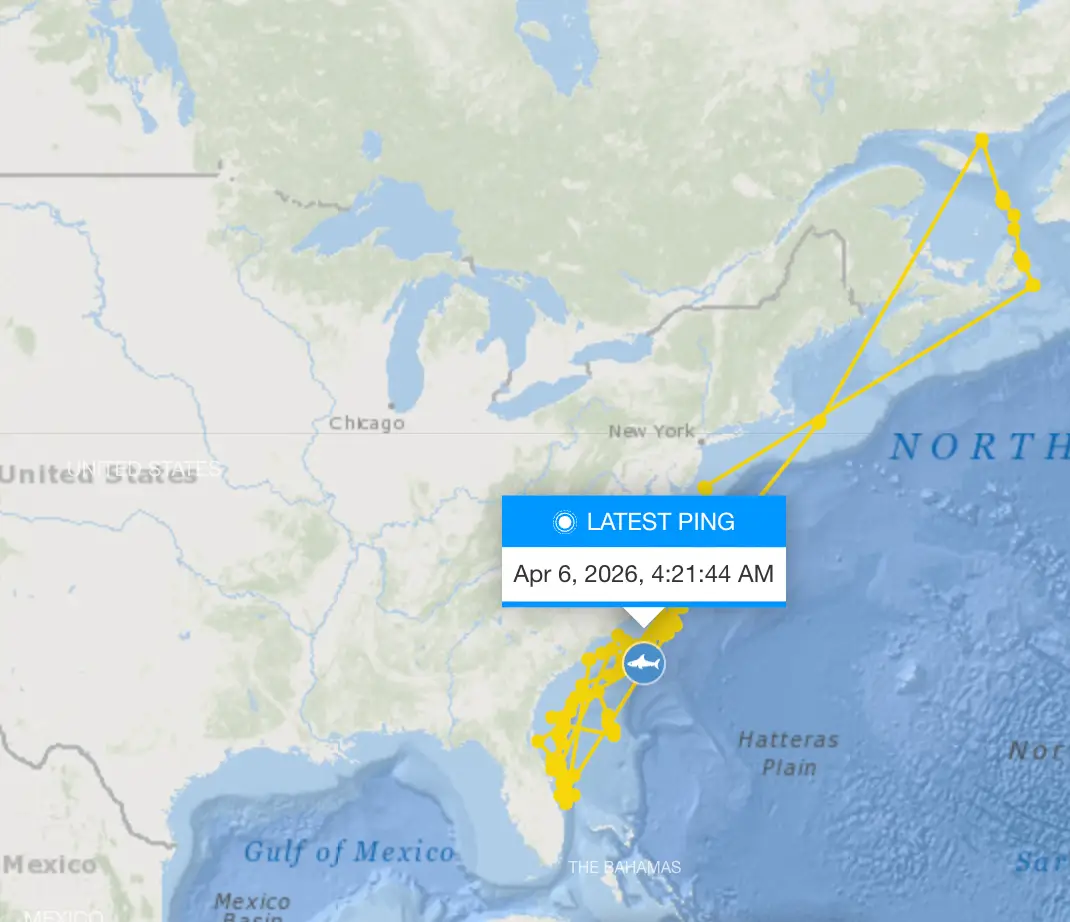
“He's shown very interesting movements – gone all the way up into the Gulf of St. Lawrence during the summer and has come all the way back down.”
Described as ‘sexually mature’, the whopper white shark’s movement patterns could possibly give researchers crucial insights into the breed’s reproductive biology.
"Keeping an eye on white sharks like Contender can give us some indirect clues as to where mating may be occurring," Tyminski said.
"It is definitely one of the questions that we still really want to try to answer to help protect and conserve white sharks."
Contender’s tag will provide data for approximately five years and the team have also collected ‘important biological samples, including urogenital material’.
 Jess Battison