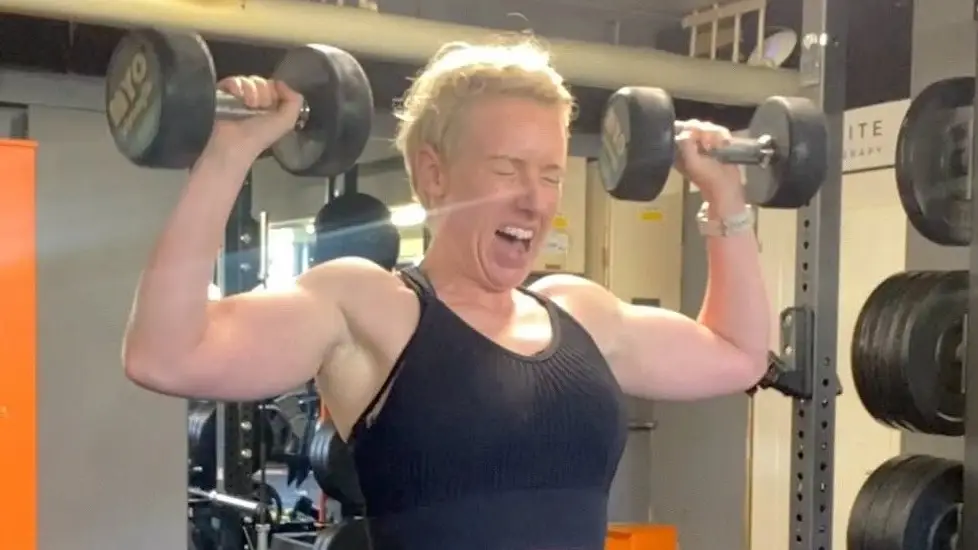
Woman, 40, took creatine for 100 days and shared everything it changed

A woman has shared how creatine helped her both in the gym and at work, hoping to prove that the popular supplement isn't just for 'guys flexing their biceps in muscle vests' but 'regular folks too'.
By taking it for 100 days and measuring her body fat, muscle mass and bone density before and after the experiment, she set out to see if it's as effective as everyone says it is.
If you've ever spent some time with a member of the body-building community, or even just your mate from work who's trying to look a little more buff, then you may already know all about creatine.
But what actually is it, and how does it work?
Advert
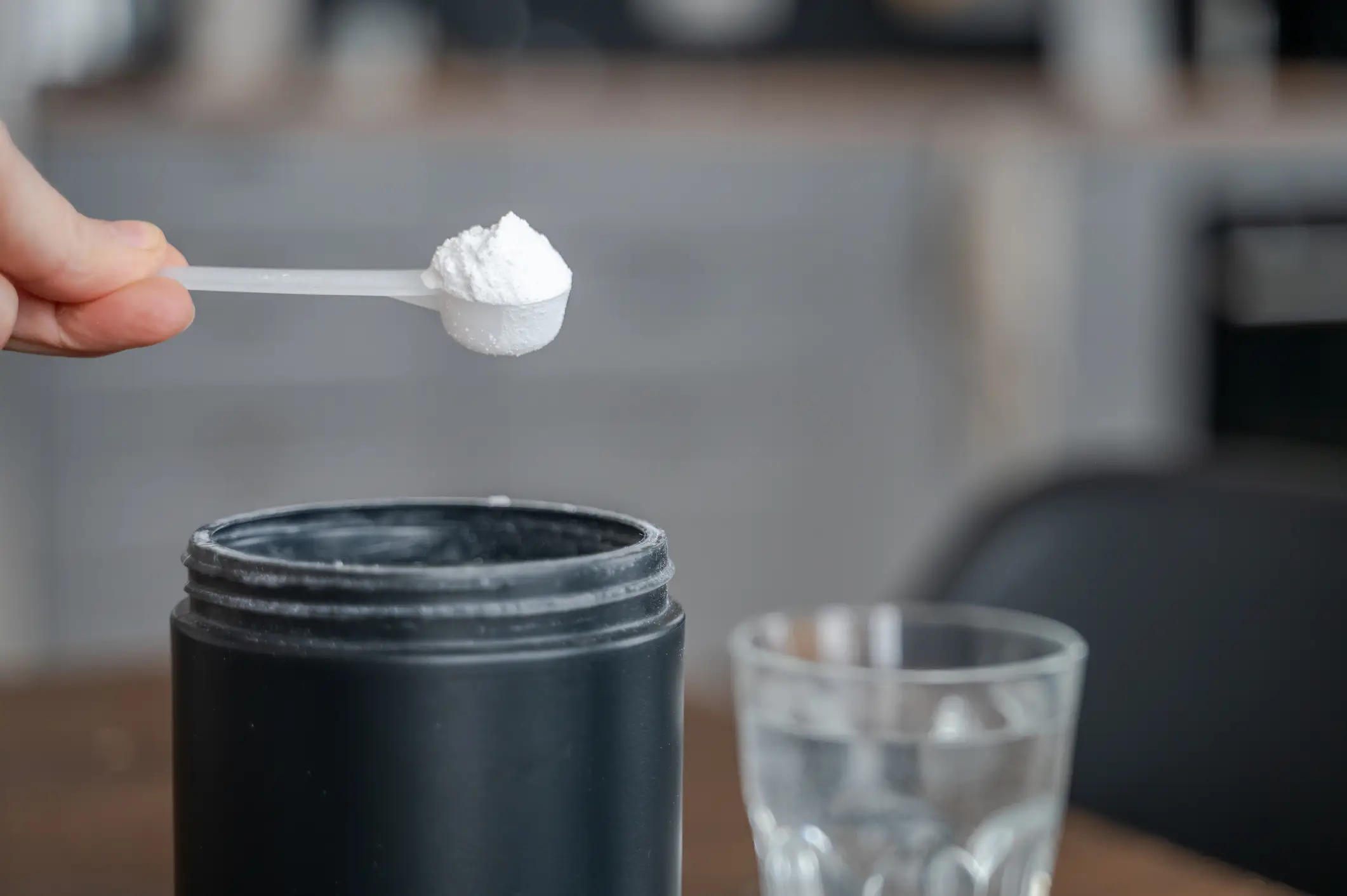
Although some folks like to pump their bodies full of unnatural substances and drugs, creatine is actually a naturally occurring compound in our body, and taking the supplement is just a good way of boosting your numbers.
It is produced in the kidneys, liver and pancreas and is one of the body's natural energy sources, particularly when it comes to muscle contraction.
Creatine also helps to increase the body's stores of adenosine triphosphate, the primary energy-carrying molecule in the body, which allows for the sort of explosive movements you see in weightlifting or sprinting.
However, too much of it could lead to explosive movements of a very different kind, as there have been concerns about creatine's impact on gut inflammation.
What are the benefits of creatine?
Naturally, it's the improvement of our muscles that a lot of people can focus on when it comes to taking creatine, with most just integrating a few mg into their daily diets.
If all goes well, you're likely to feel more energised, stronger and have better recovery when taking creatine, so it's no surprise that it's so popular with those who treat the gym as their place of worship.
A simulation recently showed off exactly how it benefits the body while explaining how it really works, highlighting the way in which it activates cells in your muscles to help you become stronger.
It's not just the body which can benefit from creatine though, as numerous studies have also highlighted the positive impact it can have on the brain.
Some studies have suggested that it can reduce symptoms of depression and anxiety, while it can also stave off cognitive decline and keep away symptoms of fatigue or even long covid.
In fact, some have theorised that it could also reduce the risk of certain cancers, so there certainly seems to be little downside when it comes to creatine.
And that's backed up by Laura's experience, after the fitness influencer began taking the supplement when she was 40 back in 2023, taking it for 100 days and seeing some significant changes.
What was Laura's experience with creatine?
Speaking to Women's Health magazine, the content creator explained how the supplement boosted her recovery, energy levels and strength.
She said: "It’s worth noting that I started taking it when I began a resistance training programme and a new meal plan, so the results would be a combination of those things. Despite putting everything I have into my workouts, full-on, ferocious effort, I recover quickly and can train hard again the next day.
"My cognition and thinking have definitely improved. I can work quicker for longer with less fatigue. It seems my brain is using creatine as fuel.
"I’ve definitely got stronger. I know some of this is down to beginner gains, but creatine is helping me build strength and get extra reps by giving my body more fuel."
She says after 100 days on creatine, she lost almost 6kg (13lb) of fat, gained 3kg (7lb) of muscle, and 200g of bone density.
But she did acknowledge a lot of this will be down to her strict exercise and eating plan, but said 'the creatine would have been the icing on the cake, helping me lift heavier for more reps, which then increases muscle mass and supports long-term health'.
She concluded: "I’m hoping this shows that creatine isn’t just for guys flexing their biceps in muscle vests. Creatine is good for regular folks too – it’s just that the marketing is stuck in the 1990s."
Topics: Health, Mental Health
 James Moorhouse