
ladbible homepage
ladbible homepage
  • Home
  • News
    • UK
    • US
    • World
    • Ireland
    • Australia
    • Science
    • Crime
    • Weather
  • Entertainment
    • Celebrity
    • TV
    • Film
    • Music
    • Gaming
    • Netflix
    • Disney
  • Sport
  • Technology
  • Travel
  • Lifestyle
  • Money
  • Originals
    • FFS PRODUCTIONS
    • Say Maaate to a Mate
    • Daily Ladness
    • UOKM8?
    • FreeToBe
    • Citizen Reef
  • Videos
  • Advertise
  • Terms
  • Privacy & Cookies
  • License Our Content
  • About Us & Contact
  • Jobs
  • Latest
  • Archive
  • Topics A-Z
  • Authors
Facebook
Instagram
X
Threads
Snapchat
TikTok
YouTube
Submit Your Content Here
  • GAMINGbible
  • LADbible Group
  • UNILAD
  • SPORTbible
  • Tyla
  • FOODbible
  • UNILAD Tech
Omega-3 Fish Oil 'silver bullet' benefit debunked in Alzheimer's blow - and what really lowers risk
Home>News>Science
Published 17:18 30 Jun 2026 GMT+1

Omega-3 Fish Oil 'silver bullet' benefit debunked in Alzheimer's blow - and what really lowers risk

Researchers from the University of Southern California investigated the daily supplement's effects on the brain for over two years.

Dan Seddon

Dan Seddon

google discoverFollow us on Google Discover

Contrary to popular belief, Omega-3 fish oil is not necessarily benefitting our brains.

It's reported that over a billion dollars are spent on the supplements every single year, with buyers labouring under the impression that acids within boost brain health.

Published by eBioMedicine, a new scientific study - focussed solely on hundreds of adults aged between 55 and 80, nearly half of whom carrying the Alzheimer's disease harbinger APOE4 gene - has debunked this accepted 'truth'.

Across the two-year clinical trial, researchers from the University of Southern California determined that high doses of Omega-3 pills actually failed to improve cognitive performance and memory.

Advert

Neither did they have a positive impact on brain cell loss.

"We all wish there was a silver bullet for preventing Alzheimer's, but our findings showed that fish oil supplements do not appear to protect brain health," noted Hussein Naji Yassine, MD, director of the USC Center for Personalised Brain Health.

"While Omega-3s play an important role in forming brain cell connections needed for cognition, our results do not support fish oil supplements as a preventive measure against Alzheimer's."
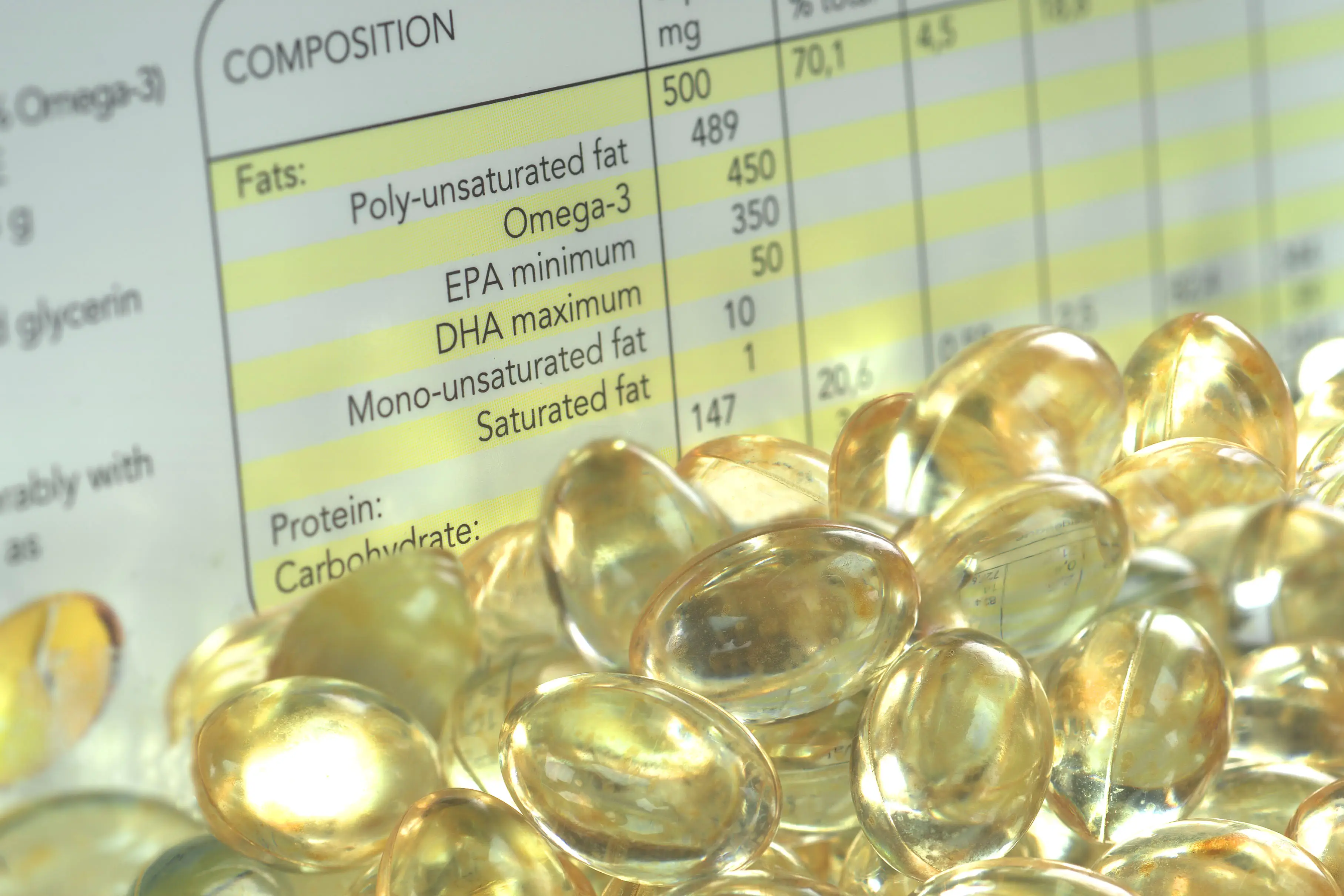
Omega-3 fish oil supplements are not useful in the battle against Alzheimer's (BSIP/UIG Via Getty Images)

The study's participants were divided into daily fish oil supplement and placebo groups - each supplement containing 2,000 mg of docosahexaenoic acid (DHA), which is fatty in Omega-3.

Although DHA successfully reach its intended target, the brain, this failed to translate into tangible cognitive improvement.

Most significantly, brain imaging scans taken two years later solidified the fact that the hippocampus (a region of the brain used to mark risk of Alzheimer's) was not slowed down in its shrinking.

These findings have seen researchers turn their attention to why Omega-3s cannot produce measurable brain health benefits.

Yassine went on to add: "We're focused on better understanding how the brain processes Omega-3s and whether factors, such as poor health, dietary pattern, genetic risk and age, may change the brain's ability to effectively absorb and use Omega-3s.

"We are working to develop medications that may help the brain better utilise these nutrients to preserve cognitive function."

As for how we can lower the chances of an Alzheimer's future for ourselves, it's mostly down to maintaining an overall positive state of health.

The study's lead investigator said: "Staying healthy throughout life remains the most powerful tool we have for reducing Alzheimer's risk, including regular exercise, quality sleep and a balanced diet.

"Living a healthy lifestyle is the brain's equivalent of getting regular car maintenance and high-quality oil changes. The brain is more likely to lose greater function if health issues in other parts of the body go unaddressed, in the same way that car engines stop working if regular maintenance is skipped."

Staring directly at the sun for 30 minutes each morning is another scientifically backed-up option.

Featured Image Credit: Kirk McKoy/Los Angeles Times via Getty Images

Topics: Health, Science

Dan Seddon
Dan Seddon

Recommended reads

Influencer mother speaks out after scamming loved ones out of £15,000 by faking cancerCOURT TVSeven passport mistakes to check you’re not making before your holiday this summerDominika Zarzycka/SOPA Images/LightRocket via Getty ImagesBlake Lively's staggering final legal bill revealed in court battle with Justin BaldoniCindy Ord/Getty ImagesDark story behind man who was dubbed the 'most beautiful boy in the world' aged 15Screen Archives/Getty Images

Advert

Choose your content:

an hour ago
2 hours ago
4 hours ago
  • COURT TV
    an hour ago

    Influencer mother speaks out after scamming loved ones out of £15,000 by faking cancer

    Haleigh Morgan Knight has pled guilty in court.

    News
  • Odd ANDERSEN / AFP via Getty Images
    2 hours ago

    Radical idea to change World Cup penalty shoot-outs is gaining momentum - but not everybody agrees

    This would make extra-time look very different indeed

    News
  • Family handout
    4 hours ago

    England fan goes missing on way to World Cup in US as family issue plea

    Michael Hewitt was last heard from during a stopover in Barcelona.

    News
  • TikTok/@hdltravels
    4 hours ago

    Man who was diagnosed with stomach cancer at 31 shares positive health update after undergoing procedure

    Harry Large, 31, from Nottingham, was diagnosed with adenocarcinoma earlier this month

    News
  • Omega-3 Fish Oil changes your body in these key ways after 30 days of taking supplement
  • Expert explains what viral 'limitless pill' that celebs take really does
  • What the size of your testicles really says about you
  • Unsettling simulation shows what really happens when you crack your knuckles