ladbible homepage
ladbible homepage
  • Home
  • News
    • UK
    • US
    • World
    • Ireland
    • Australia
    • Science
    • Crime
    • Weather
  • Entertainment
    • Celebrity
    • TV
    • Film
    • Music
    • Gaming
    • Netflix
    • Disney
  • Sport
  • Technology
  • Travel
  • Lifestyle
  • Money
  • Originals
    • FFS PRODUCTIONS
    • Say Maaate to a Mate
    • Daily Ladness
    • UOKM8?
    • FreeToBe
    • Citizen Reef
  • Videos
  • Advertise
  • Terms
  • Privacy & Cookies
  • License Our Content
  • About Us & Contact
  • Jobs
  • Latest
  • Archive
  • Topics A-Z
  • Authors
Facebook
Instagram
X
Threads
Snapchat
TikTok
YouTube
Submit Your Content Here
  • GAMINGbible
  • LADbible Group
  • UNILAD
  • SPORTbible
  • Tyla
  • FOODbible
  • UNILAD Tech
NASA launches mission to find 100,000 new planets - and it plans to discover Earth-like worlds
Home>Technology
Published 13:38 2 Jun 2026 GMT+1

NASA launches mission to find 100,000 new planets - and it plans to discover Earth-like worlds

Humanity's potential next home awaits...

Dan Seddon

Dan Seddon

google discoverFollow us on Google Discover

Thousands of new exoplanets are about to get their grand unveiling as NASA launches its exciting new mission via the Nancy Grace Roman Space Telescope.

It's been revealed that the US' National Aeronautics and Space Administration is now searching for new bodies of rock outside of our own solar system, and the possibilities for discovery seem endless.

Scientists predict that 100,000 unknown worlds - only 6,300 exoplanets have been officially identified to date - are set to be spotted out in deep space. That's some increase.

"Our galaxy is home to a variety of different environments, but when it comes to hunting for exoplanets, we've really only explored one: our own neighbourhood," commented NASA researcher Elisa Quintana.

Advert

The key difference between Roman and the famous James Webb Space Telescope is that it'll cast its eye further than ever before, into unexplored corners of the Milky Way Galaxy.

Quintana added: "Roman will extend the search far enough to encompass other galactic habitats, which could help us learn how planet formation varies across different regions of the Milky Way."
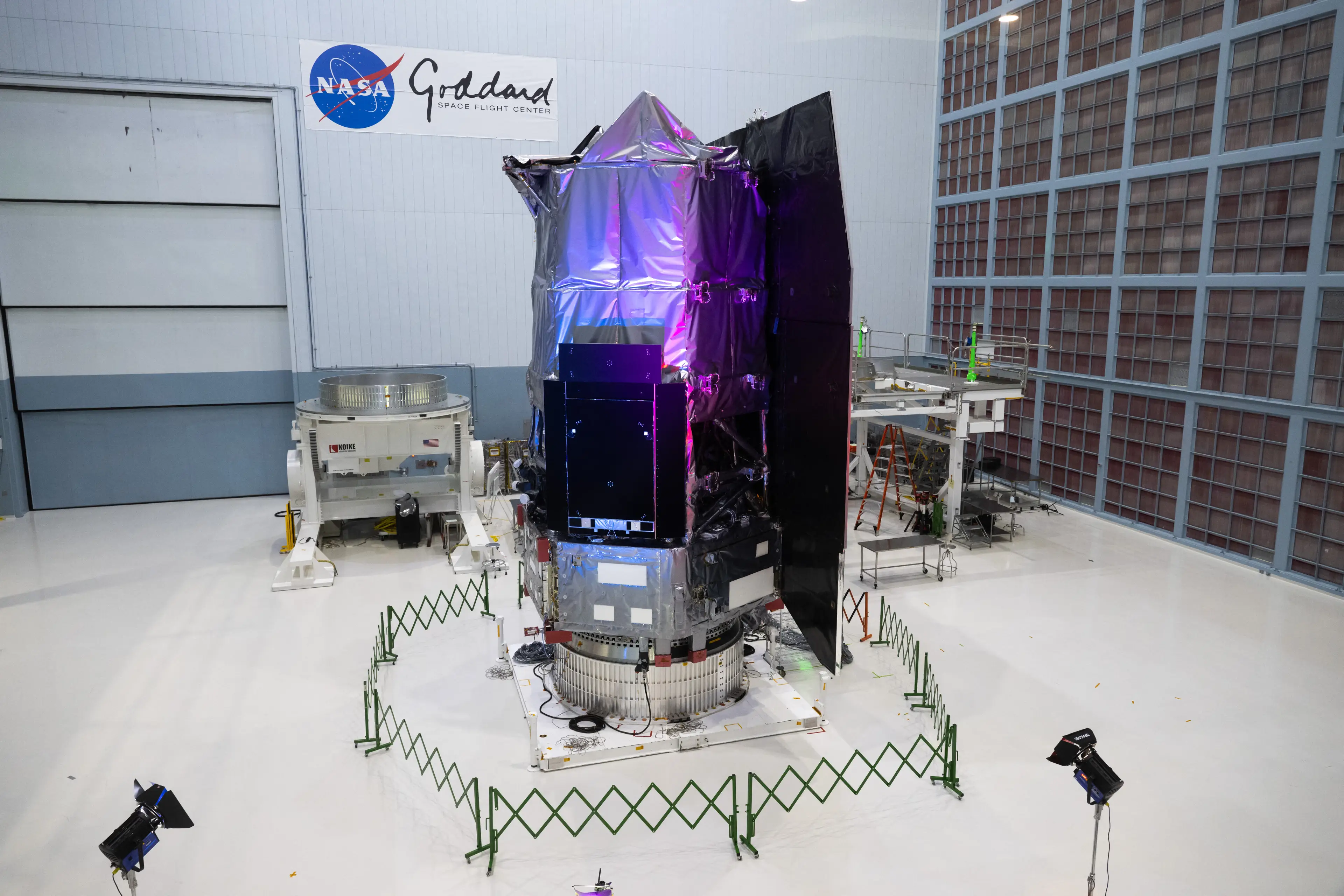
The Nancy Grace Roman Space Telescope, situated inside NASA's Goddard Space Flight Center in Greenbelt, Maryland (SAUL LOEB/AFP via Getty Images)

Most previously detected exoplanets are located within a few thousand light years of Earth, but Roman's surveys promise a greater reach of study.

Roman will 'continuously monitor stars across a large section of the Milky Way,' primed to gather data when any brightness changes occur.

There are two techniques used for this, one of which relies on planetary transits - for the layman, when a planet passes in front of its star from Earth's perspective, it blocks a certain amount of starlight, causing a temporary dimming

Then we have microlensing, which is when the gravity of a foregrounded star and any nearby planets magnify the light of a backgrounded star, making it appear brighter.

"Stars with more heavy elements tend to host more planets, especially giant ones," shared Robby Wilson, a postdoctoral fellow at NASA Goddard.

"Roman will be especially powerful because it will observe hundreds of millions of distant stars, letting scientists compare faraway planet populations to those found nearby.

"All of that data will give us a lot to comb through, so we're prepping by creating synthetic data, detecting simulated planets, and using machine learning to filter out false positives. That way we'll be ready to go right away when real data comes pouring in."

This comes after the scientific community was left flummoxed by a shining blue light out in the dark vacuum surrounding our planet.

One theory posed by astronomers is that this phenomenon, which has occurred 14 times since 2018, may be the resulting sight of another mega-hot sun smashing into a black hole.

Featured Image Credit: Tobias Roetsch/Future Publishing via Getty Images)

Topics: Space, NASA, Science, Technology

Dan Seddon
Dan Seddon

Recommended reads

Angry Ginge shares devastating scenes as mum’s house burns down night before Soccer Aid(Angry Ginge/Instagram)Groundbreaking new vaping study warns users over flavours they inhale and long-term health impactGetty Stock ImagesHugh Hefner's ex Holly Madison shares dark side of the Playboy MansionDenise Truscello/WireImageRyanair launches 15 new summer routes - just days after cutting flights from 19 airportsGetty Stock

Advert

Choose your content:

4 days ago
6 days ago
7 days ago
11 days ago
  • Onur Dogman/SOPA Images/LightRocket via Getty Images
    4 days ago

    New £3.99 charge for Facebook and Instagram Plus to be introduced

    The new 'Plus' subscription tiers will be for Facebook, Instagram and WhatsApp

    Technology
  • Getty Stock Images
    6 days ago

    Bizarre job advert is looking for people to masturbate for £1500 a month

    You'd be cranking one out to help an AI developer

    Technology
  • ALBERTO PIZZOLI/AFP via Getty Images
    7 days ago

    Pope Leo issues harrowing warning about AI in first major teaching

    The Pope has joined the voices saying AI could be a very dangerous thing for humanity

    Technology
  • (Evan Vucci-Pool/Getty Images)
    11 days ago

    Donald Trump’s $499 gold phone releases as users instantly discover huge error

    The handset reportedly comes with Truth Social pre-loaded

    Technology
  • Likely truth behind NASA video that sparked conspiracy theory Artemis II mission is being faked
  • Astronaut realised big 'lie' after looking down at the Earth from space
  • Likelihood of ‘potentially hostile’ alien threat hitting Earth following scientist's warning
  • Scientists shocked to discover what mysterious creature from 95 million years ago is