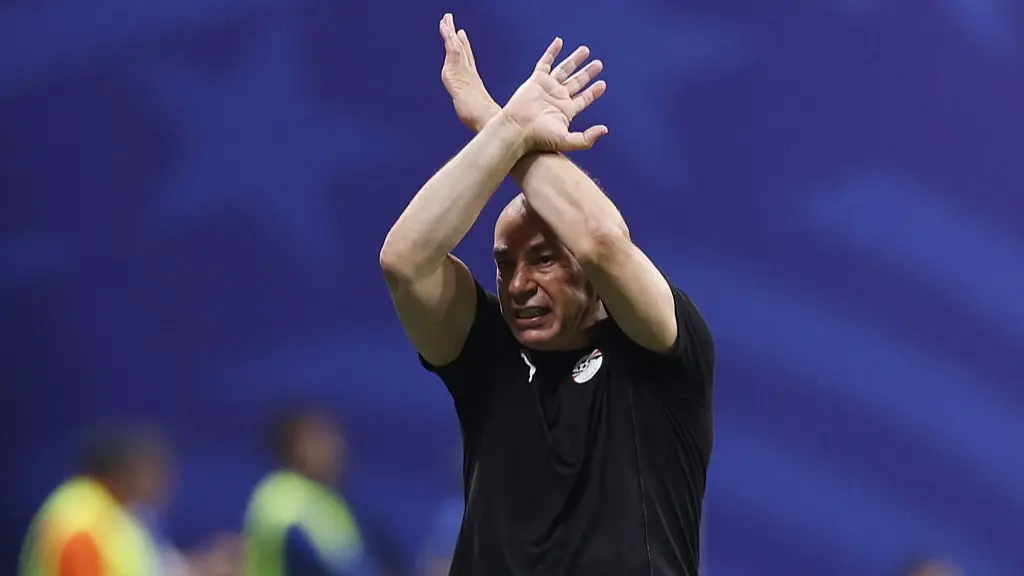
Meaning behind hand gesture Egypt manager made in World Cup match against Argentina before getting yellow card

Egypt's manager Hossam Hassan made a particular gesture with his arms as he received a yellow card during his country's 3-2 defeat to Argentina in the World Cup.
It was a dramatic round of 16 tie that saw Egypt go 2-0 up against the defending World Cup champions and Lionel Messi miss a penalty before Argentina scored three times late in the game to win.
One of those goals was Messi's, making him the tournament's top scorer with eight goals thus far, and it sets Argentina up for a quarter-final clash with either Switzerland or Colombia on Sunday (12 July).
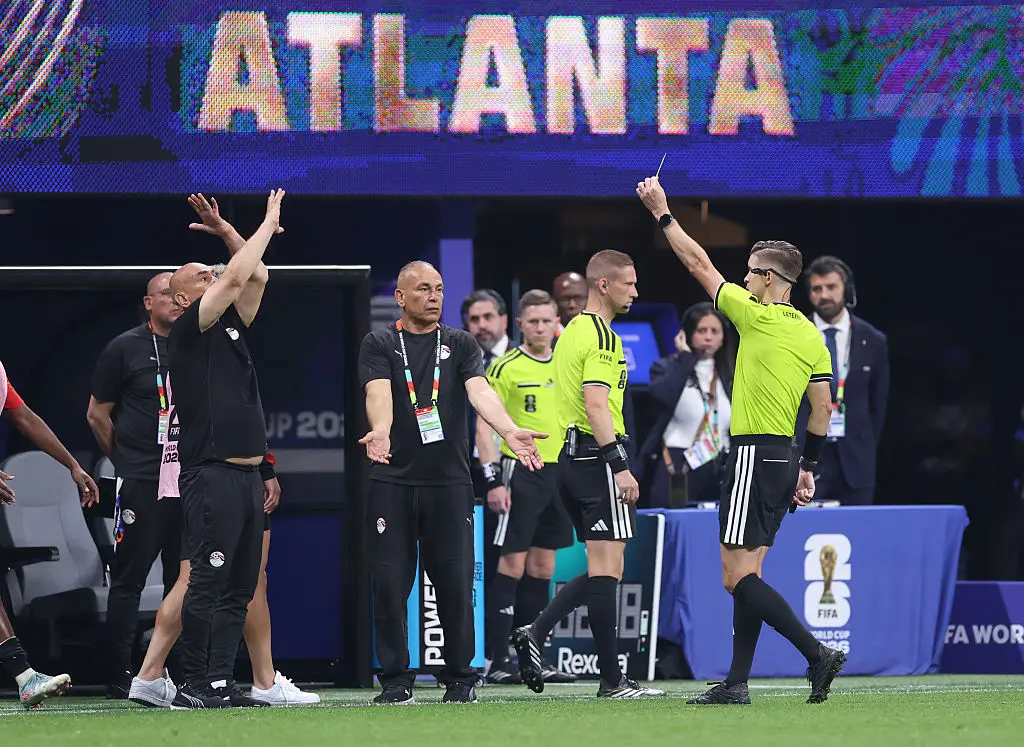
During the game the Egyptian manager was shown a yellow card after he made a gesture with his arms crossed in the shape of an 'X' in front of him.
Advert
This was not just a manager waving his arms about, it's actually FIFA's new symbol for players and officials to report racist incidents.
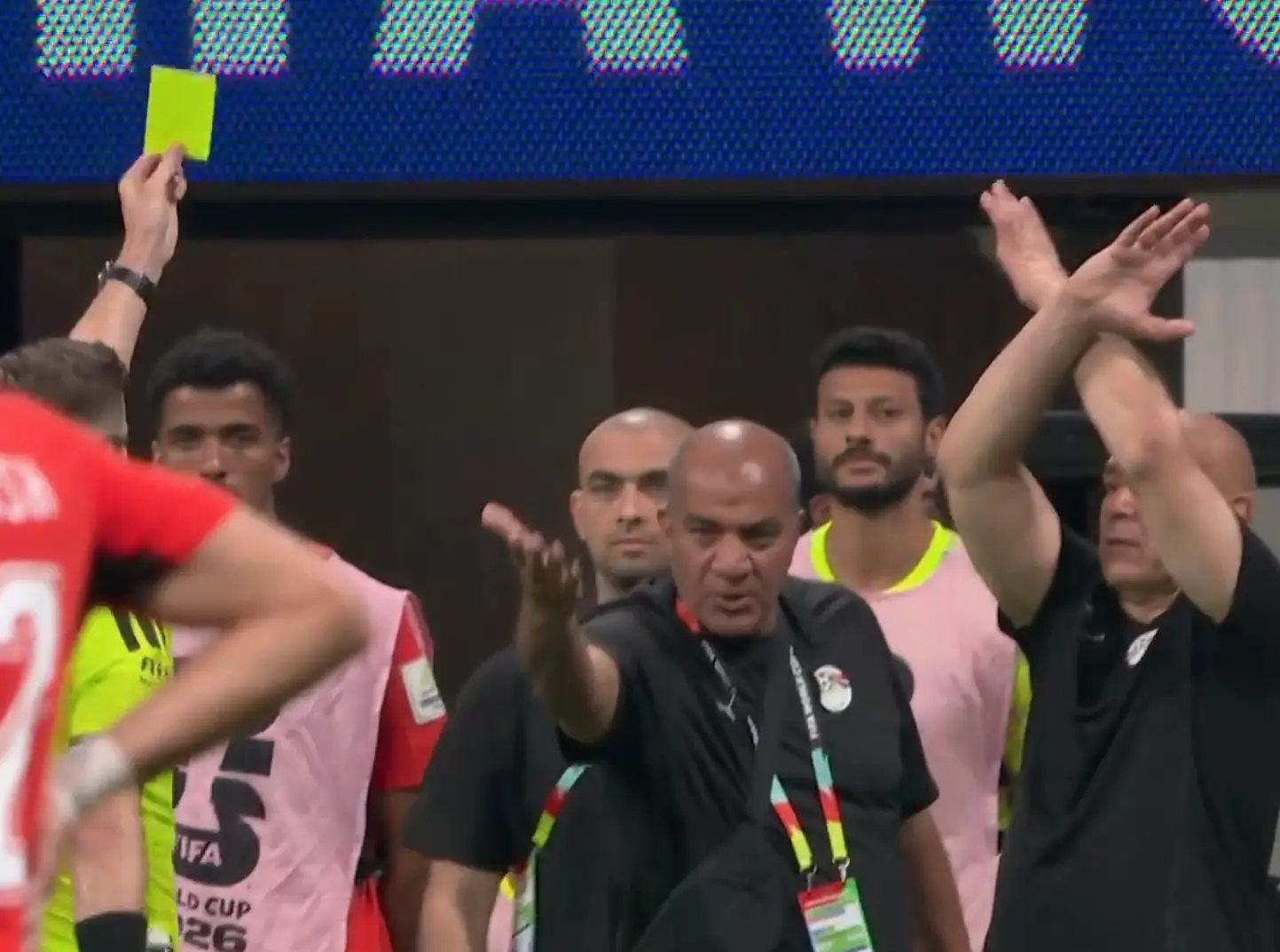
According to FIFA, making a cross with your arms is a way for referees, players and match officials to report racist behaviour, at which point it gives the referee a decision on whether or not to stop the game.
From there match officials have the power to suspend a game, which comes with a warning that if the racist incident which caused the match to be suspended does not cease then the entire game can be abandoned.
In the most extreme cases a referee has the power to take things to a third step and abandon the match altogether.
In FIFA's guidelines it doesn't say that the person making the gesture should be yellow carded, the details of what alleged incident of racism Hassan was referring to with his gesture and the referee's thinking behind showing him a card is unclear.
LADbible Group have contacted FIFA for comment.
This wasn't the only bone Hassan had to pick with how the match unfolded.
In a post-match interview with The Athletic, he was also fuming that a goal in the 57th minute from Mostafa Zico was disallowed.
He also insisted Mohamed Salah was fouled moments before Argentina scored its winning goal, and his side should have got a penalty.
He vowed he will 'never watch the World Cup again, because there’s no justice in this competition'.
Slamming Letexier, he continued: "We haven’t seen respect or fair play. I’m not convinced by this outcome and by the way things unfolded in this match."
It's not been the only controversial moment in this year's competition. FIFA also made the unprecedented decision to overturn Folarin Balogun suspension following a red card - which ultimately didn't help the US side, who lost to Belgium yesterday (7 July).
It comes as FIFA tweaked several rules in the run-up to this year's competition.
New rules for the FIFA World Cup 2026
This year, there’s been a whole host of rule changes, many of which are designed to speed up the game and penalise players who drag things out. Some of the new regulations are likely to prove controversial.
10-second substitution
Subbed players now have to get a move on and leave the pitch within ten seconds by the nearest exit point. If they haven’t, their replacement will get held up by one minute until the next stoppage of play, and until then, their side will have to play with 10 men.
5-second throw-ins and goal kicks
If a referee thinks a player is taking too long for a throw-in or goal kick, they’ll start a five-second countdown, by which time the ball needs to be back in play. If it’s not, for throw-ins the opposing team will get their own throw-in, or for a goal kick the other side gets a corner.
Injured players to remain off the pitch for one minute
An injured player treated by medical staff off-field has to stay off the pitch for one minute, leaving their side with just 10 players.
More VAR
VAR can now be used to review an incorrectly awarded corner kick; second yellow cards resulting in a red card; when a player is incorrectly awarded a yellow or red card for another player’s actions; and any attacking fouls that occur before the ball is in play.
Players can’t cover their mouths
Players who cover their mouths in confrontational situations will be handed a red card. It’s believed players might cover their mouths to guard against lip readers while racially abusing other players, which some suspect has happened in the past.
Red cards for players leaving the pitch
Any player who leaves the pitch in protest over a referee’s decision will be handed a red card, and if a team walks off and causes a match to be abandoned, they’ll forfeit the game.
 Joe Harker