17 Gen Z jobs and industries most at risk from AI - and the millions of young workers affected

Getting a job as a young person was already pretty hard before the rise of artificial intelligence but more and more jobs are now at risk of being replaced.
Artificial intelligence started out as something of a joke but the rapid development of the technology means that it's now a serious threat to our livelihoods.
If you weren't already angry about the severe damage to the environment that the ridiculous AI videos were doing, you certainly will be when it replaces people at work during a cost of living crisis.
You were probably already concerned when the Godfather of AI, Geoffrey Hinton, suggested that the only way we can stop artificial intelligence from eventually taking over is by installing a maternal instinct in future models, but the concept of losing your job to the AI is sadly a very realistic reality in the immediate future.
Advert
Bill Gates has spoken passionately on the topic before, delivering a rather ominous warning that only four jobs would survive an AI takeover, which means you might want to get learning code or going back your childhood dream of playing in the Premier League.

He said that coders, professional athletes, biologists and energy workers are the only ones who are safe, with Microsoft has also released a pretty extensive list of the jobs that might just survive for a while longer.
Naturally, occupations such as translators and historians are seriously at risk with the development of AI, but now a new study has identified 17 different Gen Z jobs and industries which could see the highest number of young people impacted.
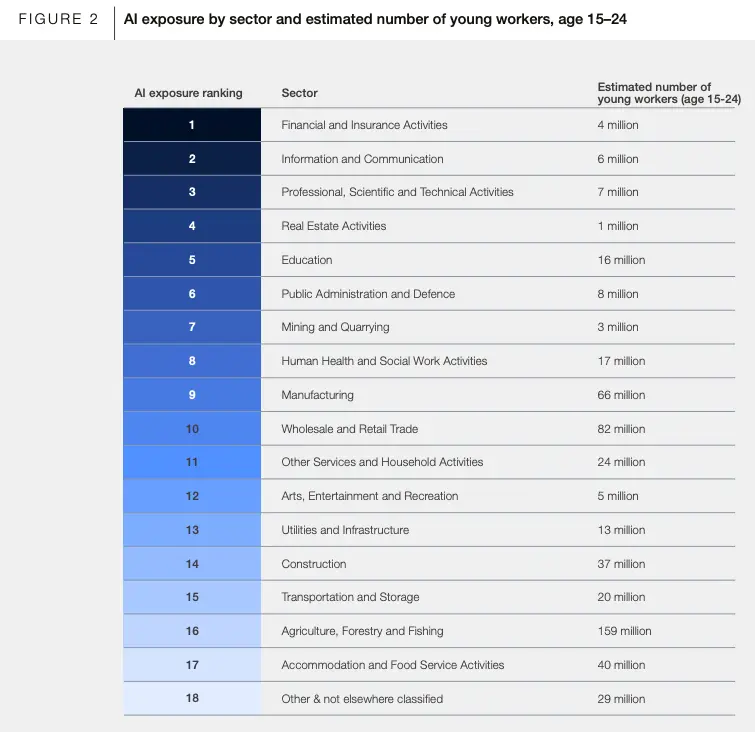
The 17 job industries most at risk from AI
1 Financial and Insurance Activities 4 million
2 Information and Communication 6 million
3 Professional, Scientific and Technical Activities 7 million
4 Real Estate Activities 1 million
5 Education 16 million
6 Public Administration and Defence 8 million
7 Mining and Quarrying 3 million
8 Human Health and Social Work Activities 17 million
9 Manufacturing 66 million
10 Wholesale and Retail Trade 82 million
11 Other Services and Household Activities 24 million
12 Arts, Entertainment and Recreation 5 million
13 Utilities and Infrastructure 13 million
14 Construction 37 million
15 Transportation and Storage 20 million
16 Agriculture, Forestry and Fishing 159 million
17 Accommodation and Food Service Activities 40 million
18 Other & not elsewhere classified 29 million
It's easy to understand why so many companies are falling into the trap of delegating almost entirely to AI, since it's so much cheaper than hiring a human, but this can also pose problems, particularly when we've seen artificial intelligence go down entirely in recent months.
Hannah Calhoon, VP of AI at Indeed, explained: “Many companies are tempted to eliminate entry-level roles in favour of AI, to drive immediate productivity gains. They reason, not incorrectly, that much of the rote work that’s done by junior employees can be easily automated. But this short-term perspective overlooks a critical risk: by eliminating junior roles, leaders are effectively cutting off their future talent pipeline.
“On Indeed, junior-level job postings fell 7% year-over-year in 2025, while senior-level postings rose 4%. That gap is a warning sign. Companies are eroding the entry point of their own leadership ladder.
“Junior employees do more than perform tasks. When they tackle foundational work – sifting through data, writing first drafts, or solving routine problems – they build the subject-matter expertise and professional intuition that cannot be taught in a seminar. If you delegate all this to AI, your team never learns how the business actually functions. You will eventually find yourself with no one capable of handling the complex, senior-level decisions that AI cannot yet master."
Not everyone is of the belief that AI will take away jobs however, as Jeff Bezos recently claimed that you only need one thing to ensure you won't be replaced by AI - creativity.
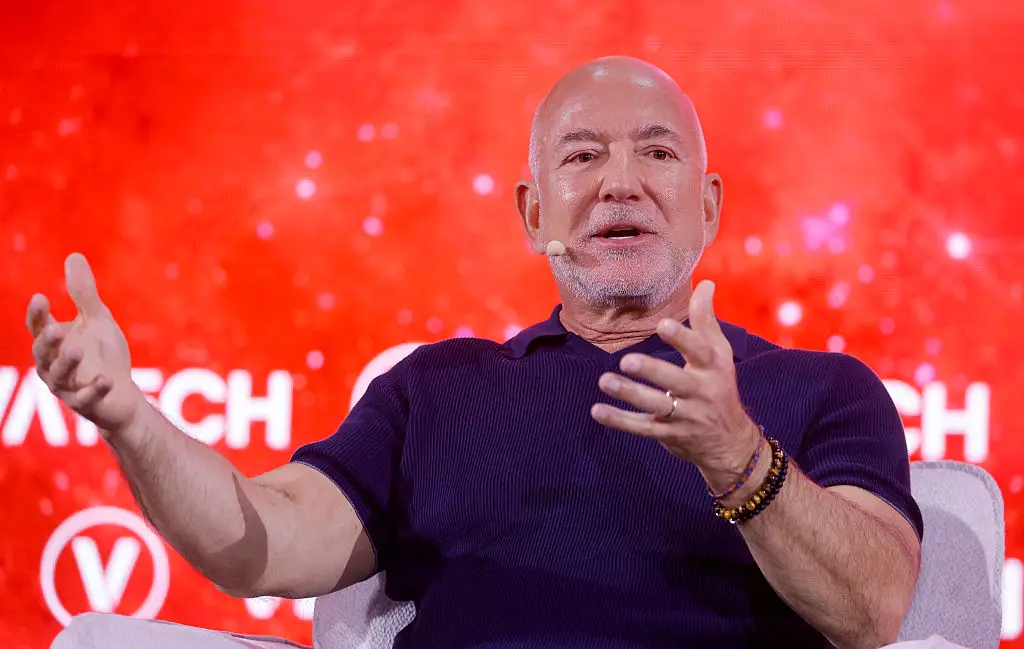
He emphasised his point by saying: “Put me in front of a whiteboard and I can generate a hundred ideas in half an hour."
The Amazon founder added: “I don’t see how anybody can be discouraged who is alive.
"[AI will make every business’] quality go up and their productivity go up. Every manufacturing company, every hotel, every consumer products company. That’s hard to fathom, but it’s real.
“There’s never been a better time to be excited about the future."
Well, that's easy to say when you're one of the richest men alive but for the young people struggling to pay their bills, it's difficult to fathom a future where they can be excited about work when a lot of the jobs they studied for at university are seemingly now becoming obsolete.
Topics: Artificial Intelligence, Gen Z
 James Moorhouse