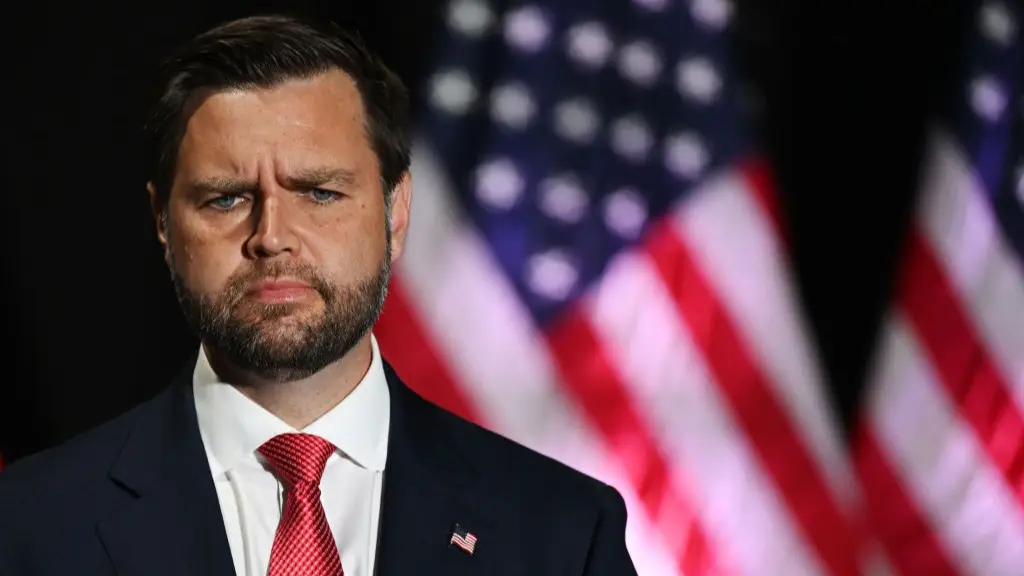
Harvard scientist responds to Vice President JD Vance's claims UFOs are ‘demons’

Vice President JD Vance ought to be a bit more 'optimistic' about what aliens might be like, according to this Harvard scientist.
Donald Trump's understudy revealed that he considers extraterrestrials to be 'demons' who 'fly around to do weird things to people' in an interview last week, citing his religious beliefs.
Now, theoretical physicist Avi Loeb - who reckons the world needs to adopt a more open-minded approach to the prospect of aliens - has shared his thoughts on Vance's assessment of UFOs.
During an appearance on The Benny Show, Vance promised to 'get to the bottom of the UFO files' which Trump promised to release earlier this year.
Advert
The commander-in-chief said he would be 'identifying and releasing' all the files the US government have which discuss the possibility of alien life and phenomena such as UFOs.
Vance told the host of the conservative podcast, Benny Johnson, that he has not yet had a chance to have a flick through these files yet.
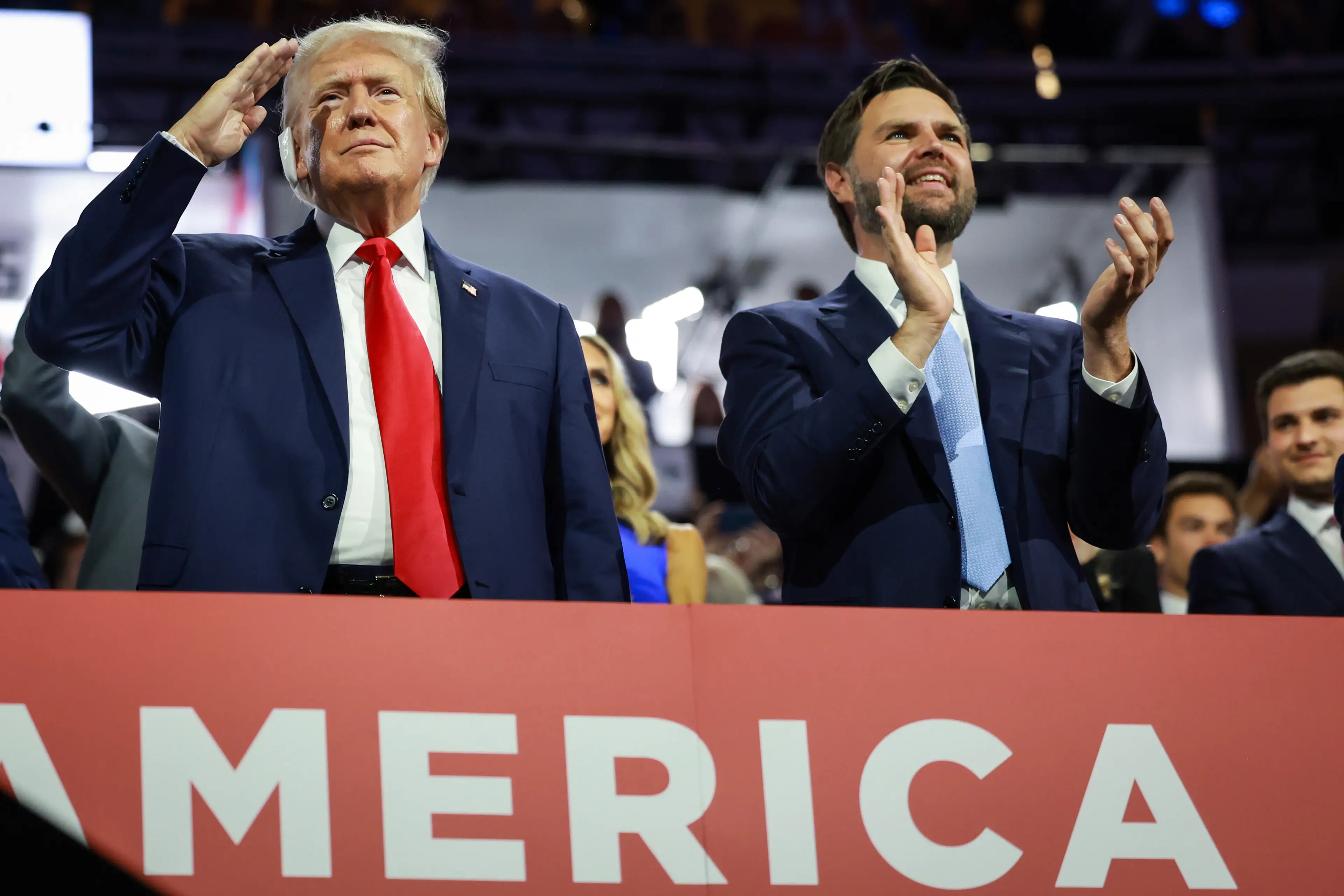
"I have not been able to spend enough time on this to really understand it, but I am going to," Vance said. "Trust me, I’m obsessed with this. I've had a couple of times where I've been like, 'We're going to Area 51, we're going out to New Mexico, we're going to get to the bottom of this'. I don't think they are aliens, I think they're demons anyway, but that’s a longer discussion."
Elaborating on what he meant by this, Vance continued: "I think that celestial beings who fly around, who do weird things to people...I think that the desire to describe everything celestial - everything is otherworldly - to describe it as aliens... every great world religion, including Christianity, the one that I believe in, has understood that there are weird things out there, and there are things that are very difficult to explain.
"And I naturally go, when I hear about sort of extra-natural phenomenon, that’s where I go, is the Christian understanding that, you know, there’s a lot of good out there, but there’s also some evil out there.
"I think that one of the devil’s great tricks is to convince people he never existed."
Avi Loeb was asked to chime in on Vance's comments during an interview with NewsNation's Jesse Webber, and whether he believes the vice president might have intel that the public are currently unaware of.
Webber asked: "Would he have been briefed on UFOs? Could his demon theory be shaped not just by his personal beliefs, by some things he’s seen, something he’s heard?"
Sharing his analysis of Vance's remark, Loeb - who famously suggested that 'alien technology' could have been behind the 3I/ATLAS comet - said the vice president might have 'gone too far' with his description of aliens.
Loeb also pointed out that he is leading Harvard's 'Galileo Project', which aims to find physical objects associated with extraterrestrial technological equipment.
The experts behind the Galileo Project hope to come up with 'validated and systematic scientific research' to explain the phenomena of UFOs, rather than relying on speculation.
Responding to what Vance said, Loeb continued: "My thinking about it is not in the context of demons, but more in the context of aliens.
"And in that case, if we are seeing any extraterrestrial technologies, the way I think of them is as the better angels of our nature. Why not be optimistic?

"We can learn from new technologies," Loeb said. "We have only had science and technology for a hundred years, and most stars formed billions of years before the Sun.
"I should also mention that the latest interstellar visitor we had, 3I/ATLAS, could have potentially released some probes or objects during its path.
"We should be open-minded to the possibility that we’re not at the top of the food chain within the Milky Way galaxy, that we can learn something from siblings of our family of intelligent civilisations.
"And of course, you may ask: how is religion supposed to be affected by any finding?"
Loeb doesn't 'necessarily see a conflict between religious beliefs and science', as long as 'everyone agrees that we should attend to the evidence'.
"If the US government cannot figure out what these objects are, then, of course, people have their own speculations or theories, or they connect it to some past traditional thoughts," he said.
"I have no issue with that as long as everyone agrees that we should get more data and figure these things out. At the end of the day, we might recognise this as something completely unexpected - but we might also figure it out."
 Olivia Burke